US and Iran rush to lock in deal as Geneva summit slips forward
Negotiators in Geneva and Muscat are weighing whether to sign the long-stalled US-Iran memorandum of understanding electronically before delegations have even sat down.
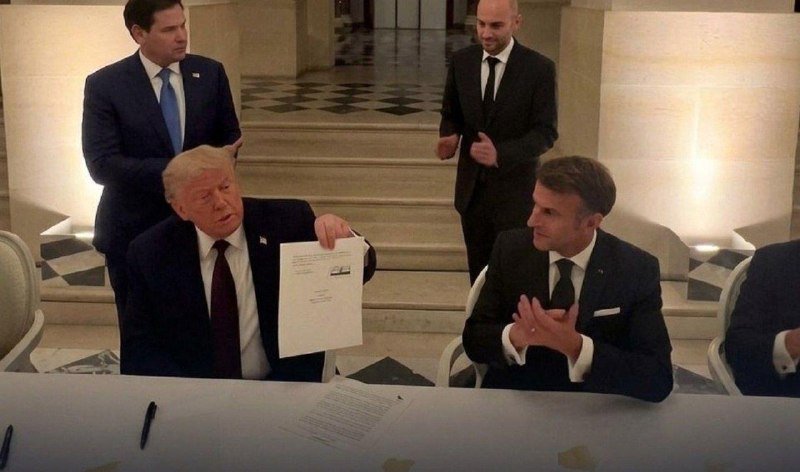
At 16:01 UTC on 17 June 2026, Axios reported that Washington, Tehran and the mediating governments were weighing whether to pull the signing of a long-stalled US-Iran memorandum of understanding forward from Friday — and whether to initial it electronically, before the parties have even reconvened around a table. The proposal, carried in real time by the Instant News Alerts channel on Telegram, marks the most concrete signal yet that the framework deal brokered through Omani and Swiss channels is approaching the stage where the lawyers draft, not the diplomats grandstand.
What is being signed is not the comprehensive agreement that once animated a decade of Western sanctions architecture. It is a narrower text — the kind of interim memorandum that freezes the most destabilising elements of the dispute long enough for both sides to claim they have not conceded, and for the mediators to claim they have not been sidelined. That is the operative meaning of the day's headlines, even as the choreography around it suggests something more dramatic.
The Swiss file
The Friday meeting, which Axios described as the scheduled formal venue for the MOU signing, was already embedded in a dense sequence of indirect contacts. A source close to Iran's negotiating team told Tasnim News Agency on 17 June at 15:13 UTC that the delegation's planned trip to Switzerland on Friday had not been cancelled, and that discussions over the arrangements were continuing. That caveat matters. In the choreography of US-Iran diplomacy, the cancellation of a travel leg is rarely a logistics story — it is a tell. The fact that the Tasnim-sourced report, carried by The Cradle Media's Telegram channels at 15:13 UTC, emphasised continuity suggests Tehran wants the optics of arrival, even if the substantive instrument is already in escrow.
Mediation has been the through-line. Oman and Switzerland have served as the postbox and the conference hall respectively, a division of diplomatic labour that allows each intermediary to claim ownership of a different stage of the process. Whether that division survives a deal is an open question. The mediators have a vested interest in the agreement being read as their accomplishment, and the parties have a vested interest in not being seen to need a third party's protection. The MOU structure — narrow, technical, lightly symbolic — offers both sides a way out: Washington can deny it is normalising relations with a government it has designated as a state sponsor of terrorism, and Tehran can deny it has conceded the architecture of its nuclear programme.
The counter-narrative
Not everyone in the Iranian system is on message. Hardline outlets have framed the prospect of an electronic signing as evidence that Tehran is being hustled into a document whose contents the negotiating team has not fully read into the public record. That reading is structurally plausible — electronic initialing does remove a layer of last-minute review, and the opacity of the MOU's text, so far, is itself a political fact. It is the same opacity, however, that allows the deal to exist at all.
A competing Western frame treats the rush as evidence of Tehran's desperation: that sanctions have bitten hard enough to bring the Islamic Republic back to a posture it refused for two decades. There is something to that. The pressure campaign has not been lifted; what is being discussed is the architecture under which some of it might be paused, conditional on what is suspended in return. The Memorandum is not the end of that contest but its formalisation.
What sits underneath
The MOU is best read not as a settlement but as a structural instrument. It locks in a posture — verification access, enrichment ceilings, sanctions architecture — long enough for both governments to survive their domestic review cycles. For Washington, that means a presidency that wants to claim a foreign-policy win without a Senate treaty; for Tehran, it means a system that wants sanctions relief without a public capitulation on the nuclear file.
The pattern is familiar. Interim frameworks tend to harden into permanent arrangements when the cost of revisiting them exceeds the cost of living with them. That is what happened with the Joint Plan of Action in 2013, and what did not happen with the 2015 framework that was overtaken by the 2018 withdrawal. The MOU now under consideration is closer to the 2013 model — a confidence-building instrument whose job is to make a later, larger instrument possible, not to substitute for it.
The mediation infrastructure compounds that dynamic. Oman and Switzerland have institutional reasons to keep the process moving: a signed document, even a narrow one, validates the channel and guarantees them a seat at the next stage. Mediators whose credibility depends on delivery have an incentive to compress the timeline. The proposal to sign electronically is, in that sense, the mediators' preferred outcome — the deal becomes the proof that the channel worked, regardless of what the deal contains.
Stakes and timing
If the MOU initialing proceeds on Wednesday or Thursday — ahead of the Friday venue — the next inflection point will be the verification regime. The technical annexes will determine whether the agreement is a genuine pause or a deferral of the contest that has defined the file since 2002. The harder question, the one the MOU is structured to defer, is what happens when the interim term expires and neither side has built the domestic politics for a fuller deal.
The risks are also concrete. An electronic signing removes the room for last-minute walk-backs by either delegation, which compresses the risk into the hours immediately after the document is filed. That is when the Israeli and Gulf reviews will harden, and when the Iranian parliament and Guardian Council will decide whether to ratify or resist. The next seventy-two hours are the period in which the deal either holds its shape or begins to be publicly contested by parties who were not in the room.
For now, the sources disagree on substance and agree on the choreography. Tasnim reports continuity in the Swiss leg; Axios reports an attempt to compress the timing in Washington and the mediating capitals. What both agree on is that the document exists in some form, and that both governments want it to be signed before their negotiating teams disperse. The space between those two reads is where the next week will be contested.
This publication is watching the verification annexes as the next hard test. The MOU's text will tell us whether the deal is a pause or a deferral — the framing of the announcement will not.
Wire provenance
This editorial synthesis draws on the following public wire/social posts:
- https://t.me/osintlive
- https://t.me/thecradlemedia
- https://t.me/TheCradleMedia
Follow the event.
These dated source records provide context. They do not retrospectively verify this archive article.
Separate what the nuclear watchdog reported from what it could not determine after the June 2025 strikes.