Tehran on a tightrope: how a fast-tracked US-Iran memorandum and a Russian helicopter deal converged in 48 hours
A reported US-Iran memorandum signing pulled forward to 17 June collides with a Russian helicopter MOU, exposing the limits of a deal that was only ever going to be partial.
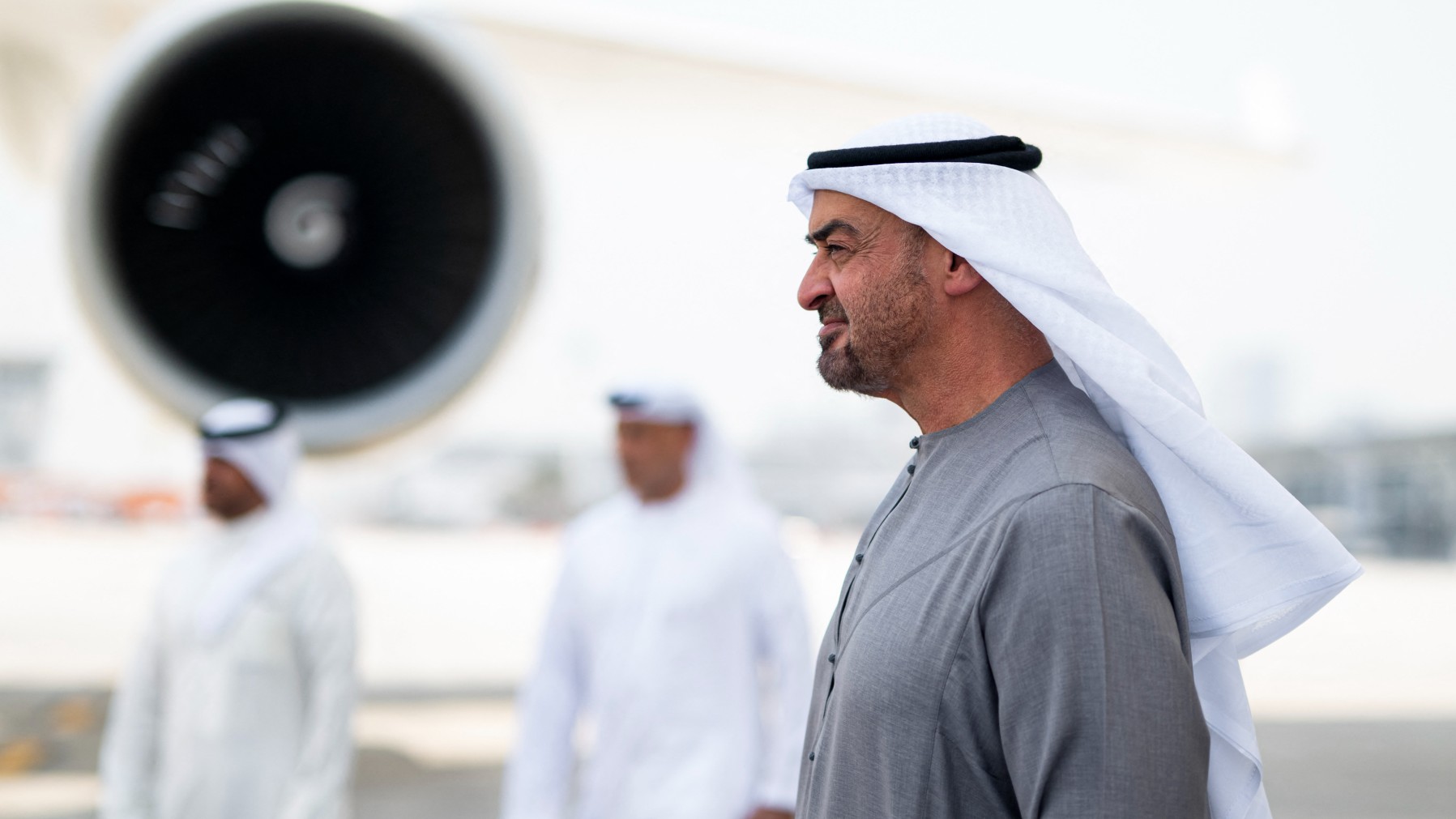
On 17 June 2026, in the hours after markets priced in a possible US-Iran deal, two parallel threads converged around the Islamic Republic. The first: Tehran and Washington, with mediators in the loop, were discussing moving the signing of a memorandum of understanding up to as early as the same day, per Axios reporting relayed by BRICS News at 15:27 UTC. The second: Iran had agreed in principle to purchase 20 military helicopters from Russia, with the MOU confirmed by 14:37 UTC, and was reportedly closing an additional defence package that would make the country's armed forces more interoperable with Moscow's at exactly the moment its negotiating position with Washington was supposed to be at its most exposed.
Read together, the two threads suggest a Tehran that is no longer choosing between the Russian and American camps so much as sequencing them. The deal with Washington, if it lands, will be partial, narrow, and reversible. The procurement from Moscow is concrete, denominated in airframes, and difficult to unwind. The hard question for analysts is which of the two is the headline and which is the footnote.
A memorandum pulled forward — and a $300 billion figure that wasn't
The US-Iran track moved faster than the public schedule suggested it would. By 15:24 UTC on 17 June, Polymarket's deal-monitoring account was flagging that Washington, Tehran, and the mediators were discussing pulling the signing of the memorandum forward to the same day. Two hours earlier, the same account had reported that Iran had agreed to purchase 20 military helicopters from Russia; an hour later, at 15:00 UTC, that figure had been incorporated into the broader deal-tracking feed as confirmed MOU material.
The headline number that did not survive the day was the $300 billion Iran fund. At 13:24 UTC, US President Donald Trump publicly denied the reports, stating that the United States was not investing in such a vehicle. The denial was notable for its precision: it did not deny that negotiations were taking place, did not deny that a memorandum was being prepared, and did not deny that some form of financial arrangement had been discussed. It denied only the specific structure — a US-invested $300 billion fund — that had been attributed to the talks in earlier coverage. That is the kind of denial that tends to leave the underlying channel intact while pruning a particular headline figure off it.
The diplomatic backdrop is a known quantity: the United States and Iran have been working through Omani and Qatari mediators on a sequence of confidence-building steps, with the most likely deliverable being a narrow non-nuclear file — sanctions easing on frozen funds, a partial release of Iranian assets held in third-country escrow, and a mutual cap on enrichment — rather than a comprehensive settlement. The memorandum format itself is consistent with that: a political understanding, not a treaty, signed at the level of principals or their equivalents, and reversible on either side within a defined notice period.
Twenty helicopters, and what an airframe actually buys you
The Russian track is the one with the most quantifiable substance, and it is the one that should give Western defence planners the most honest pause. Twenty military helicopters, agreed in MOU form on 17 June, is a modest order by global standards but a meaningful one for the Iranian armed forces. Iran's helicopter fleet is a mix of ageing American airframes from the pre-1979 inventory, Russian Mil Mi-17s and Mi-171s delivered during the 1990s and 2000s, and a smaller cohort of more recent Russian platforms. The fleet has been described in open-source defence reporting as heavily utilised, with maintenance backlogs that limit the air hours available to the regular army and the Islamic Revolutionary Guard Corps.
The 20-airframe figure should not be read in isolation. The 15:00 UTC wire from the Polymarket deal feed described the helicopter agreement in the same breath as a broader pattern of Iran-Russia defence convergence, and earlier in the day, at 14:37 UTC, the Unusual Whales account reported the MOU in language that emphasised the military-equipment framing rather than any single platform. The cumulative signal is a relationship that is moving from a sanctions-era low-cost partnership of last resort into something more durable: a standing procurement channel with predictable delivery schedules, training pipelines, and likely co-production discussions further down the line.
For the United States, the complication is timing. Any US-Iran memorandum that includes a sanctions-easing component will be assessed, in Moscow and in Tehran, against the question of whether the eased revenue flows into the Russian defence account. That is not a hypothetical. The argument that Iran would redirect liberated oil revenue into Russian-made airframes is precisely the argument that hawks in Washington, Jerusalem, and Riyadh have been making in private for months. The 17 June reports, by surfacing both tracks in the same 48-hour window, have made that argument harder to rebut on the public record.
The Meloni meeting, and the read-across to Europe
A sixth data point sits slightly outside the Iran file but inside the day. At 08:40 UTC on 17 June, Polymarket's deal feed reported that Trump and Italian Prime Minister Giorgia Meloni had held their first known meeting since a public clash over Pope Leo XIV and the Iran operation. The framing is doing work here: the reference to a "clash" suggests a substantive disagreement that has now been papered over, at least operationally, by a face-to-face. Italian positions on Iran have historically tracked the European mainstream — sanctions enforcement, support for the nuclear non-proliferation regime, and reluctance to support regime-change rhetoric. A Trump-Meloni rapprochement that produces a coordinated Iran policy would be a meaningful shift in the European tone.
The read-across to the memorandum signing is indirect but real. A unified transatlantic front — or even the appearance of one — strengthens the US negotiating position in any bilateral document. A visibly fractured Europe, by contrast, gives Tehran room to test the edges of any US commitment, knowing that Washington cannot count on a coordinated sanctions snapback from its allies. The 08:40 UTC meeting, if the reporting holds, suggests the United States is doing some of the coalition-tightening work that would normally accompany a signing day.
What the framing choices reveal
The 48-hour news flow has been shaped, in ways worth naming, by the source mix. The US-Iran memorandum is being reported primarily through aggregator and prediction-market channels — Polymarket, BRICS News, Unusual Whales — that have an explicit commercial interest in the signing landing, since their instruments price in the probability and timing of a deal. The Russian helicopter MOU is being reported through the same channels. Neither has been confirmed, as of writing, by an official readout from the US State Department, the Iranian Foreign Ministry, or the Kremlin. The Russian state-adjacent wires — TASS, RIA, Sputnik — have not been cited in the thread context for either story, which is itself a notable absence given that a confirmed Russian defence sale would normally generate a TASS item within hours.
This shapes what can and cannot be said with confidence. The memorandum signing is reported, not confirmed. The helicopter purchase is agreed in principle, not contracted. The $300 billion fund is reported, and then explicitly denied by the US president. The Meloni meeting is described as the first since a prior clash, which is consistent with a normalisation, but the substance of the conversation is not in the public record. A reader who treats any of these as settled fact is over-reading; a reader who treats the whole package as noise is under-reading. The honest position is that the day contained a cluster of credible signals, none of which is yet a deliverable.
Stakes: who wins and who loses if the package holds
If both tracks hold — a partial US-Iran memorandum and a Russian helicopter MOU — the winners are predictable. Tehran gains a sanctions-easing channel and a hardened defence relationship with Moscow in the same quarter, which is a stronger combined outcome than either deliverable on its own. Moscow gains a customer for an airframe it produces at scale and a precedent for sanctions-era defence exports to a country the West would prefer to isolate. The mediators — Oman and Qatar, by the structure of the channel — gain continued relevance as the only diplomatic infrastructure that holds the conversation together.
The losers are more distributed. The United States gains a partial nuclear freeze or cap, if the memorandum includes one, but pays for it in Russian-Iranian defence convergence and a likely Saudi-Israeli pushback in the same news cycle. The European Union gains a coordinated transatlantic position if the Meloni meeting holds, but loses leverage if it is read in Tehran as US-coordinated coercion rather than allied consensus. Israel and the Gulf states lose the cleanest version of maximum-pressure: a partial deal with sanctions carve-outs is harder to police than a comprehensive one with full snapback.
The hardest case to call is the Iranian public. A memorandum that eases access to frozen assets without producing visible economic relief at the consumer level will read, in Tehran, as another elite bargain. A helicopter deal that does not change the air posture over the Strait of Hormuz will read, in the same city, as a gesture. The 17 June news cycle is, in that sense, a story about the people around the table more than the people under the helicopters.
What remains genuinely uncertain
Three things are not yet established on the public record. First, whether the memorandum has been signed at all, as opposed to merely being prepared; the thread context describes a discussion about pulling the signing forward, not a confirmation of signing. Second, the platform type of the 20 helicopters — whether they are Mi-17/Mi-171 transport variants, heavier Mi-28 or Ka-52 attack platforms, or a mixed package — which materially changes the strategic significance of the order. Third, whether the US denial of the $300 billion fund closes the door on a smaller financial vehicle with similar architecture, or whether the denial is a calibrated pruning of a specific number rather than a policy line. Each of these will resolve within days, and the resolution will determine whether 17 June 2026 is remembered as a hinge or a footnote. This publication will track the official readouts as they appear and update accordingly.
Desk note: Monexus framed this as a single-day convergence of two parallel tracks rather than as either an Iran-deal story or a Russia-defence story in isolation. The thread context was dominated by prediction-market and aggregator channels; the wire confirms are still pending, and the article says so plainly rather than asserting confirmation.
Wire provenance
This editorial synthesis draws on the following public wire/social posts:
- https://t.me/bricsnews
- https://en.wikipedia.org/wiki/Iran%E2%80%93Russia_relations