After the MoU: How a US-Iran Deal Is Reshaping Israel's Lebanon Calculus
Four people died in Israeli drone strikes in south Lebanon on 17 June, hours after a US-Iran memorandum that Donald Trump is already using to publicly discipline Benjamin Netanyahu.
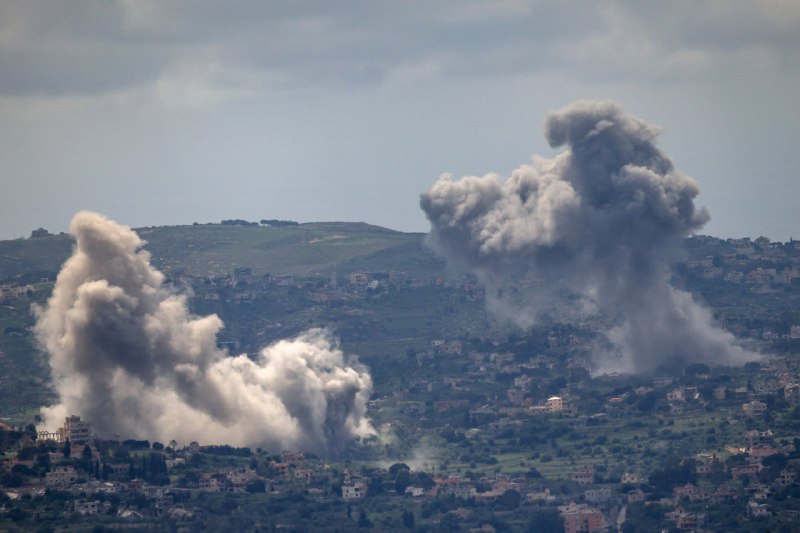
Four people were killed in Israeli drone strikes in southern Lebanon in the early hours of 17 June 2026, hours after a US-Iran memorandum of understanding that the White House is now publicly using to manage Israeli escalation. The strikes, reported by CGTN drawing on Lebanese health sources, underline a familiar pattern in the post-October 2023 theatre: a high-level de-escalation track between Washington and Tehran coexists with a parallel Israeli campaign that the same US administration is struggling, with mixed results, to leash.
The reading matters. The MoU, brokered in recent days, was supposed to dampen a regional escalation that had pulled Hezbollah, Israel, and Iranian proxies into open exchange. Instead, the agreement has set up a visible argument between an American president who wants it to hold and an Israeli prime minister whose military doctrine has, for nearly two years, treated south Lebanon as a permanent forward operating area. The argument is now being conducted in public, on cable news and on social platforms, in language that is unusually direct for a US-Israeli relationship that normally hides its disagreements behind communiqués.
What happened in south Lebanon
The strikes hit targets in the south of the country in the early hours of 17 June, killing four people according to Lebanese health sources cited by CGTN, which headlined the incident "4 killed in Israeli strikes in Lebanon despite US-Iran peace deal." The phrase "despite" does work the headline writer did not have to do: the four deaths landed on the same day the broader framework was being sold, in Washington and in Gulf capitals, as a step back from the brink. The news cycle did not need a metaphor. The juxtaposition supplied one.
Reporting from the ground remained thin in the immediate hours after the strike. Initial accounts did not specify the precise location of the impact sites, the identity of those killed, or the type of drone or munition used. CGTN, a Chinese state broadcaster with regional correspondents in Beirut, framed the strikes as a violation of the spirit of the new understanding; Israeli military spokespeople, when they commented, used the boilerplate language of operations against Hezbollah infrastructure. The two framings describe the same event and mean different things by it.
The Trump-Netanyahu argument, now in public
What makes the strike consequential is not its tactical weight — four deaths in south Lebanon is a single morning's toll, not a campaign — but the diplomatic weather around it. On 16 June 2026, Donald Trump publicly told Benjamin Netanyahu that he must be "more responsible" with regard to Lebanon, and that he must now "treat Lebanon with respect," according to posts aggregated by Polymarket and the trader account Unusual Whales. The phrasing is significant. American presidents do not normally instruct a sitting Israeli prime minister, in public, on the conduct of operations against a third country, and they certainly do not tell that prime minister to treat a neighbouring state with respect. The fact that this one did, on a day when south Lebanon was still receiving Israeli drone fire, indicates how much the US-Iran MoU has reordered the White House's tolerance for Israeli unilateralism.
Trump's parallel warning to Iran was sharper. On the same day, he stated that "all hell will break lose" — the wordplay appears to be the original, not a transcription error — and, in a separate remark, that "all hell will rain down" if Iran tries to develop a nuclear weapon, again as captured by Polymarket and Unusual Whales. The double-barrelled language, applied to both an Israeli prime minister and an Iranian theocracy in the same 24-hour news cycle, is the kind of framing a deal-maker uses when he wants both parties to feel managed. Whether it is the framing of a deal that will hold is a different question.
Why the MoU changed the operating environment
Until early 2026, the Israeli operational doctrine in south Lebanon was effectively insulated from the Washington-Tehran track. Israeli strikes against Hezbollah infrastructure, including the high-casualty campaign of late 2024 and the subsequent rolling operations, were either tacitly tolerated or formally endorsed by successive US National Security Council postures, on the bipartisan understanding that degrading Hezbollah's precision-rocket capability was a US interest as well. That assumption is now visibly fraying.
The reason is structural rather than rhetorical. The US-Iran MoU, the details of which remain largely undisclosed, almost certainly traded Iranian restraint on nuclear escalation and on proxy attacks through Iraqi and Syrian corridors for American restraint on Israeli strike packages. Once that trade is in place, Israeli unilateralism inside the Lebanese theatre becomes a direct cost to the American side of the deal. Every Israeli drone that lands in a south Lebanese village is a unit of political capital that the White House has to spend to keep Tehran at the table. Trump has chosen, for now, to spend that capital by telling Netanyahu to behave in front of the cameras. He has not chosen, at least not yet, to spend it by withholding the materiel that makes the strikes possible.
The wider Middle East reading is that the same logic is now being applied across the Israeli operational map. Strikes attributed to Israel in Syria, periodic operations against Iranian Revolutionary Guard Corps assets around Damascus and the Quneitra axis, and the long-running low-intensity campaign around the Iraq-Syria border are all now running into a Washington that has suddenly developed a strong interest in quiet. The Lebanon theatre is simply the first place that friction has produced visible daylight between the two governments.
The counter-read: a deal that exists only because both sides still need the bombs
The dominant framing above — Trump disciplining Netanyahu, the MoU reordering regional restraint — has a credible counter-narrative, and the credibility matters. The counter-read is that nothing has materially changed. The US-Iran MoU is a tactical arrangement, not a strategic one, and its principal function is to give both sides cover for a pause in escalation that their own domestic politics were forcing on them anyway. From this view, the Trump-Netanyahu public exchanges are theatre of a familiar kind: an American president performing toughness for a Gulf audience, an Israeli prime minister absorbing the script, and the underlying security cooperation — intelligence sharing, missile defence, and the steady flow of precision-guided munitions — running on exactly as before.
The supporting evidence is straightforward. Israeli strike tempo in south Lebanon in the first half of 2026 was high before the MoU and remained high in the days after its announcement. The four killed on 17 June were not the first casualties of the post-MoU period, and CGTN's reporting suggests they are unlikely to be the last. Hezbollah's political wing in Beirut continues to insist on a political settlement that returns to the pre-2024 status quo ante, and Israel continues to insist on a demilitarised border zone that the Iranian-backed movement has no intention of accepting. The substance of the dispute is unchanged. What has changed is the public temperature at which it is being argued.
A second counter-read, more uncomfortable for Western capitals, is that the MoU is in part a function of the broader US-Iran-China triangulation. As Chinese diplomatic and economic weight in the Gulf has grown — and Beijing's role as a major buyer of Iranian crude has been a quiet but load-bearing element of the sanctions architecture for years — Washington has fewer unilateral levers and more reason to seek the kind of transactional, time-limited deal that the MoU represents. The MoU is, on this reading, less a confident American realignment than an admission of how thin the American hand has become in the Gulf. That framing, harder to verify and easier to overstate, is one the Chinese and Iranian press have been happy to advance.
Stakes, and what to watch next
The next forty-eight to seventy-two hours are the test. If the Israeli strike tempo in south Lebanon visibly slows, and if Hezbollah responds to the public Trump intervention by reciprocally downshifting its posture along the border, the MoU acquires the kind of operational meaning that diplomats normally have to build into a deal from the outset. If the tempo does not slow, or if a single high-casualty incident collapses the political space that the White House is now trying to construct, the entire framework risks being remembered as another transactional pause rather than a settlement.
The concrete stakes are not abstract. A working MoU would reduce the probability of a wider Israeli-Hezbollah war in 2026, which would in turn reduce pressure on the Lebanese state, on the approximately 60,000 people displaced from south Lebanese border villages by earlier exchanges, and on the Cypriot and Turkish coastguards now positioned for a refugee surge that has not, so far, arrived. It would also slow the rebuild of Iranian proxy logistics across the Levantine corridor, with knock-on effects on US force posture in the eastern Mediterranean and the Gulf. A failed MoU produces the reverse of each of those outcomes, and a third possibility as well: a managed but permanent low-intensity Israeli campaign in south Lebanon, justified in Israeli domestic politics by the same arguments used to justify the 2024-25 operations, that the White House complains about in public and supports in practice.
What the sources do not yet allow this publication to determine is whether the four killed on 17 June were combatants, Hezbollah-affiliated, or civilians, and what specific infrastructure the strikes were meant to degrade. Initial accounts are silent on the targeting rationale. The Lebanese health sources cited by CGTN did not, in the version of the report available at the time of writing, distinguish between civilian and military casualties. The Israel Defense Forces did not, in the same window, publish a specific operational statement. The number itself, four, is robust across reporting; the identity of the four is not.
What the sources also do not specify is whether the Trump-Netanyahu exchange represents a coordinated message — the kind of public-on-private alignment that the US-Israeli relationship has historically used to discipline an ally without breaking the alliance — or a genuine fracture that the next round of strikes will widen. The diplomatic record will become clearer in the days ahead, when either the strike tempo responds to the warning or it does not. For now, the most defensible reading is also the most unsatisfying: the MoU is real, the Israeli campaign is real, and the gap between them is the space in which south Lebanon's politics, and four people on a Tuesday morning, are being decided.
This publication framed the strikes as a stress test of the new US-Iran understanding, foregrounding the public Trump-Netanyahu exchange as the diplomatic signal that gives the incident its meaning, rather than treating it as a routine operational update.
Follow the event.
These dated source records provide context. They do not retrospectively verify this archive article.
Separate what the nuclear watchdog reported from what it could not determine after the June 2025 strikes.