A 24-hour flurry from Tehran to Washington, and the contradictions it exposes
A claimed US-Iran ceasefire, an Iranian deal to buy Russian helicopters, and a domestic US health announcement all landed on 17 June 2026. Each item is thin on confirmation; taken together, they expose how thin the sourcing layer has become.
At 21:27 UTC on 17 June 2026, a channel that aggregates BRICS-aligned news flashed a single line: the United States and Iran had signed a memorandum of understanding to end the war, effective immediately. Three hours earlier, the same country was reported to have signed a separate MOU to buy military equipment — helicopters — from Russia. And on the same day, a domestic US health official announced $700 million in new mental-health, addiction, and homelessness funding inside the United States. The three items are not obviously related. They share a date, a thin sourcing layer, and a habit, common to the contemporary information environment, of treating rumour as wire copy.
The headline that does not need a theorist to interpret it: when a peace deal, an arms purchase, and a domestic spending announcement all surface in the same 24-hour window from channels with patchy track records, the question is not which of the three is true. The question is what "true" means in a media cycle where aggregator accounts can move markets and shape diplomatic readings faster than the parties involved can confirm or deny.
A ceasefire that may not be a ceasefire
The BRICS News flash, picked up by aggregators, was categorical: the US and Iran have "officially" signed a memorandum of understanding to end the war, "effective immediately." No counterparties were named beyond the two countries. No text of the agreement was posted. No ministry spokesperson in Tehran or the US State Department was quoted in the originating post. Within minutes the same wording was re-circulated by accounts that specialise in amplifying unsourced scoops. The 21:27 UTC timestamp is the only stable fact on the page.
Compare that with the slower cadence of confirmed US-Iran diplomacy in recent memory: framework deals take weeks of shuttling through intermediaries in Oman, Qatar, and Switzerland; they are then read out in stage-managed statements. A flash post, with no linking document and no named principals, sits outside that pattern. The reasonable read is that something is being negotiated — both governments have reason to want a managed de-escalation — but that something has not yet reached the form the post describes.
The Russian helicopter deal, and what it would mean if real
Two separate feeds carried the second item, and they pointed in the opposite direction. At 15:00 UTC, Polymarket's news desk reported that Iran had "reportedly" agreed to purchase 20 military helicopters from Russia. At 14:37 UTC, Unusual Whales put it more tersely: Iran has signed an MOU to buy military equipment from Moscow. The number — twenty airframes — is specific enough to suggest a document, but the counterparty, the helicopter type (Mi-17? Mi-171? Ka-226?), the delivery timeline, and the price are not stated.
The structural contradiction is the story. A country signing a ceasefire MOU with Washington on the same day it signs an arms MOU with Moscow is a country hedging — or, more charitably, a country keeping its options open across two capitals that are themselves no longer aligned. Tehran has historically bought Russian helicopters for the Islamic Revolutionary Guard Corps and the regular army; the airframes matter less than the signal. An Iran that is buying from Russia while talking peace with the US is an Iran that has decided not to choose. That is consistent with a long pattern of Iranian foreign policy: maximise leverage, minimise dependency, keep every channel open.
The Russian angle also matters for the wider geometry. Moscow has been a long-standing supplier of military kit to Tehran, and the two governments have grown closer since 2022. A formalised helicopter deal — even a small one, twenty airframes — would be the kind of quiet upgrade that extends an air force's reach without producing the headlines a fighter-jet sale would. The sources do not specify whether the deal is announced by Moscow, by Tehran, or only by aggregators. The thinness of the sourcing is the point.
A domestic item, and the politics of timing
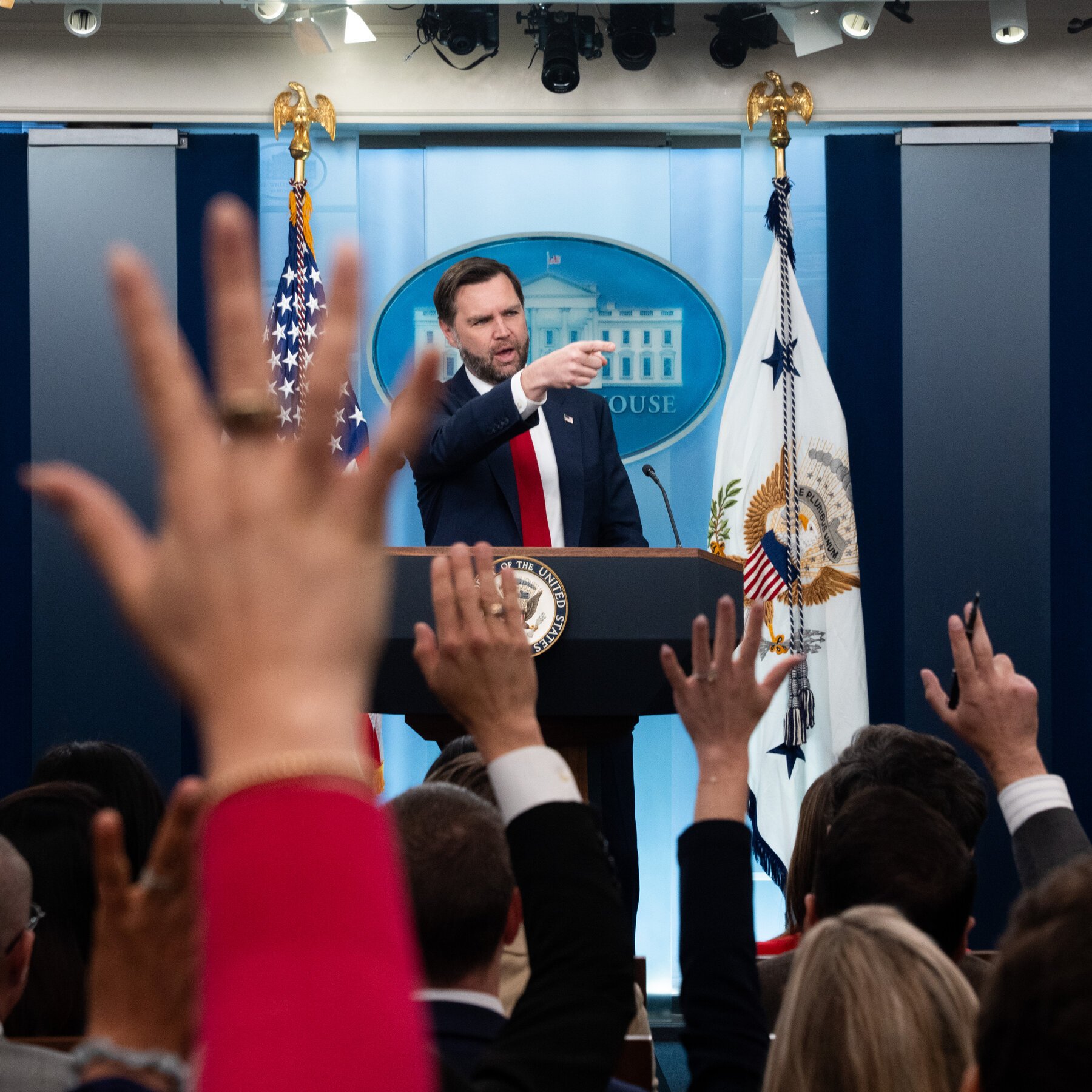
The third item, at 17:57 UTC, sits in a different register. Robert F. Kennedy Jr., in his capacity as a senior US health official, announced $700 million in new funding to address mental illness, addiction, and homelessness. The number is round, the framing is broad, and the political reading is that the administration wants a domestic-wins story on the same day its foreign-policy posture is being read in contradictory ways. A $700 million announcement is not, on its own, a story. It becomes one when it lands on a day when the administration's Iran file is being parsed in real time and the press cycle is hungry for any clean line.
What the sources actually establish
Strip the day back to what the inputs verify. As of 17 June 2026, 21:27 UTC: a BRICS-aligned Telegram channel has claimed a US-Iran MOU to end the war, with no text released. As of 15:00 UTC: Polymarket's account reports an Iranian agreement to purchase 20 Russian helicopters, sourcing described as "reportedly." As of 14:37 UTC: Unusual Whales reports an Iran-Russia military equipment MOU. As of 17:57 UTC: a Polymarket-syndicated post records a $700 million US domestic health funding announcement attributed to RFK Jr. No Western wire has yet confirmed the ceasefire; no Russian or Iranian state outlet is in the cited set. The sourcing layer is Telegram and X (Twitter) aggregation, full stop.
The structural frame, in plain language
Three patterns sit underneath the day's noise. First, the cost of producing a "scoop" has collapsed: a Telegram post, an X repost, and a Polymarket tick can move sentiment in minutes. Second, the parties most affected — foreign ministries, defence procurement offices, the US State Department — operate on a slower cycle and rarely issue real-time corrections, which lets a wrong claim set the agenda for the next 24 hours. Third, the geopolitical geometry of 2026 makes all three stories plausible at once. The US and Iran plausibly want a managed de-escalation. Iran plausibly wants to keep buying Russian kit. The US administration plausibly wants a domestic health headline on a noisy day. The fact that the day's aggregator output is consistent with that geometry does not mean the specifics are true. Plausibility is not confirmation.
The counter-read is straightforward: a sceptical reader in any capital should treat all three items as unconfirmed until at least one tier-1 wire — Reuters, AP, AFP, BBC, Bloomberg, Axios, the Financial Times, the Wall Street Journal — independently corroborates the substance with named principals. Until then, the news of 17 June 2026 is that the gap between what is being claimed and what is known has widened to the point where the gap itself is the story.
*Desk note: Monexus is publishing this as a sourcing-realism piece rather than a confirmed-events piece. The day produced three flash claims of major consequence; our reading is that none meets a normal verification threshold yet, and we will update when tier-1 wires publish.
Wire provenance
This editorial synthesis draws on the following public wire/social posts:
- https://t.me/bricsnews
Follow the event.
These dated source records provide context. They do not retrospectively verify this archive article.
Separate what the nuclear watchdog reported from what it could not determine after the June 2025 strikes.