Geneva, again: the US–Iran meeting that may or may not be on
A Friday meeting in Switzerland is the most concrete signal in weeks that Washington and Tehran are still talking. Both sides now have reasons to overstate the breakthrough — and reasons to understate it.
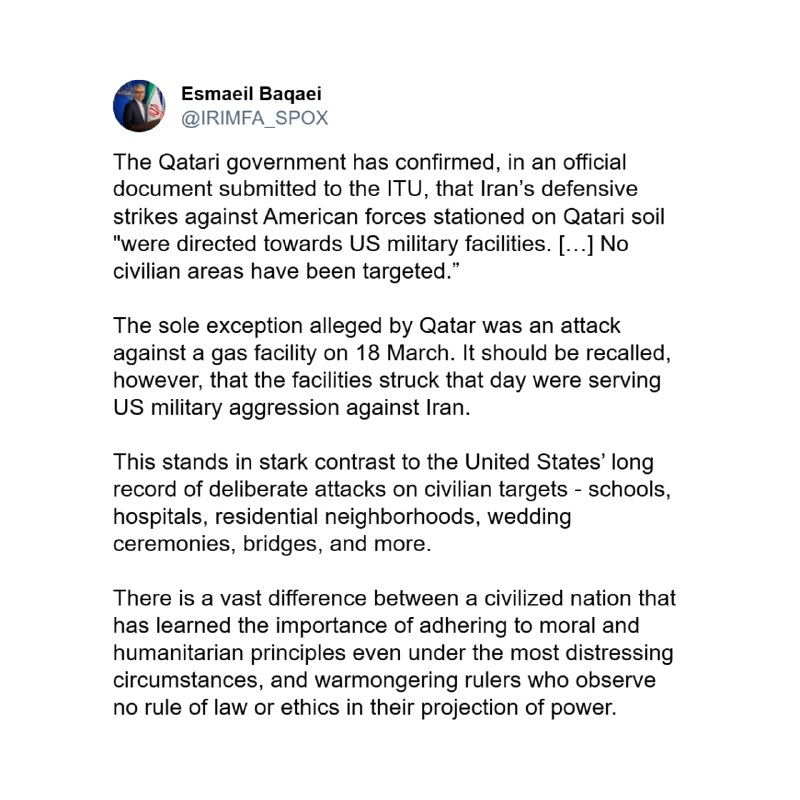
A meeting between American and Iranian delegations is scheduled for Friday, 19 June 2026, in Switzerland, according to Axios, which first reported the plans citing US and Israeli sources on 17 June 2026 (15:35 UTC). Less than twenty-five minutes later, a source close to Iran's negotiating team told the Tasnim News Agency that the trip had not been cancelled and that discussions over the "arrangements" were still in progress, a position relayed in parallel by The Cradle's Telegram channel at 15:13 UTC. The cross-current is the story. Both sides are confirming the meeting while leaving each other room to walk it back, and the price of either outcome is rising.
The substance under negotiation has not been disclosed. The American side, per Axios's reporting, has been pushing a memorandum of understanding that would lock in constraints on Tehran's nuclear and missile programmes in exchange for sanctions relief, though neither the text nor the sequencing has been made public. The Iranian side, in its own readout via Tasnim, frames the trip as preliminary and ongoing — a way to keep the channel open without committing to a signing ceremony that would bind the Islamic Republic to terms its domestic critics have not yet seen. The fact that the meeting is happening in Switzerland, the venue of every previous round of US–Iran back-channels since 2013, is itself the most that either side will currently say out loud.
A familiar venue, a less familiar backdrop
Switzerland has hosted US–Iran contacts for more than a decade, beginning with the secret 2013 talks in Oman that fed the 2015 Joint Comprehensive Plan of Action, and continuing through the 2021–22 attempts to revive that accord. Geneva, in particular, has become the default city for high-stakes proximity talks, in part because Swiss neutrality offers each side a non-aligned host and in part because the logistics — separate hotels, a single conference centre, no public press stakeout — can be controlled in ways the cities of the signatories cannot. The June 2026 venue, per the Axios report, follows that template.
The backdrop is not familiar. The 2015 deal was negotiated under a reformist Iranian government working in tandem with a US administration willing to defend a multilateral agreement against domestic opposition in both countries. The 2026 environment is the inverse on several counts. The US is operating from a position of declared maximum pressure that has been rebuilt and tightened through 2024 and 2025, with sanctions enforcement treated by the Treasury and State Department as the primary instrument short of military action. Iran, in turn, has spent the intervening years hardening the very sites and supply chains that earlier restrictions targeted, and the negotiating team travels to Switzerland knowing that the architecture of verification the JCPOA once promised no longer reflects what is on the ground.
What the two readouts actually say
Reading the wire material carefully is the only way to avoid the trap both sides have set. The Axios report, in the form carried by the Al Alam Arabic Telegram channel, frames the Friday meeting as a near-certainty: the delegations are meeting, even if the date for the memorandum's signing has been pushed back. That wording — "even if" — is the tell. It allows Axios's sources to claim credit for breaking the meeting without vouching for the deal.
The Tasnim denial-cum-confirmation, in turn, is shaped for a domestic Iranian audience. A source close to the negotiating team is quoted as saying the delegation's planned trip has not been cancelled; that talks over the arrangements are ongoing. Nothing in the Tasnim framing commits Tehran to a signing ceremony, a venue confirmation, or a defined agenda. The semantic distance between "the trip has not been cancelled" and "we are going to sign" is the distance the Iranian read is trying to preserve. Both readouts are accurate, and neither is complete.
This is not a sign of bad faith so much as a sign of structural asymmetry. Washington can afford to leak the date and the location because the cost of a no-show is borne by the other side. Tehran can afford to refuse to confirm the date and the location because the cost of an over-commitment is borne by the domestic political system, where the parliament and the Guardian Council have an effective veto on any deal that touches enrichment or missile work.
What the sources do not say
The thread material does not specify the Swiss city, the names of the lead negotiators, the scope of the agenda, or the legal form of the memorandum. It does not state whether the European Union's External Action Service will be present, whether the United Kingdom, France, or Germany are attending in any capacity, or whether a third-party backstop is in play. It does not say what the Americans have offered or what the Iranians have conceded. Each of those facts is consequential, and each is currently missing from the public record.
That gap is not an accident. The parties have learned, across roughly thirteen years of on-again, off-again contact, that premature disclosure of negotiating terms produces two predictable outcomes: a domestic political backlash against any politician seen as the source of "softness," and a financial repricing in oil and freight that punishes whichever side the market reads as desperate. The 2018–19 collapse of the JCPOA negotiations, when the Trump administration walked away on a unilateral timetable, is the standing precedent for how a deal can be killed by its own visibility.
Why both sides have reason to overstate and reason to understate
The American incentive to project progress is straightforward. A signed memorandum, even a limited one, is a deliverable that the administration can take to Congress and to the Gulf monarchies, both of which have demanded demonstrable constraints on Iran's nuclear work before accepting any sanctions architecture that opens the door to oil revenue. It also functions as a hedge against the military option that the 2025 posture documents explicitly reserved. A deal that caps enrichment, however modestly, is cheaper than a strike that produces a known-unknown breakout timeline, and it does not require a war-footing in the Gulf.
The Iranian incentive to understate runs through the same set of variables. Tehran's leverage in the meeting is the credible ability to walk away, which is preserved only as long as the deal is not yet signed. Confirmation of a signing ceremony would harden the opposition in the Majles and the security establishment, both of which have institutional reasons to prefer a sanctions-normalised status quo. It would also tighten the price that regional actors — Saudi Arabia, the UAE, Israel — can extract from Washington in side-payments for accepting a deal. The sweet spot for the Iranian side is to keep the meeting visible enough that the sanctions pressure remains a live negotiating tool, and quiet enough that nothing is yet politically irreversible.
The structural frame, in plain language
What is unfolding is a recurring pattern in the long US–Iran relationship: an asymmetric contact in which the higher-status party controls the calendar and the lower-status party controls the price. The Swiss venue formalises the asymmetry by lending it the appearance of parity. Both sides can claim they are meeting; both sides can claim they are not surrendering. The actual negotiation happens in the gap between the two claims, and the public discourse around it does not, on the evidence available today, get to see the working text.
This pattern predates the 2015 deal, the 2018 withdrawal, the 2021–22 revival attempt, and the 2024–25 sanctions rebuild. It is not a product of personalities, though personalities affect the cost of maintaining it. It is the equilibrium that emerges when two parties, one of which is a global reserve-currency issuer with full-spectrum military dominance and the other of which is a regional power with the technical capacity to enrich at industrial scale, find themselves unable to settle the underlying contest by force and unable to ignore it. Switzerland is the venue; the meeting is the punctuation; the equilibrium is the substance.
What would change the read
Three things would make this story clearer in the days after Friday. First, a public read-out by either the US State Department or the Iranian foreign ministry of the agenda, the participants, and the next agreed step. The historical record suggests this is unlikely in the first 24–48 hours and probable, in some form, within a week. Second, a movement in the price of dated Brent or in the bid for Iranian crude on the spot market, which would signal that the market has either priced in progress or discounted the meeting. Third, a leak — from either delegation, from a Gulf capital, or from a European foreign ministry — that reveals the scope of the memorandum under discussion. The leak path is the one most likely to reach Western press first, and Axios's early positioning suggests it is already being prepared.
What would change the read in the opposite direction is a Friday no-show that neither side explains, a public cancellation attributed to "scheduling," or a secondary event — a missile test, a tanker seizure, a strike on a proxy asset — that converts a technical meeting into a political one. The history of these rounds is that the most consequential moves happen in the windows between the public meetings, not at the meetings themselves.
Stakes
If a memorandum is signed, the most concrete beneficiaries are Iran's oil customers in Asia, who would face a reduced sanctions-overhang discount on their purchases; the Gulf monarchies, who would face a managed ceiling on Iran's nuclear capacity rather than a binary choice between a deal and a war; and the European companies still carrying residual JCPOA-era exposure. The most concrete losers are the Iranian opposition factions that have built political capital on a maximalist sanctions posture, and the Israeli political coalition whose position depends on a frame in which containment of Iran requires continuous escalation. If no memorandum is signed, the beneficiaries and losers invert in the obvious way, and the meeting itself becomes a marker of how high the cost of a no-deal equilibrium has become.
The time horizon is short. Friday, 19 June 2026, is the first legible date. A second, third, or fourth meeting in the same configuration would be the next legible date. Anything beyond that is speculation, and the public record as of 17 June 2026 does not support more.
What remains uncertain
The sources in the public thread do not specify the Swiss city, the name of the lead American negotiator, the name of the lead Iranian negotiator, the agenda, or the legal form of the document under discussion. They do not specify which European governments, if any, are present in any capacity. They do not specify whether the memorandum under discussion is binding, non-binding, or aspirational. They do not specify the sequencing of sanctions relief against any nuclear-side concession. The Iranian readout, by design, leaves every one of those points open. The American readout, by habit, treats them as known to its sources and not yet shareable with the reader. The honest answer to "what is on the table" is that the public does not currently know, and the public is not likely to know until a leak, a signature, or a cancellation makes ignorance costly for one side or the other.
Desk note: The wire material as of 17 June 2026 supports the meeting, the venue category, and the readouts from each side; it does not support any specific claim about the substance of the agreement under discussion. Where this piece names "the memorandum of understanding" it is following the language used in the Axios-sourced thread; the document's contents remain undisclosed.
Wire provenance
This editorial synthesis draws on the following public wire/social posts:
- https://t.me/alalamarabic
- https://t.me/thecradlemedia
- https://t.me/TasnimnewsEn
- https://en.wikipedia.org/wiki/Joint_Comprehensive_Plan_of_Action
- https://en.wikipedia.org/wiki/Switzerland_in_World_War_II
- https://en.wikipedia.org/wiki/Iran%E2%80%93United_States_relations
- https://en.wikipedia.org/wiki/Geneva
Follow the event.
These dated source records provide context. They do not retrospectively verify this archive article.
Separate what the nuclear watchdog reported from what it could not determine after the June 2025 strikes.
- https://t.me/alalamarabic
- https://t.me/thecradlemedia
- https://t.me/TasnimnewsEn
- https://en.wikipedia.org/wiki/Joint_Comprehensive_Plan_of_Action
- https://en.wikipedia.org/wiki/Switzerland_in_World_War_II
- https://en.wikipedia.org/wiki/Iran%E2%80%93United_States_relations
- https://en.wikipedia.org/wiki/Geneva