Warsh's Fed debut meets a market that has stopped expecting a dovish rescue
Kevin Warsh's first rate decision arrives with the committee tilting more hawkish than the market had positioned for, and crypto is repricing the consequences in real time.
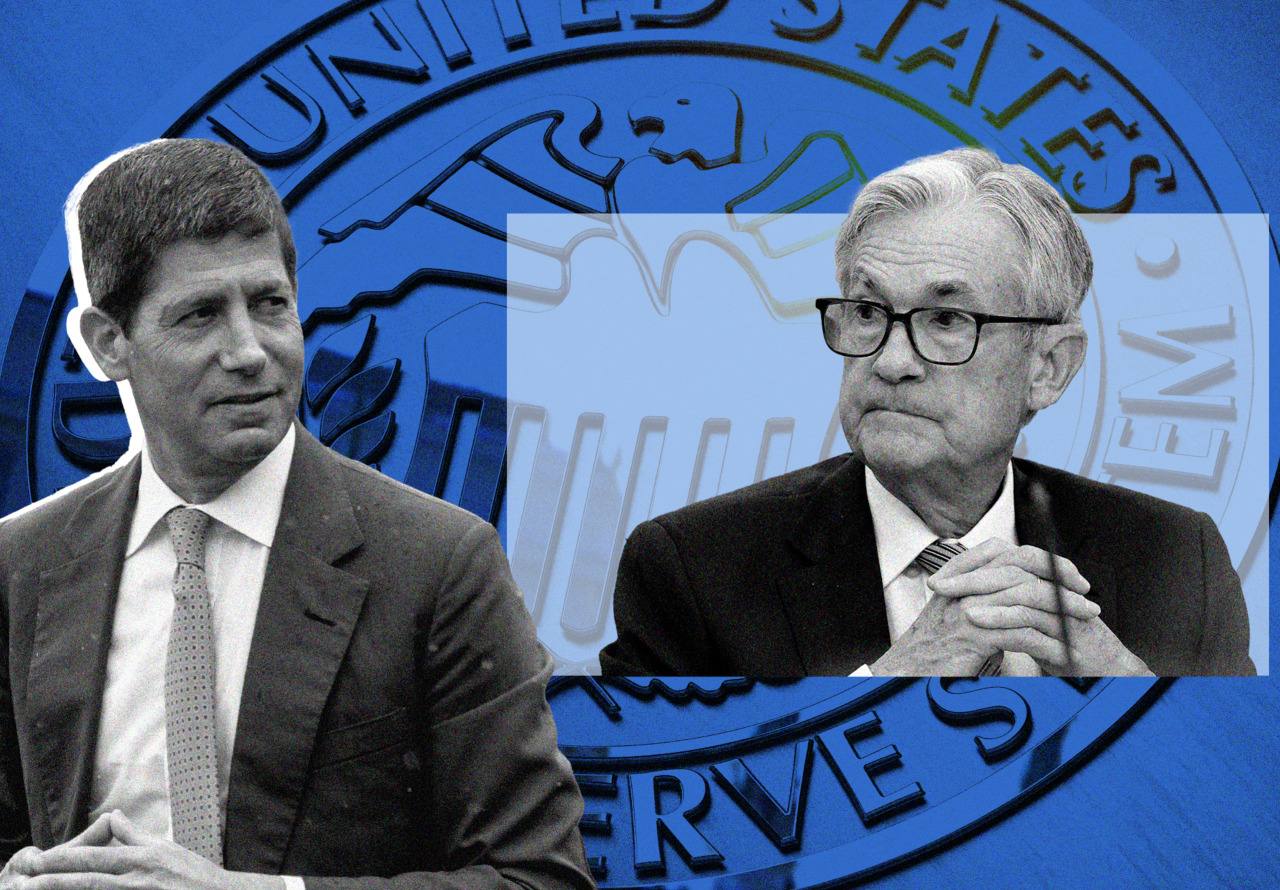
At 15:23 UTC on 17 June 2026, with the Federal Open Market Committee hours from announcing its first rate decision under Chair Kevin Warsh, crypto markets were drifting, not crashing — but drifting with a posture that said more than the tape suggested. Bitcoin had slipped. The altcoin tape was uneven. The Uni token was the day's conspicuous outlier, rallying on its own catalyst while the rest of the market oriented itself around a single question: how hawkish is the new chair willing to be on day one? CryptoBriefing's market wire, refreshed at 12:17 UTC, framed the session in unusually direct terms — "Bitcoin slips as Kevin Warsh's Fed debut confronts unexpectedly hawkish committee." That phrasing, and the timing of the drift, tells readers where the marginal seller sits.
What looked like a routine leadership handover had, by the morning of 17 June, hardened into something more consequential. Warsh inherited a committee that had spent the preceding months tilting away from the easy-money posture traders had learned to underwrite. The cut debate, according to CryptoBriefing's 11:03 UTC brief, was no longer a debate about whether to cut in the near term — it was a debate about whether to cut at all, and on what timeline. That distinction matters for crypto. A cut debate is a liquidity tailwind traders can price. A cut-pacing debate, in which the committee's median dot drifts hawkish while the chair signals patience, is something else: it punishes the assumption that the Fed will ride to the rescue of any specific asset class when risk premia widen.
A committee that stopped waiting for permission
The under-appreciated story of Warsh's debut is not the chair. It is the committee. Coverage of any new Fed chair's first meeting tends to over-rotate toward the personality in the room — the tone of the press conference, the choice of adjectives, the body language in the Q&A. That framing flatters the institution's theatrics and obscures the more durable fact: the seventeen people around the table had already moved before Warsh sat down. CryptoBriefing's wire made the point bluntly at 12:17 UTC: Warsh was not steering a dovish consensus into a more hawkish lane. He was arriving at a hawkish lane that had already been paved.
This matters because the standard "first meeting" narrative gives the new chair outsized credit or blame for the decision on the day. The cleaner read is that the median voter — the official whose dot sits at the centre of the distribution — had been migrating toward a higher-for-longer terminal rate across the preceding cycle, and that Warsh's job on 17 June was to ratify a consensus already in motion. Bitcoin's slippage, in that reading, is not a verdict on Warsh. It is a verdict on the committee the market had underestimated.
Why the altcoin tape tells a different story
Uni token's surge, flagged in CoinDesk's market roundup published at 10:36 UTC, was the day's counter-signal. In a session when broad crypto was bracing for a hawkish surprise, a governance-token rally on idiosyncratic news is precisely the kind of move that exposes how thin the liquidity backstop actually is. The market was not panic-selling. It was re-pricing the probability that the Fed will not cut on the cadence traders had penciled in for the back half of 2026. Uni moved on its own catalyst, and the rest of the market did not follow it higher — which is, in itself, a read on positioning. If traders believed a dovish rescue was imminent, idiosyncratic rallies would have lift. They did not.
There is a second, more uncomfortable interpretation available. The altcoin rally may have been the kind of move that happens when the marginal buyer has stopped looking at the macro altogether — a small pocket of the market trading a token-specific thesis while the macro desk waits on Powell's successor to set the policy tone. Both readings can be true at once. The honest answer is that the 17 June tape is too small a sample to adjudicate between them.
The structural frame — and what the wires are not yet saying
Dollar-hegemony commentary tends to arrive late, after the move, in the form of post-hoc explanation. The more useful frame for 17 June is closer to home: the Federal Reserve, under a new chair whose reputation was forged in tighter-money circles, is signalling that the era of pre-emptive cuts to support asset prices is over for the cycle. That is not a hawkish revolution. It is a normalisation — the committee's median voter returning to a default that treats the policy rate as a tool for price stability first and a tool for risk-asset support second, if at all.
For Global South balance sheets carrying dollar debt, the implication is unromantic: a Fed that cuts later rather than sooner extends the duration of dollar tightness, and dollar tightness remains the single most reliable transmission belt from Washington to every emerging-market central bank with a dollar-denominated liability stack. The wires covering the 17 June meeting were framed almost entirely in the language of US equity multiples, US housing, and the US election cycle. That is parochial. The same decision will land, within seventy-two hours, in the front-end pricing of every EM currency that has been running a carry trade funded in dollars.
What remains uncertain
Three things the 17 June wires do not yet let readers adjudicate. First, the dot plot: until the FOMC releases its Summary of Economic Projections alongside the rate decision, the market cannot distinguish between a one-vote hawkish tilt and a committee-wide hawkish shift, and those are very different assets to be holding into the back end of 2026. Second, Warsh's own press-conference framing: a chair who signals openness to cutting in September is a different chair from one who treats the next move as a hike, and that distinction will only be visible in the Q&A transcript. Third, the credibility question that any new Fed chair has to answer in the first ninety days — whether the median voter believes the chair, and whether financial conditions will tighten or loosen on the answer.
The 17 June tape, in short, was the market pricing a probability shift, not absorbing a verdict. The verdict arrives at the statement. The market's read on the verdict arrives at the press conference. Anything written between those two moments is positioning, not analysis.
Desk note: Monexus framed the 17 June FOMC as a committee story first and a chair story second — the opposite emphasis from most US-market wires, which led with Warsh's debut. We treat that inversion as the day's most under-priced analytical point.
Wire provenance
This editorial synthesis draws on the following public wire/social posts:
- https://t.me/CryptoBriefing
- https://t.me/CryptoBriefing
- https://t.me/CryptoBriefing