Kevin Warsh's Fed Debut Tilts Hawkish as Dot-Plot Floats 2026 Hike
In his first meeting as chair, Kevin Warsh held the federal funds rate steady while the committee's median projection drifted to 3.8%, hinting that the next move could be up, not down.
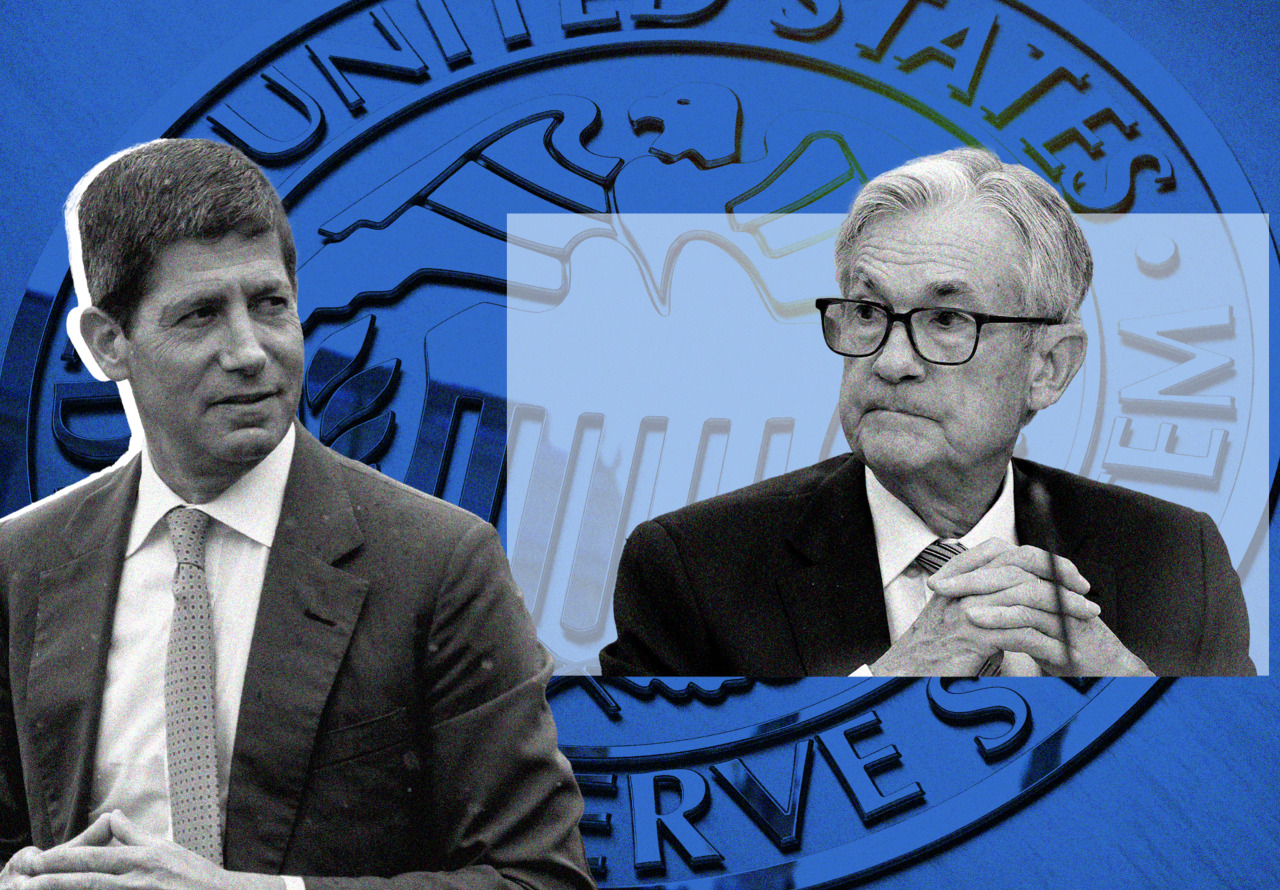
At 18:04 UTC on 17 June 2026, the Federal Open Market Committee kept the federal funds target range unchanged and confirmed what the bond market had begun pricing in hours earlier: Kevin Warsh's debut as chair is not the dovish reset traders had talked themselves into during the spring. Within minutes of the statement, the Federal Reserve's quarterly Summary of Economic Projections did the rest of the talking, with the median dot landing at 3.8%, a configuration that, on a charitable reading, leaves room for one more cut in 2026 — and on a less charitable one, opens the door to a hike by year-end.
The result is an institution that has spoken in two registers in a single afternoon, and markets are now trying to work out which voice to listen to. Warsh inherits a committee that, by its own projections, believes it has not finished tightening — or at least not finished preparing to tighten again. The political timing, the composition of the board, and the inflation backdrop all matter here. So does the fact that the new chair's first press conference is being parsed for a single phrase that may not even appear.
A steady hand, an unsteady signal
Warsh's opening move was the safe one. No change to the policy rate, no change to the language on inflation, no change to the characterisation of the labour market. By the standards of Fed continuity, it was a flawless debut. The statement, released at 18:00 UTC and relayed through wire and Telegram channels within minutes, kept the policy statement language nearly identical to the May meeting, and offered no forward guidance beyond the usual: that the committee remains data-dependent and is prepared to adjust in either direction.
The signal worth watching was in the dots, not the statement. According to the median projection circulated in the SEP at 18:00 UTC, the committee now sees the appropriate federal funds rate at 3.8% by the end of 2026, up from the prior median of 3.6%. That two-basis-point-equivalent shift in the median, applied across the distribution, is enough to take a 2026 cut off the table in the modal projection. The accompanying economic projections, also released with the SEP, nudged core PCE inflation forecasts higher and left the unemployment-rate projection essentially unchanged, the configuration that central bankers reach for when they want to communicate patience without committing to it.
In his first press conference as chair, which began shortly after 18:30 UTC, Warsh's task was to walk that line in real time. Early reporting from the briefing room, circulated through Telegram and crypto-news channels as it happened, suggested the chair emphasised the resilience of consumer demand and the persistence of services inflation, while avoiding any explicit endorsement of either a near-term cut or a near-term hike. The phrase traders latched onto, per the same thread, was Warsh's description of policy as "well calibrated" — language that historically signals an inclination to hold, not to move.
What the market heard
The reaction was not subtle. Bitcoin slipped in the hours leading up to the decision, with the price action visible across Telegram channels at 12:17 UTC, 15:23 UTC, and into the statement release. UNI, the token of the Uniswap protocol, was a conspicuous outlier — surging through the same window, in a move that the trade press attributed to protocol-specific catalysts rather than the macro print. Equity-index futures, by the time the dot plot hit the screens, had drifted into the red; the two-year Treasury yield, which had been compressing into the meeting, firmed by a handful of basis points as the SEP made the rounds.
The honest reading of the price action is that traders came in long the dovish trade and were forced to cover. The framing that dominated Telegram and crypto-news threads in the run-up — that Warsh, as a known inflation hawk with a long paper trail on rate-hike advocacy, would steer the committee in a more restrictive direction — turned out to be directionally right and tactically uncomfortable. The decision itself was a hold; the projection was the news.
The counter-narrative, and it is one worth taking seriously, is that the dot plot is a soft signal. It is a committee document, not a commitment, and the historical record on Fed forecasts is not flattering. Warsh himself, in his pre-Fed commentary and academic writing, has argued that the dot plot is over-weighted by markets and creates more noise than signal. If the new chair is serious about his own prior, he will spend the next several months actively talking down the projection — and a 2026 hike is not, on that reading, the base case but the tail.
Why this chair, why this moment
The personnel choice is the political choice. Warsh's path to the chair — through the Hoover Institution, the Bank for International Settlements, and a long advisory role in Republican monetary-policy circles — was, in part, a bet that the next phase of the inflation fight would require a chair with credibility on the hawkish side of the FOMC's distribution. The committee that greeted him on 17 June includes members whose median dot has been drifting higher for two consecutive SEPs, and whose tolerance for an unemployment-rate uptick has visibly narrowed since the spring. The institutional centre of gravity has moved; the chair was selected to match it.
The macro context reinforces the read. Core services inflation, by the SEP's own admission in its accompanying projections, has been slower to recede than the 2025 projections expected. Wage growth, while off its 2022 peak, is running ahead of the level consistent with a clean return to 2%. The labour market, while no longer overheated, is not visibly breaking. In that configuration, the path of least resistance for a new chair with hawkish priors is to hold, project patience, and prepare the committee for the possibility that the next move is up. The dot plot, on this reading, is not a forecast — it is a permission slip.
There is a structural layer worth naming. The dollar's reserve-currency role, and the policy space it confers on the Federal Reserve, depends on the Fed's willingness to act against domestic political pressure when inflation warrants. A 2026 hike, were it to materialise, would be a signal that the institution still believes it has that room — and that the new chair intends to use it. The corollary is that the bonds and risk assets that priced in 2025's disinflation narrative as a structural fact rather than a cyclical episode are, on the SEP released at 18:00 UTC, being told to reconsider.
Stakes and what to watch
The cleanest way to read 17 June 2026 is as a regime marker, not a policy event. The federal funds rate did not move. The composition of the FOMC did not change. What changed was the committee's stated tolerance for the next move. In a single afternoon, the modal path shifted from "one more cut, then hold" to "hold, then assess," with the option value of a hike now visibly on the table.
For markets, the practical consequence is that the front end of the curve repriced for less easing through 2026 and into 2027. Mortgage and corporate rates will follow. Risk assets that benefited from a falling discount rate will, at the margin, give some of it back. Crypto, which has spent the spring trading as a high-beta proxy for rate expectations, will continue to do so — and the surprise on 17 June was that the new chair did not give traders the dovish gift they were looking for.
For the institution, the stakes are more durable. Warsh used his first meeting to communicate patience, restraint, and a willingness to leave policy restrictive for as long as the data demands. The committee, in turn, gave him a dot plot that matched that posture. The next test is whether the chair is willing to deliver the hike the median now implies, should the data over the summer fail to cooperate. On the evidence of 17 June 2026, he has spent his first day as chair preparing the ground for exactly that.
The honest caveat is that the sources here are the dot plot, the SEP, the statement, and the market reaction in the hours surrounding them. Warsh's press conference was still unfolding at the time of writing, and the language of the chair's answers will, as ever, do as much work as the projections. The thread material also does not specify the size of the dissent, if any, on the rate decision; a dissent in either direction would be the next day's news. The market's read on 17 June was a hawkish lean. The Fed's read on itself, as expressed in its own projections, is the same — with the option of being wrong, and being forced to walk it back, now sitting visibly in front of them.
How Monexus framed this: The wire led on the hold and the chair. We led on the dot plot, because in a meeting where the rate decision was a foregone conclusion, the projection is the event.
Wire provenance
This editorial synthesis draws on the following public wire/social posts:
- https://t.me/CryptoBriefing
- https://t.me/CryptoBriefing
- https://t.me/CryptoBriefing
- https://t.me/CryptoBriefing
- https://t.me/CryptoBriefing