Warsh's first stand: a Fed chair who refuses to promise anything
On his first day as Fed chair, Kevin Warsh diagnosed five years of inflation misses and then declined to tell markets how he plans to fix them. That is a posture, not a person.
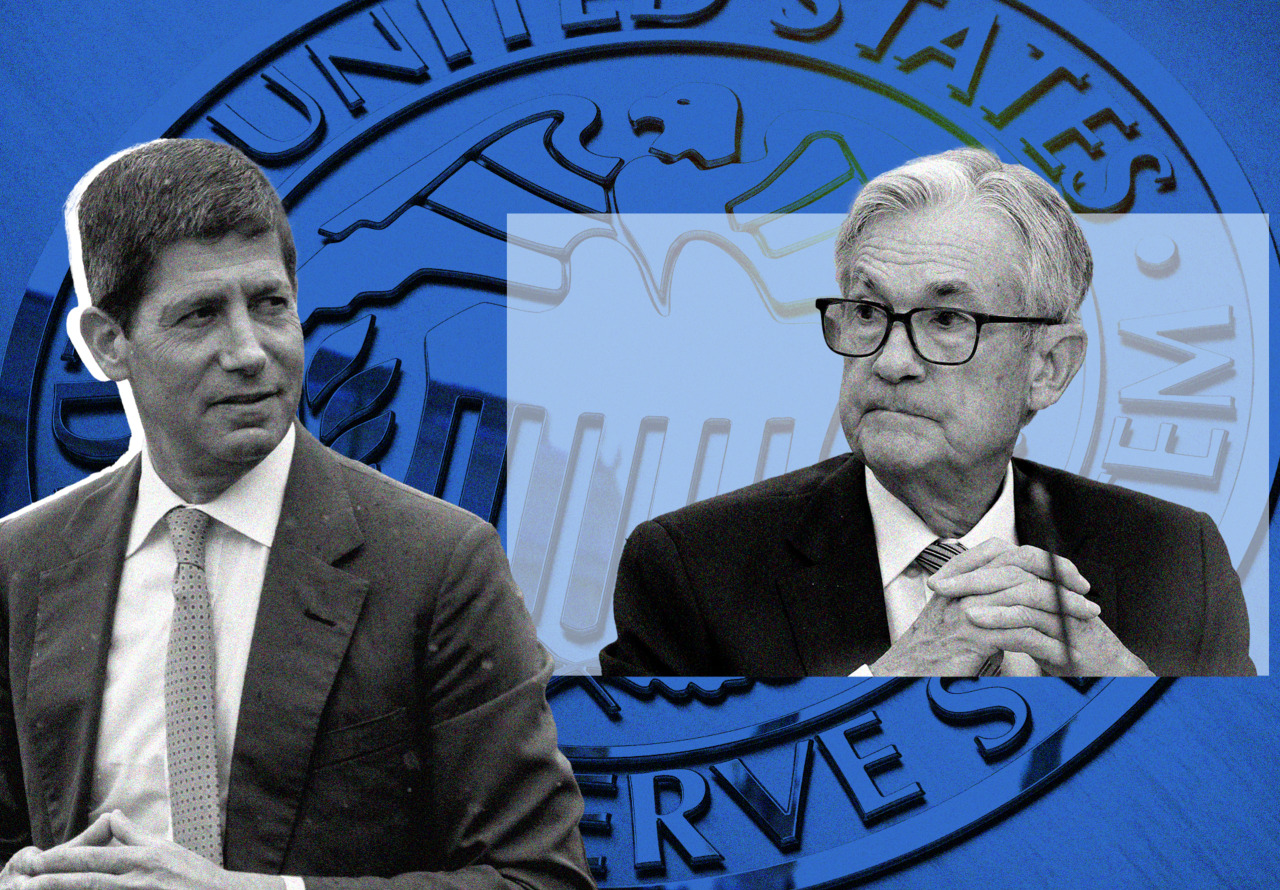
The new chair of the Federal Reserve walked to the podium on 17 June 2026 and did something almost no modern Fed chair has done on day one: he told the room what was wrong, and then refused to tell the room what he intended to do about it.
Kevin Warsh, confirmed earlier this year as the central bank's newest leader, used his first post-decision press briefing to acknowledge that inflation is "well ahead of the 2% goal" and that the institution he now runs has missed that target for five years running, per his opening remarks reported on the broadcast carried by Reuters on X. He also described the current policy stance as "restrictive vis-à-vis the housing market, but not financial markets," and used the briefing to formally announce that the Fed had "dropped the forward guidance." Each of those statements is a separate bomb, and the new chair lit all three fuses in the same hour.
A diagnosis without a prescription
Start with the diagnosis. Five years of misses is not a typo or a glancing reference; it is a sustained failure of the institution's central self-defined task. Warsh chose to call that failure out by name in his opening minutes. The implicit message is that the prior framework — the assumptions about inflation, the reaction function, the way the committee communicated — is now under indictment by its own incoming leader. That is an unusually aggressive opening posture for a Fed chair, who historically prefers the safety of inherited vocabulary.
It also tells you what kind of chair Warsh intends to be. He is not running on continuity. He is running on a clean acknowledgement that the previous regime, under which he served as governor in earlier years, did not deliver. Whether that candour buys him credibility or simply hands markets an excuse to demand rate cuts is the open question, and it is the question he is not yet willing to answer.
The forward-guidance retreat
The second bomb is procedural. "We have dropped the forward guidance" is the kind of sentence that, in the Bloomberg-and-wires world, gets parsed for what it does not say. Forward guidance is the Fed's primary tool of the last fifteen years: a promise about the path of rates, designed to shape long-term yields and the credit conditions downstream. Dropping it means the chair is explicitly declining to make that promise.
Warsh's framing, carried on Unusual Whales' live feed, was that policy is restrictive in one corner of the economy (housing) and not restrictive in another (financial markets), so a single rate path is no longer the right way to describe the stance. That is a defensible analytical point. It is also, conveniently, a way to retain optionality — to move on housing without telegraphing the move, and to move on financial conditions without having to defend the move as a single coherent decision.
Markets, which have spent more than a decade pricing Fed promises, are now being asked to price Fed options. That is a different game, and a harder one.
The populism problem hiding inside the FOMC
Here is the structural read. The Fed has spent the post-2021 period oscillating between two incoherent political positions. In the first, it is a technocratic body that sets policy to maximise employment and stabilise prices, with the political costs borne by whoever sits in the White House when the bill comes due. In the second, it is an engine of asset prices whose primary constituency is the holder of financial assets, and the political cost is redistributed upward through wealth effects and downward through housing costs. Warsh's split diagnosis — restrictive on housing, not restrictive on financial markets — is, fairly or not, an admission that both of these positions are true at once, and that the institution has been managing the contradiction by talking about neither.
The political cost of that contradiction is now visible in both parties. Populist voices on the right want the Fed to ease to support housing and consumer credit; populist voices on the left want the Fed to ease to support wages. The technocratic centre, which used to be able to triangulate the two, has lost the high ground because the inflation track record undercuts it. Warsh's honest first-day line about five years of misses is also a quiet admission that this triangulation has run out of runway.
What Warsh actually has
The Fed chair still has the most powerful single microphone in the American economy. He can move the front end of the curve with a sentence. He can change the price of a thirty-year mortgage for millions of households by the inflection of a verb. What he does not have, and what no Fed chair has had since the 1970s, is the ability to set inflation expectations by fiat. Those expectations are formed by what households and businesses observe in their own bills, and right now the bills are not telling the 2% story. Warsh acknowledged as much. He then declined to commit to a fix.
That is the only defensible move available to a new chair who has not yet earned the room's trust on his own framework. To promise a path on day one would have been to import the previous regime's vocabulary under a new name. To refuse the promise forces the conversation onto the diagnosis, which is the part Warsh does want to have. The next test is whether the diagnosis produces a path, or whether the chair decides the path itself is the enemy.
The serious part
Five years of misses is not a problem any chair can fix with a press conference. It is the result of supply shocks, fiscal policy, energy markets, and a labour market that did not behave the way the old models said it would. Warsh knows this. The markets know this. The interesting question is not whether the new chair can deliver 2% — no one can, in the relevant time horizon — but whether he can build a policy framework that survives the public's loss of faith in the old one, and does so without crashing the housing market or the bond market in the transition. On 17 June 2026, at 18:45 UTC, he told the room he understood the first half of that problem. He said nothing about the second.
The sources do not yet record what the FOMC's vote looked like, how regional presidents dissented, or whether the dot plot was published alongside the briefing. Those details will matter. For now, the public record is a chair who is more willing than his predecessors to call the institution's record what it is, and less willing than any of them to tell anyone what comes next. That posture is either the beginning of a new, more honest era of Fed communication, or the opening move of a chair who is buying time. Either way, the most powerful financial microphone in the world is, for the moment, deliberately silent on its own future.
The Monexus desk framed this as a posture story, not a personality story. The wire frame on the day leaned on rates-held; we leaned on the silence after the held.
Wire provenance
This editorial synthesis draws on the following public wire/social posts:
- https://x.com/i/broadcasts/1nKOLLjmrEWGR
- https://t.me/euronews