Warsh Takes the Lectern: A Quiet First Test for the Fed's New Chairman
Kevin Warsh steps in front of reporters on 17 June for his first Q&A as Fed chair, with rates on hold and markets already pricing a 2026 hike. The new chair inherits a divided committee and a dollar whose primacy is being tested in slow motion.
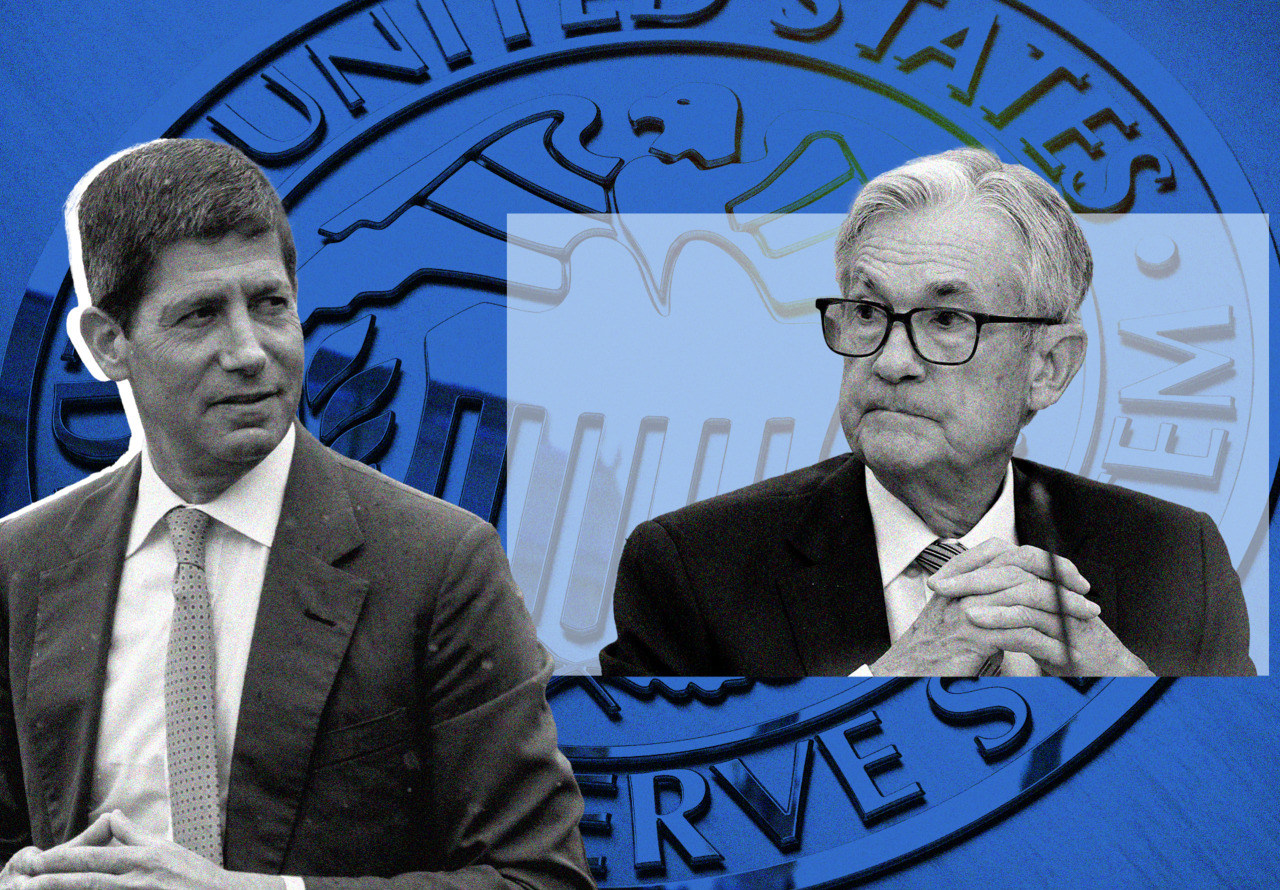
Kevin Warsh walked into the Federal Reserve's press room on 17 June 2026 at roughly 14:00 UTC as the institution's newest chair, and almost immediately became the story. The Federal Open Market Committee was widely expected to leave the target range for the federal funds rate unchanged, but the headline was the man at the podium: Warsh, answering reporters' questions for the first time since taking over the chairmanship, was being asked to do something his predecessor had stopped bothering with — explain himself in plain English, on the record, in real time. The financial press, conditioned by years of carefully neutral post-meeting statements, treated the moment like a debut.
The wider signal is not subtle. With investors pricing in at least one 25-basis-point rate hike before the end of 2026, and with Citadel Securities telling clients as recently as 16 June that the odds of a September move are climbing, Warsh inherits a Fed that is being pulled in two directions at once. Inflation has not been beaten into submission. The labour market remains tight enough to give hawks cover. And the chair's own lengthy public record — dovish enough in 2020, hawkish enough in 2023, and recently sympathetic to the idea that the Fed's balance sheet is doing damage at the long end of the curve — sits awkwardly with a committee that has spent two years trying to communicate steadiness.
A hold that isn't really a hold
The expected decision itself is the smallest part of the day's news. A hold at this meeting was consensus going in: rates traders had fully priced it, and the wire reporting in the 48 hours before the announcement read more like a weather forecast than an analytical question. The interesting move is what the statement does not say. Warsh's first written communication as chair will be parsed for two things in particular — any softening of the language about "additional firming" that became standard under his predecessor, and any new acknowledgement of the long end of the Treasury curve, where the Fed has been a passive observer while thirty-year yields have done work that no central bank in a normal cycle would tolerate.
What makes this consequential is the calendar. Markets are not waiting for the June dot plot; they are waiting for September. Citadel Securities flagged rising odds of a hike at that meeting in a note circulated on 16 June, and that note is now part of the public conversation around how to read Warsh's first press conference. If the chair signals anything dovish on Wednesday, the curve will price it. If he signals anything hawkish, the dollar strengthens and the Treasury's refinancing math gets uglier, just as the Treasury Department is trying to push more supply into the long end to reduce roll-over risk in 2027.
The structural point is that "hold" is doing a lot of work in the current vocabulary. The Fed is not tightening. It is not easing. It is letting financial conditions do the easing for it, while a weaker dollar — measured against a trade-weighted basket — has imported a quiet round of disinflation that the hawks on the committee are quietly pretending did not happen.
The hawk case, restated
The argument for moving sooner rather than later is straightforward and politically convenient for Warsh. Core services inflation, excluding shelter, has not returned to a level consistent with the Fed's two-percent target on a sustained basis. Wage growth, while moderating, is still running above what most staff research suggests is consistent with two-percent inflation in the long run. The unemployment rate sits near four percent, which by historical standards is a tight labour market, and the participation rate for prime-age workers has not recovered to its 2023 level.
There is also a dollar argument. A weaker greenback is good for US exporters and good for emerging-market debt service in nominal terms; it is bad for the Fed's inflation problem, because it shows up at the petrol pump and in import-sensitive goods within six to nine months. Hawks on the committee — and there are several who voted for the last hike — have been making exactly this case in speeches over the past two months. Warsh, who himself voted for tighter policy in earlier incarnations as a governor, will not have to stretch to sound sympathetic.
The dovish counter-case is equally coherent. The long end of the curve is already doing substantial work. Thirty-year mortgage rates near seven percent have throttled the housing market to a level not seen since the mid-1990s, with starts running well below the pace of household formation. Commercial real estate, especially in the office segment, is in a slow grind that has not yet fully shown up in bank earnings. And the administration's fiscal trajectory — large deficits funded increasingly by short-term debt — is the kind of backdrop against which a hawkish move risks a genuine funding scare.
The Warsh variable
This is the part the wires are still working out. Warsh is not a conventional monetary economist. His published work has emphasised balance-sheet normalisation and the cost of the Fed's footprint in long-duration assets more than the standard Taylor-rule debate. He has also been sympathetic, on the record, to the view that the Fed's communication regime over the past five years has over-promised and under-delivered — that forward guidance has become a credibility liability rather than an asset.
If he leans into that view on Wednesday, expect two things. First, the statement will be shorter and less forward-looking than the boilerplate his predecessor favoured. Second, the press conference will lean on the chair's prerogative to express personal views within the bounds of committee consensus — a power that is technical but real, and that Warsh seems inclined to use. Market participants will read that as hawkish, because the median FOMC participant has spent the last two years trying to talk the curve down, and a chair who stops doing that is effectively tightening in expectation.
If instead he performs continuity — reads the statement, answers the questions, declines to break new ground — the September hike gets priced more cleanly, and the dollar finds a bid into the autumn. Both outcomes are coherent. What is not coherent, and what the market is watching for, is muddle.
Structural frame: a dollar under slow stress
The deeper story is not about twenty-five basis points in September. It is about the institutional position of the Federal Reserve in a world where the dollar's primacy is being tested, not by an aggressive challenger but by a slow accretion of workarounds — bilateral local-currency trade invoicing, expanded swap lines among non-aligned central banks, BRICS+ clearing experiments, and a steady accumulation of gold reserves by emerging-market sovereigns that is no longer explained by hedging alone.
Warsh's appointment arrives at a moment when the Fed's domestic decisions and its international role are unusually entangled. A more hawkish Fed strengthens the dollar in the short run, which is the cheapest form of sanctions enforcement available to the US government. It also tightens financial conditions in the rest of the world at a moment when several large emerging-market borrowers are rolling debt denominated in greenbacks. A more dovish Fed, by contrast, weakens the dollar and lets the Treasury's debt-service arithmetic improve, but at the cost of letting inflation expectations drift in the opposite direction.
The chair does not set this trade-off — the global system does — but he does manage the line. The first press conference is the moment where the market begins to learn whether Warsh intends to manage that line as a quiet insider, in the manner of the 2014–2018 era, or as a more visible advocate for his own priors. The market's reaction to his first Q&A will tell us which.
Stakes, and what remains uncertain
If Warsh signals hawkishness and a September hike is delivered, the dollar strengthens into year-end, emerging-market equities take another leg lower, and the Treasury's refinancing programme gets through autumn at higher coupons than the Office of Management and Budget assumed in its winter budget. If he signals continuity and the hike comes later or not at all, the curve steepens, the dollar weakens modestly, and the inflation problem persists into 2027 — at which point the political pressure on the Fed to act will be considerably louder.
The uncertainty that the wires do not yet resolve is the composition of the FOMC itself. The wire reporting on 17 June did not detail how regional bank presidents will rotate into the voting contingent later in the year, and the appointments pipeline at the White House for the remaining empty seats will colour Warsh's room to manoeuvre. A chair who is personally hawkish but presiding over a committee whose median voter is dovish — or vice versa — is a different actor than the same chair with a clearer coalition. Until that becomes legible, every press conference will be read as a coalition signal, and markets will react accordingly.
There is also the question of how the Fed's balance-sheet runoff continues through the second half of 2026. Warsh's public commentary has been notably more critical of the current pace than the median FOMC participant's. A shift in the runoff schedule, even a modest one, would have larger market effects than a single rate move. Whether he raises that on Wednesday, or waits for the September meeting and the Jackson Hole symposium in between, is one of the few genuinely open questions of the day.
For now, the chair has the lectern. The committee has a hold. The market has a September meeting pencilled in. The dollar has work to do in the background that none of them directly controls.
Desk note: Wire reporting on the June FOMC meeting converged on the consensus hold and on Warsh's debut, with limited disagreement. Monexus frames the meeting less as a one-day event than as the opening move in a longer sequence — September, Jackson Hole, year-end — whose stakes are set by the dollar's slow loss of uncontested primacy rather than by any single twenty-five-basis-point decision.
Wire provenance
This editorial synthesis draws on the following public wire/social posts:
- https://x.com/unusual_whales/status/example
- https://t.me/CryptoBriefing/stream
- https://www.federalreserve.gov/monetarypolicy/fomccalendars.htm
- https://www.federalreserve.gov/monetarypolicy/files/fomcprojtabl20260617.pdf
- https://www.treasury.gov/resource-center/data-chart-center/interest-rates/Pages/TextView.aspx?data=daily_treasury_yield_curve
- https://en.wikipedia.org/wiki/Kevin_Warsh
- https://en.wikipedia.org/wiki/Federal_Open_Market_Committee
- https://x.com/unusual_whales/status/example
- https://t.me/CryptoBriefing/stream
- https://www.federalreserve.gov/monetarypolicy/fomccalendars.htm
- https://www.federalreserve.gov/monetarypolicy/files/fomcprojtabl20260617.pdf
- https://www.treasury.gov/resource-center/data-chart-center/interest-rates/Pages/TextView.aspx?data=daily_treasury_yield_curve
- https://en.wikipedia.org/wiki/Kevin_Warsh
- https://en.wikipedia.org/wiki/Federal_Open_Market_Committee