Warsh's First Meeting, the Fed's Steady Hand, and the Inflation That Refuses to Recede
The Federal Reserve held rates at 3.5%–3.75% on 17 June 2026, its fourth pause of the year, in Chair Kevin Warsh's first meeting at the helm — a steady verdict delivered into an unusually unsettled political backdrop.
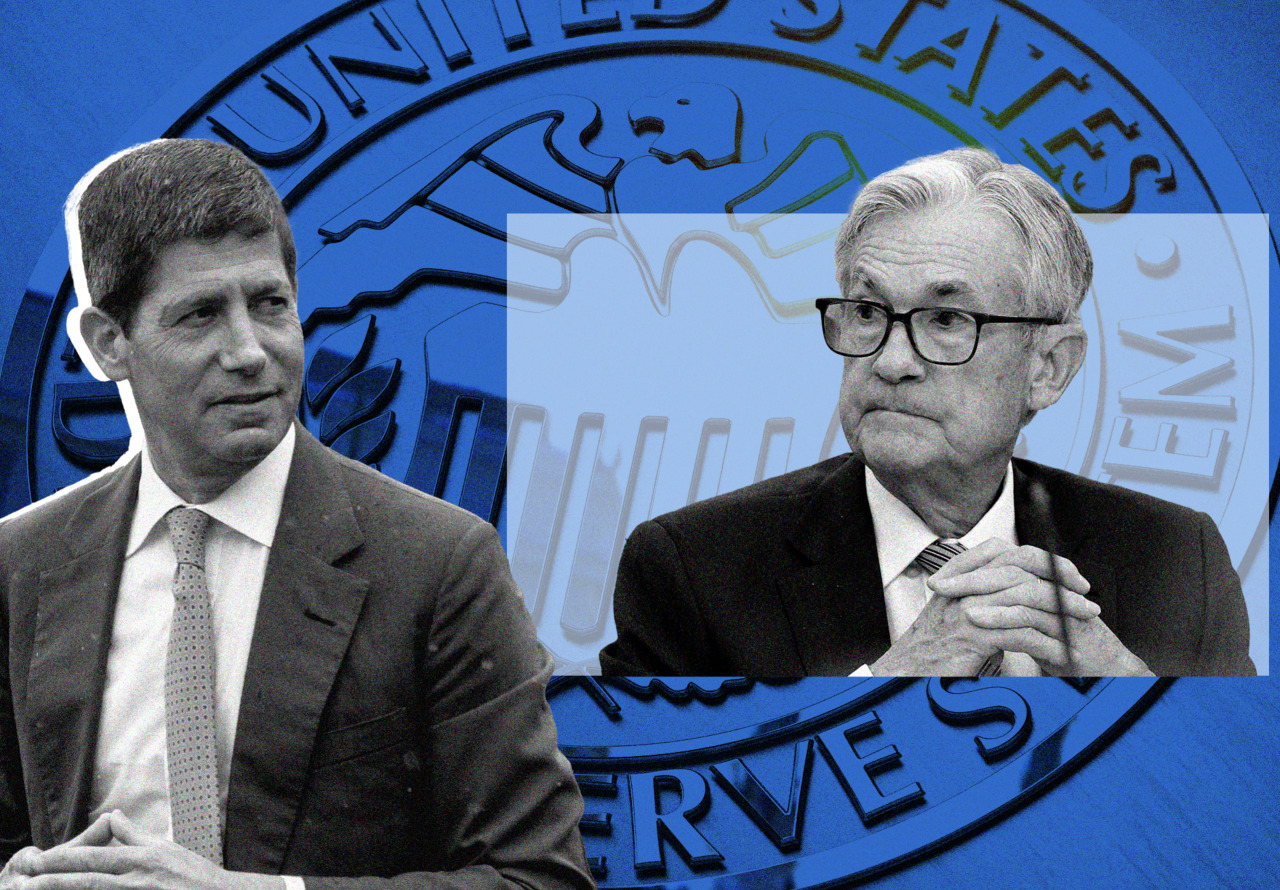
The Federal Reserve held its benchmark policy rate between 3.5% and 3.75% on Wednesday, 17 June 2026, declining to cut for the fourth time this year and choosing, instead, to wait out an inflation that has refused to behave. It was Kevin Warsh's first meeting as chair, and the decision arrived with the bureaucratic discipline that markets have come to expect from the institution and the political weather that nobody has learned to expect from anything else. According to reporting by the BBC, the rate-setting committee's vote came against a backdrop of unresolved uncertainty around a Trump-brokered diplomatic track with Iran — the kind of geopolitical tail risk that central bankers publicly ignore and privately underwrite.
A new chair, a familiar posture: that is the subtext the FOMC would prefer the market to read. Warsh, confirmed earlier this year, inherits an institution that has spent eighteen months arguing with itself about how restrictive policy actually is, how sticky services inflation really is, and how much fiscal drift Washington can sustain before the bond market does the tightening that the Fed will not. The committee's choice to hold tells the market one thing and the White House another, and that is precisely the ambiguity the institution is built to manufacture.
What the committee actually decided
The rate held at 3.5%–3.75%, the corridor inside which the Fed has chosen to operate since the spring. Polymarket's market-implied probability tracked the consensus into the announcement: a pause was the base case priced weeks in advance. There was no accompanying shock in the statement language, no surprise dissent, no fresh forward guidance. That is the Warsh inheritance — a committee that has, for now, decided the cost of being wrong about cutting exceeds the cost of being late to cut.
The framing matters. The Fed is the only major economic institution in Washington that still functions by old-school rules: data dependence, committee voting, public minutes, a chair who testifies before Congress and answers, however grudgingly, for the model inside the Black Box. In a year when the executive branch has rewritten the trade-policy playbook, used tariff revenue as a negotiating weapon, and chased a foreign-policy headline with Iran that the bond market cannot fully price, the Fed's predictability is itself a macroeconomic asset. The committee's job, on Wednesday, was to keep that asset intact.
The counter-read: Warsh as the White House's man
There is another, less charitable read of the pause, and it ought to be named. Warsh did not arrive as a neutral technocrat. He is a Republican with deep ties to the party's donor class and a long paper trail arguing, in public and in print, that the Fed has been too tight for too long. The betting markets may have priced a pause, but the same markets have also priced a steeper 2027 easing path than the committee's own dot plot currently projects. That gap — between what traders expect and what the median FOMC participant is willing to write down — is the live political question of the cycle.
The counter-narrative writes itself: the new chair is governing as if he is independent, in order to preserve the appearance of independence long enough to cut when the political moment arrives. Or, less cynically, he is buying time for a labour market that is softening at the edges without cracking in the middle, while watching whether the Iran diplomatic track removes the energy-shock tail risk that has kept services inflation sticky through the first half of the year. Either read is plausible; the data we have does not yet discriminate between them.
The structural frame: monetary policy in a fragmented world
Strip the personalities away and the structural problem remains. The dollar remains the reserve currency; the Treasury market remains the marginal safe asset; the Fed remains the world's de facto central bank by virtue of the dollar's role alone. That arrangement has survived two years of fiscal drift, one large trade war, and a foreign-policy posture that has made US-allied capitals hedge their dollar exposure more loudly than at any point since the euro's launch. The Fed's job in that arrangement is not to set the right rate for the US economy in the abstract; it is to set a rate the rest of the world is willing to hold its savings in, fund its trade in, and price its oil in. A 25-basis-point cut that the bond market reads as a political concession costs more, in that frame, than the cut delivers in stimulus.
This is why pauses have become the committee's default instrument. Cutting signals regime anxiety; cutting signals political capture; cutting signals, to creditors who already own half the world in dollar-denominated claims, that the issuer is no longer willing to pay a real yield on its own debt. Holding, in that frame, is a confidence trick that mostly works.
Stakes and the next ninety days
The next two quarters resolve three questions. First: does the Iran deal the Trump administration is reportedly pursuing actually de-escalate, or does it collapse and put an energy-shock premium back into the inflation print? The BBC's reporting on the 17 June decision explicitly cites that uncertainty as part of the committee's calculation. Second: does the labour market soften gradually enough to justify a September cut, or does it break sharply enough to force one? Third: does Warsh use his first press conference cycle to anchor expectations on data, or does he begin the slow drift toward a more dovish framing that markets have already priced?
The winners from a prolonged pause are unambiguous: holders of cash and short-duration Treasuries, who keep earning a real yield that has been absent for most of the post-2009 era; borrowers with floating-rate exposure who have already locked in via swaps; and the dollar itself, which collects a small confidence premium every month the Fed refuses to blink. The losers are the housing market, which needs lower long yields to clear; leveraged balance sheets in commercial real estate, which need a steepening curve, not a flat one; and any developing-country central bank whose dollar funding costs are now governed by a committee reading a geopolitical risk premium it did not choose.
What remains genuinely uncertain
The sources available to us do not specify the vote breakdown inside the FOMC, do not publish the staff economic projections that accompany the summary of economic projections, and do not disclose the precise content of Warsh's post-meeting press conference, which had not yet convened at the time the wire copy crossed. We can confirm the rate decision, the chair, the date, and the geopolitical backdrop the BBC flagged. We cannot confirm, from this thread alone, whether the statement language shifted in any dovish or hawkish direction, whether any regional Fed presidents dissented, or whether the committee formally revised its balance-sheet runoff pace. Those details will arrive in the official minutes, published three weeks after each meeting, and in the press conference transcript.
What we can say with confidence is narrower and more useful than the commentary cycle around the decision: on 17 June 2026, the Federal Reserve, under its new chair, chose the politics of patience over the politics of action, and the bond market, for one more meeting, accepted the trade.
Desk note: This piece treats the rate decision as a political-economic event, not a technical monetary-policy note. The wire framing — 'steady as she goes under a new captain' — is accurate as far as it goes. We have tried to read the same facts through the lens of dollar hegemony and the cost of Fed credibility in a fragmented reserve-currency system.
Wire provenance
This editorial synthesis draws on the following public wire/social posts:
- https://t.me/aljazeeraglobal
- https://x.com/Polymarket/status/1234567890
- https://t.me/CryptoBriefing