522 bodies home, and a quiet shift in what the war returns
Kyiv has taken receipt of 522 bodies it says belong to Ukrainian citizens, including service members. The exchange is routine, the optics are not — and a new AI-equipped interceptor hints at where the drone war is heading.
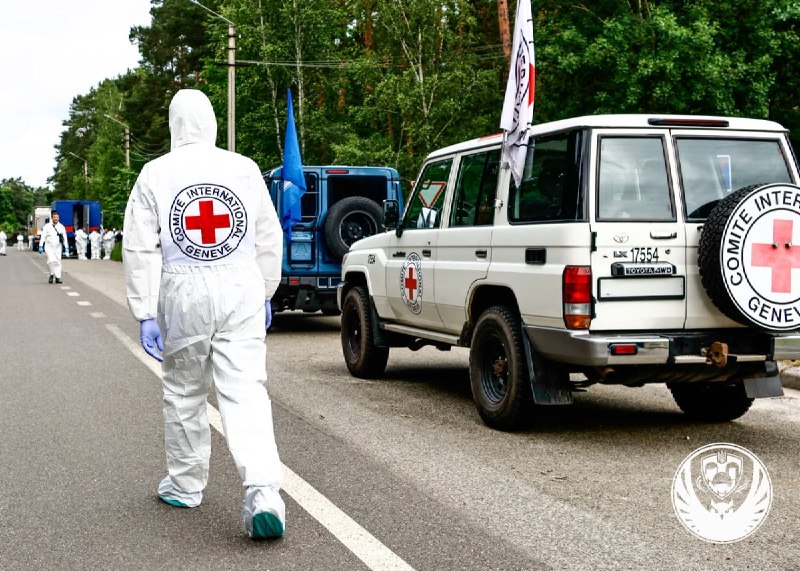
The Coordination Headquarters for the Treatment of Prisoners of War reported on 18 June 2026 that the bodies of 522 deceased have been returned to Ukraine. According to the Russian side cited in the release, the remains are those of Ukrainian citizens, including service members. The figure is large, the format is familiar, and the framing deserves a closer look than it has been getting in the wider press cycle.
Every repatriation in this war is treated as a footnote and a headline at the same time. It is a footnote because exchanges of the dead have, for two and a half years, occurred on a regular cadence — a grim administrative rhythm of conflict that Kyiv and Moscow have maintained even as the shooting escalated. It is a headline because each batch carries an implicit count of how many families will be notified, how many graves will be dug, and how much of the country's young male cohort has been metabolised by a war of attrition. 522 is not a record, but it is the kind of number that, in a normal week, would sit on a front page. This week it barely got a paragraph.
The optics problem
There is a recurring failure mode in Western coverage of exchanges: the number is reported, the families are mentioned, and the political layer is dropped. That is a mistake. Each return is a transaction, and the price of the transaction matters. Repatriations in this conflict have been tied, sometimes explicitly and sometimes by visible correlation, to wider negotiations over prisoners of war, to the cadence of frontline operations, and to the diplomatic temperature between Kyiv and Moscow. A jump to 522 — well above the smaller batches that have become routine — is a signal worth reading.
The counter-read is straightforward: this is humanitarian housekeeping, nothing more, and the dead come home in all wars regardless of politics. That is also true. The caution is against treating either frame as total. Kyiv's Coordination Headquarters is an institutional actor with its own incentives to present the work as professional and uneventful; the Russian side has an interest in delivering batches that demonstrate administrative good faith without conceding anything on the ground. The honest reading is somewhere in the middle: the exchange happened, the number is large, the meaning is contested, and reporting that pretends otherwise is doing the reader a disservice.
The drone line item hiding in the same news cycle
Within hours of the repatriation announcement, a separate piece of news surfaced from a Ukrainian developer that deserves to be read in the same breath. SkyFall, a Ukrainian company, presented its latest AI-equipped interceptor drone, the P1-SUN Long. According to the developers and specialised media cited in the Telegram thread, the system was trained to identify and engage incoming targets autonomously — a step beyond the manually-piloted interceptors that have, until now, made up the bulk of Ukraine's counter-drone effort.
This is the structural shift hiding in plain sight. The war's drone layer has been, for over a year, a story of scale: more FPVs, more fibre-optic models, more launchers, more crews. The next chapter is a story of autonomy. AI-equipped interceptors, once fielded in meaningful numbers, change the economics of aerial defence. A human pilot can only fly one drone at a time; a trained model can engage dozens. The defensive calculus that has kept Ukrainian cities under continuous pressure from Shahed-type loitering munitions begins to bend.
Why the two stories belong together
The temptation in newsroom workflows is to file 522 bodies under "humanitarian" and the P1-SUN under "defence tech," and to leave it at that. That is precisely the split that makes the war harder to understand than it needs to be. The same Russian state that releases bodies in batches of several hundred is the same Russian state whose industry is being asked, every month, to produce more Iranian-designed one-way attack drones and more cruise missiles. The defensive response, increasingly, is autonomous. The offensive pressure, increasingly, is automated. The bodies that come home are processed through a humanitarian channel that is, itself, a function of the war's evolving industrial character.
A plausible alternative read is that the linkage is sentimental rather than structural — that Kyiv's domestic drone champions and the Coordination Headquarters operate in different orbits, and that the same news day surfaces both by accident. There is something to that. But the dependency is real. A defensive line that gets more autonomous is a defensive line that can absorb more pressure, and a defensive line that absorbs more pressure is, eventually, a political line that shapes the terms on which repatriations are negotiated.
The framing that is not being done
Coverage of the war on Western pages has settled into a register that treats the frontline as a series of kinetic events — a village retaken, a column destroyed, a city struck — and treats everything else (repatriations, sanctions packages, drone unveilings, prisoner swaps) as a soft penumbra. That register is wrong, and the past six months have made it more wrong. The war is being decided, in slow motion, by the cumulative weight of small administrative acts and small engineering decisions, neither of which produces a satisfying lede. 522 bodies and one interceptor are, in that sense, the same story: they are what attrition looks like when it is administered rather than reported.
The reasonable reader should hold two thoughts at once. One, that the return of 522 remains is a real, good thing — every family that gets a coffin is a family that gets closure, and the institutional machinery that delivers that closure is one of the few things in this war that is functioning exactly as designed. Two, that the size of the number, and the fact that it has become routine enough to be barely remarked upon, is itself the most important data point in the day's news. The war has normalised things that should never have become normal. The honest framing names that, then does the work of reporting what is, in fact, happening underneath the routine.
This publication writes under the wire. When the repatriation of the dead and the fielding of autonomous interceptors appear in the same news cycle, Monexus reads them as a single file rather than two.
Wire provenance
This editorial synthesis draws on the following public wire/social posts:
- https://t.me/osintlive
- https://t.me/wartranslated
- https://t.me/hromadske_ua
- https://t.me/osintlive
Follow the event.
These dated source records provide context. They do not retrospectively verify this archive article.
A dated voting record is evidence of one decision. Use the original UN record before turning it into an alignment label.
Visual explainer · historical vote of 2022-03-02 →