Colombia opens World Cup 2026 campaign against Uzbekistan in Mexico City
Los Cafeteros step onto the Azteca turf as the expanded 48-team tournament begins in earnest, with kickoff scheduled for 05:30 UTC on 18 June 2026.
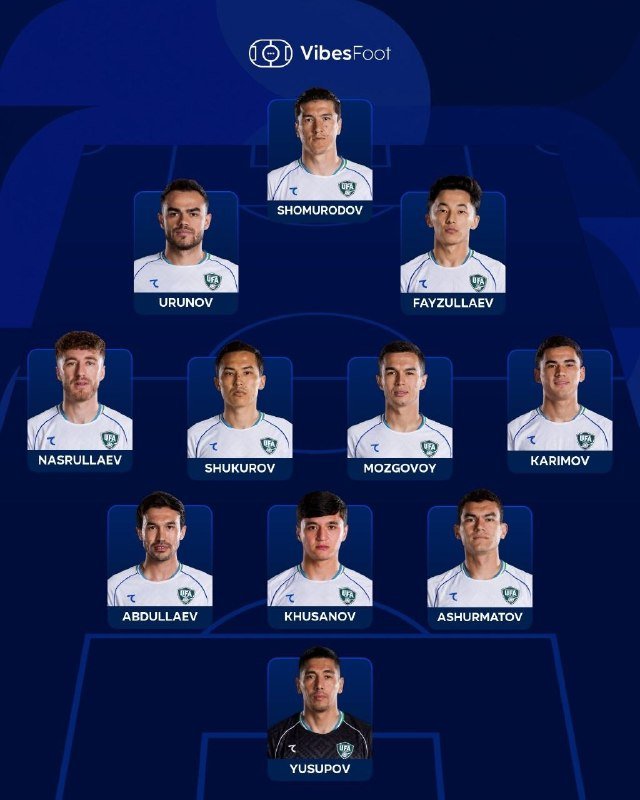
At 05:30 UTC on 18 June 2026, Colombia will run out at the Estadio Azteca in Mexico City for its opening fixture of the 2026 FIFA World Cup, taking on Uzbekistan in Group K. The lineups were confirmed roughly three and a half hours before kickoff via Transfermarkt's official channels on Telegram, with Sky Sports carrying a live tracker from 00:00 UTC and TeleSUR English flagging the game in the half-hour leading up to first whistle. The fixture is part of the expanded 48-team format, the first World Cup hosted across three countries — the United States, Mexico and Canada — and one of the marquee opening assignments in the tournament's most diffuse first round yet.
The matchup is, on paper, the kind of lopsided group-stage draw organisers have spent a decade engineering. Colombia, a fixture of recent tournaments, brings the higher FIFA ranking, the deeper professional talent base and a continental support network that is expected to outnumber Uzbek fans inside the Azteca by a wide margin. Uzbekistan, returning to the World Cup stage after a 24-year absence, offers something rarer: a Central Asian side that has built its case for inclusion through a decade of qualifying consistency, an increasingly export-heavy professional pipeline, and a coaching apparatus that has institutionalised youth development in a way few of its confederation peers have matched.
A tournament remade by expansion
The 48-team format — approved by FIFA in 2017 and contested for the first time at senior level this month — has reshaped the economics of the group stage. Twelve groups of four now feed into a 32-team knockout round, which means a single defeat in the opening 90 minutes no longer carries the existential weight it once did for smaller federations. For Uzbekistan, the maths is straightforward: take points where available, and trust the bracket to keep a route to the round of 32 visible. The South American calculus is less forgiving. Colombia, drawn into a group that has not been described in the available material as a soft landing, will be expected not merely to advance but to do so with the goal-difference cushion that buys margin in the third-place playoff conversation.
The Azteca setting adds its own weight. Mexico's national stadium, refurbished and re-roofed for this tournament, has staged two World Cup finals and a generation of Concacaf lore. Colombian fans have, since the 1990s, treated any match on Mexican soil as a partial home fixture; the diaspora corridor between Bogotá, Medellín and Mexico City is long enough and dense enough to ensure the stands will tilt visibly toward Los Cafeteros before the first whistle.
What the lineups tell us
Transfermarkt's pre-match publication, the only lineup-confirming source available in the wire, was released at 01:52 UTC, more than three hours before kickoff. Both federations had submitted their starting XIs through official channels by that point. The composition of the Uzbek side, as reported, leans on the core that secured their 2026 qualification, with the bulk of the squad drawn from clubs in the domestic Super League and from the small but growing pool of Uzbek nationals playing professionally in Russia, Turkey and the Gulf. Colombia's XI, also per Transfermarkt, follows the now-familiar template of a European-export spine — players developed and currently contracted at clubs in Spain, England, Italy and France — wrapped around South American league experience.
TeleSUR English's framing of the contest at 01:46 UTC was characteristically continental, foregrounding the South American entry into the tournament and inviting audience participation under the #COL #UZB tags. Sky Sports, covering from a UK-centric live-blog desk, treated the match as a routine Group K fixture on a congested opening day. The two framings, in other words, are doing the same work every World Cup opening produces: one voice for the diaspora, another for the diaspora-plus-neutral-fan in Europe, both pointing at the same 22 players.
Why this game is a useful opening read
The first match of any World Cup is a bad place to draw conclusions, and the first match of an expanded tournament is worse. The number of group-stage fixtures has grown by 50 percent, the rest-day cycles are tighter, and the third-place-qualifier pathway means even a slow start does not foreclose progression. What the Colombia–Uzbekistan game will reveal, more than anything, is whether the presumed hierarchy of the group stage still holds when the floor of the field has been deliberately raised.
For Colombia, the stakes are positional. A South American side that fails to clear the group stage at an expanded tournament will be treated, fairly or not, as having wasted a generation. For Uzbekistan, the stakes are existential in a different register: every minute on the Azteca pitch is evidence for a federation that has spent two decades arguing, with growing credibility, that Central Asian football belongs in the tournament's permanent conversation.
The broader picture
The 2026 World Cup is the most expensive sporting event ever staged, distributed across 16 host cities in three countries, and it arrives amid an open dispute between FIFA and a number of broadcast-rights holders over the cost of the expanded package. The on-pitch product, beginning in Mexico City in the early hours of 18 June UTC, is the only counter-argument that will land in the first 48 hours. Colombia and Uzbekistan are not the match the global marketing campaign will lean on — that role falls to fixtures involving the United States, Mexico, Brazil, Argentina, England, France, Spain and Germany — but they are the first match in which a new structural reality of the World Cup will be visible on the field. Whether the format produces a wider, deeper, more genuinely competitive tournament, or whether it merely elongates the same handful of familiar storylines, is the question every result from this point forward will help answer.
Desk note: Monexus framed this as a structural opener for the 2026 tournament rather than a match preview, given the limited wire material available in the immediate pre-kickoff window. The lineup data is drawn from Transfermarkt; the live coverage and tone are drawn from Sky Sports and TeleSUR English.
Wire provenance
This editorial synthesis draws on the following public wire/social posts:
- https://t.me/transfermarkt