Counting bodies in Gaza is not a substitute for counting the cost
Wire desks keep publishing Gaza health-ministry tallies without scrutiny or context. The numbers are real, the framing is the problem, and the consequences are being measured in lives.
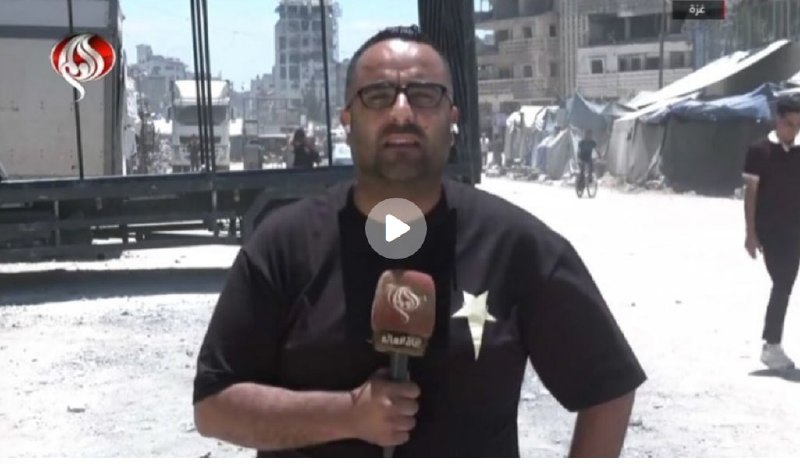
On 18 June 2026, two channels carrying Gaza reporting — the Beirut-based outlet The Cradle and Iran's Al-Alam — opened their morning wires with the same grim statistic. According to Gaza's Health Ministry, two Palestinians were killed and eight others wounded in Israeli attacks across the Strip over the previous 24 hours, with victims said to remain under the rubble. The figure was small by the arithmetic of the past two years, and that is precisely the point at which a careful newsroom should slow down, not speed up.
This publication has no interest in arguing the numbers away. The death toll in Gaza, accumulated since October 2023, is among the most thoroughly documented mass-casualty episodes of the twenty-first century. What deserves scrutiny is the way the daily casualty brief has been metabolised into a routine — a number to beheadlined, a verb to attach, and then a turn of the page. The flat, repetitive rhythm does two things at once: it confirms the horror, and it neutralises it.
The headline trap
Casualty-led wire copy produces a specific kind of numbness. When the lead is "two killed, eight wounded" — as The Cradle and Al-Alam both reported on 18 June — the reader is invited to do a small, almost domestic mental calculation. Two is a quiet night. Eight wounded is manageable. The arithmetic implies a conflict that has, against the evidence of the rest of the year, somehow moderated.
The structural problem is that the headline figure says nothing about who died, under what circumstances, with what access to medical care, and inside what kind of infrastructure. A strike on a displacement tent is not a strike on a military installation, even when the only number either outlet has the bandwidth to file is the casualty count. The format flattens the distinction the public actually needs to make.
The sourcing problem the wire desks don't want to discuss
Every reputable newsroom has, in its style guide, a sentence about treating health-ministry figures from a territory under封锁 and bombardment with appropriate caveat. Few newsrooms publish the caveat prominently. The Gaza Health Ministry has, throughout the conflict, been treated as a source whose numbers travel unaccompanied and whose methodologies go unexamined — not because anyone believes the counts are invented, but because no one has built the workflow to interrogate them properly while the bombs are still falling.
The corollary is just as uncomfortable. When Israeli civilian casualties, hostage conditions, or rocket attacks on Israeli towns are reported, they tend to arrive wrapped in institutional language — "the IDF said," "Israeli officials stated," "according to a spokesperson." Palestinian casualties arrive in a different grammatical register, as raw tallies. The two registers are not equally weighted, and the asymmetry compounds with every filing cycle.
What a serious desk would do instead
A serious wire desk would, on a quiet day, file a different kind of story. Not "two killed" but a structural piece: what the hospitals in northern Gaza are reporting on their intake capacity, which wards have closed in the past fortnight, what the World Health Organization's last verified field assessment actually said, what the International Committee of the Red Cross has been able to access and what it has been denied. The Cradle's brief reporting on 18 June is closer to this standard than most — it specifies the time window, names the issuing ministry, and notes that some victims remain unrecovered. That is the floor.
The ceiling, which no one in the wire ecosystem is currently meeting, is a parallel-track reporting model that treats a Gazan casualty brief and an Israeli casualty brief with the same institutional seriousness — same methodology paragraph, same contextual caveats, same number of follow-ups when the initial figure is revised. Until that happens, the daily count functions less as information than as liturgy.
The stakes are being measured in lives, not column inches
There is a temptation, in opinion writing about Gaza, to retreat into the safety of meta-criticism — to write about the writing, about the framing, about the cadence of the wire. That temptation should be resisted, because the subject of the framing is also the subject of the bombs. The Palestinian civilians whose deaths are being counted on a daily drip are not abstractions; they are people inside a health system that has been repeatedly described, by UN agencies and aid organisations, as operating at the edge of collapse.
What remains uncertain, even after this publication's review of the 18 June wire, is substantial. The Cradle and Al-Alam are regional outlets with documented editorial alignments; the figures they transmit come from a ministry whose own independence has been disputed by parties to the conflict; the underlying events — which strikes, on which neighbourhoods, with what ordnance — are not described in either brief. A reader who stops at the headline has been told almost nothing true about the previous 24 hours in Gaza. A reader who reads past it still does not know very much.
That is the editorial scandal of the present moment. The information apparatus is functioning, the wires are moving, the count is being kept. The interpretation is not being done. And in the absence of interpretation, the daily count becomes a substitute for the policy debate that should be consuming every capital with a stake in the file. Until that debate catches up with the arithmetic, two killed and eight wounded will keep arriving in the morning inbox, and the page will keep turning.
Desk note: Monexus treats Israeli and Palestinian civilian harm as first-order facts of equal weight. Where this piece departs from the regional wire is in foregrounding the editorial frame around the daily count, rather than the count itself.
Wire provenance
This editorial synthesis draws on the following public wire/social posts:
- https://t.me/thecradlemedia
- https://t.me/alalamfa
Follow the event.
These dated source records provide context. They do not retrospectively verify this archive article.
Separate what the nuclear watchdog reported from what it could not determine after the June 2025 strikes.