Díaz-Canel's pitch to the diaspora: capital welcome, bureaucracy still in the way
Cuba's president addressed the diaspora directly on 18 June, inviting investment and remittance-funded enterprise — while conceding that the same bureaucracy he blames on the blockade keeps capital on the sidelines.
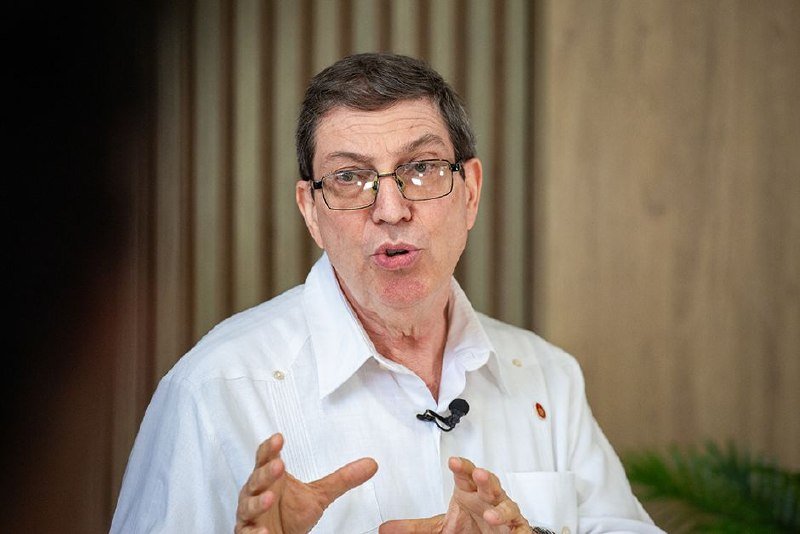
On 18 June 2026, at 14:50 UTC, Cuban President Miguel Díaz-Canel used a televised address to make an unusually direct pitch to Cubans living abroad: bring capital home, and Havana will offer a "clear, stable, and responsible" framework in return. Within minutes, the remarks were being rebroadcast by sympathetic Telegram channels DDGeopolitics and Clash Report, which lifted the relevant excerpts in near-real time. The pitch is the most concrete diaspora-investment appeal Havana has issued in years, and it lands at a moment when the country's power grid is failing its own citizens.
That is the contradiction the speech tries to manage. The president who wants diaspora dollars spent hours earlier describing the rolling blackouts that have made daily life unlivable for ordinary Cubans. He framed the outage not as a technical problem of megawatts, but as a moral one — the child who cannot study, the food spoiling in a refrigerator. It is the rhetorical move of a leader who knows he is selling an opportunity story while presiding over a collapse story, and who is asking the audience to hold both in mind.
What he actually offered
The core message, repeated in four separate clips circulated between 14:49 and 15:04 UTC, is straightforward: Cubans abroad who want to invest, donate, import technology, open a market, or build a project will be given a stable, predictable welcome. It is, in form, a classic diaspora-bond pitch — the same instrument Caracas and Managua have leaned on at various points to recycle remittance flows into formal investment. The novelty is that Díaz-Canel is making it personally and on television, with the implicit promise that the political risk of dealing with Cuban state entities will be lowered from the top.
He was also candid about what the pitch is up against. In a passage lifted by both channels at 14:52–15:02 UTC, the president conceded that "foreign investment is imprisoned by a web of obstacles" and acknowledged that "there are obstacles that do not come from abroad or from the blockade" — specifically slowness, bureaucracy, and rules that hold back producers. That admission is significant because it splits the blame Havana usually assigns solely to US sanctions. Some of the friction, the official line now concedes, is homegrown.
The counter-read from the embargo lobby
The obvious counter-frame, carried in Miami and in segments of the US Congress for the better part of two decades, is that tightening the embargo is what forces this kind of pitch in the first place — and that any new investment framework is, in effect, a laundering mechanism for a state that represses its own citizens. From that vantage, the president's "clear and stable" promise is undermined by the very conditions he lists: a power grid that cannot run a small enterprise reliably, a bureaucracy that the same speech admits is hostile to investors, and a legal architecture that US banks still treat as radioactive regardless of what Havana prints in a decree.
Díaz-Canel's response, captured in the 14:59 UTC excerpt, is the standard revolutionary-defence formulation: "No revolution has ever had it easy. And ours has had the audacity to survive six decades of blockade, genocidal laws, hybrid warfare, and a ladder of unilateral coercion." That sentence does the work of reframing the embargo not just as economic policy but as an existential campaign — which, in turn, makes any concession to investors look like a managed retreat rather than a market opening.
The structural frame
What is actually being offered is not so much a market as a managed re-entry for a specific class of capital: diaspora money that already has familial and political reasons to accept Cuban-state friction that a purely financial investor would not. The structural pattern is well-rehearsed across the Caribbean and Central America — Venezuela's cripto-recycling schemes, Nicaragua's canal-pitched FDI drives, Haiti's diaspora-bond experiments. Each tries to substitute political loyalty and remittance gravity for the rule-of-law guarantees that orthodox foreign direct investment requires. The speech does not change that template; it confirms it.
The power-grid admission is the tell. A diaspora investor being courted to import technology or open a market cannot do either at scale against the rolling blackouts the same president catalogued as a moral emergency at 14:50 UTC. Until the megawatts problem is solved — and Havana has not been able to solve it for the better part of four years — the "clear and stable" promise is conditional on a recovery that is not yet on the public horizon.
Stakes
If even a modest share of the diaspora capital responds, Havana buys itself two things: foreign exchange at a moment when the convertible currency pipeline is threadbare, and a political constituency whose self-interest now aligns with the regime's survival narrative. If the pitch fails — and the bureaucracy the speech itself names is the most likely reason it fails — the credibility cost is higher than the status quo, because the admission of internal obstruction will be on the record alongside the request for trust.
What the available material does not specify is whether the promised framework will be published as a decree, a law, or a series of bilateral contracts; whether US primary sanctions will be addressed in the pitch at all (the excerpts suggest they will not); or how the electrical crisis interacts operationally with any new investment pipeline. Those are the questions the next 30 days will answer, or fail to.
Desk note: Monexus carried the speech as a single story rather than splitting the investment pitch and the blackout admission, because the president's own framing tied them together in the same address.
Wire provenance
This editorial synthesis draws on the following public wire/social posts:
- https://t.me/DDGeopolitics
- https://t.me/clashreport