Eric Weinstein and the credential economy: a case study in manufactured legitimacy
Five and a half years after the Harvard Crimson documented that Eric Weinstein never completed his PhD, the platforms that pay him continue to introduce him as 'Dr.' The credential economy, in other words, does not require credentials.
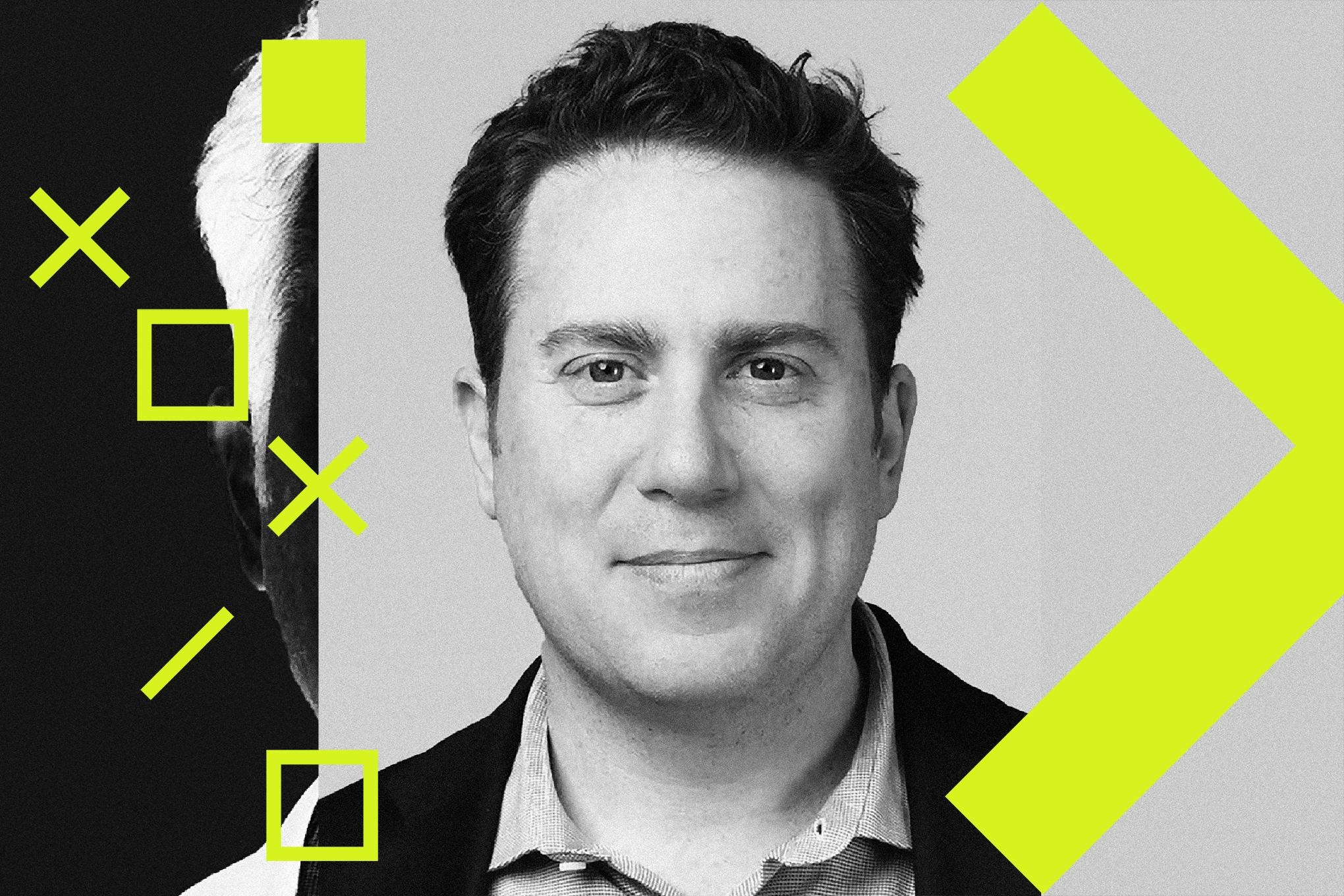
In December 2020, the Harvard Crimson published a short investigative note with a long afterburn: Eric Weinstein, who routinely introduces himself as "Dr. Eric Weinstein" on podcasts, conference stages and Twitter, did not finish his PhD at Harvard. The paper's reporting, dated 22 December 2020 and surfaced widely after a December-2024 X mirror by user @zei_squirrel, documented a candidate status in mathematics that had quietly stalled for roughly two decades.
That record, thin as it looks on paper, has done almost nothing to slow the Weinstein media operation. A Wikipedia entry accessed on 18 June 2026 still leads with "mathematician"; archived snapshots of his personal site on the Wayback Machine between 2018 and 2020 keep the title in circulation. Weinstein has built a six-figure audience on the strength of a credential he does not hold, which makes him one of the more useful case studies in how the attention economy manufactures its own authority.
The missing years
The Crimson story is short on detail, but the shape of the record is consistent across the Wayback archive of ericweinstein.org and the public biography. Weinstein entered Harvard's mathematics programme in the early 1990s, joined a research group, and then, by his own later accounts, drifted away from the department to pursue an idea he called "geometric unity" that no academic journal has published. The PhD was never awarded.
What the timeline does show is a long, unbroken stretch during which Weinstein continued to use the title while declining to subject the work that allegedly justified it to peer review. The Crimson ran a separate piece on 1 June 2020 cataloguing inflammatory Discord messages, including claims about Black Lives Matter protesters and Holocaust analogies, that cost him a visiting fellowship at the Oxford Martin School. None of the institutions that have platformed him as a credentialed physicist or mathematician have asked the credential into evidence.
The credential as content
This is where Weinstein's case stops being personal and starts being structural. The market he operates in does not actually require a credential. It requires the appearance of one, deployed at the right moments to short-circuit the audience's scepticism. A man who can describe himself as "Dr." on a long-form podcast, then pivot to "I work outside the system," captures two audiences at once: those who respect the title and those who distrust the institutions that confer it.
That double register is the product, not the bug. Weinstein's audience overlaps heavily with listeners who think elite universities are gatekeepers of groupthink, and the "Dr." gives those listeners permission to take him seriously without conceding that expertise matters. The credential becomes an alibi, present just often enough that critics who point out its absence can be dismissed as pedants.
The institutional shrug
What is most telling is who has not checked. Weinstein is a fixture on long-form interview circuits that trade on the supposed seriousness of their guests. Producers book him as "Dr." because the title does work in the trailer copy. Editors cut clips under chyrons that use his preferred self-description. The Wikipedia entry, maintained by volunteer editors over years, leans on Weinstein's own past statements, including the Harvard candidacy, without resolving the question of whether a candidate who never completed the degree is a doctor in any sense relevant to broadcast copy.
The Crimson's December 2020 story was a correct, narrow, public-interest disclosure. It ran in a campus paper, was picked up in fragments, and then faded. There was no formal retraction from any platform that had used the title. There was no clarification from the shows that paid for his appearances. The credential economy had absorbed the correction and moved on.
Manufactured legitimacy in practice
The Weinstein case is extreme only because the gap between the public claim and the documentary record is unusually stark. The mechanism is common. Think-tank fellows, podcast hosts, Substack writers and Substacker-turned-podcasters routinely trade in credentials that have been quietly inflated, expired, honorary, or self-awarded. The cost of being wrong is low; the cost of asking the question is high, because the questioner looks like they are policing titles instead of arguing ideas.
What makes Weinstein worth a case study is that he has built the most polished version of this product. He pairs the unverified credential with an explicit critique of the institutions that would have verified it. He markets himself as a dissident whose genius the system could not accommodate. The Crimson story simply does not register inside that frame, because the frame was built precisely to absorb such corrections.
The price of not asking
The cost of the credential economy is not that listeners are fooled. Most are not, in any deep sense; they enjoy the performance of expertise. The cost is that the public sphere loses a working distinction between someone whose claims have cleared review and someone whose claims have cleared an audience. When a PhD means only "this person has persuaded a paying crowd," every credential becomes a marketing term.
Weinstein's PhD is not a private matter. He has monetised the title for at least a decade through appearances, books and subscription content. The Crimson documented the gap in 2020; the Wayback Machine captured the bio pages; the Wikipedia entry keeps the language in circulation. The record exists. What the record has not produced, in five and a half years, is any visible recalibration from the platforms that profit from the misdescription. That is the story. The credentials are the evidence.
Sources:
- The Harvard Crimson, "Eric Weinstein, Who Frequently Uses 'Dr.' Title, Did Not Complete Harvard PhD," 22 Dec 2020. https://x.com/zei_squirrel/status/2067568712320696320
- Wikipedia, "Eric Weinstein (mathematician)," accessed 18 Jun 2026. https://en.wikipedia.org/wiki/Eric_Weinstein_(mathematician)
- Eric Weinstein / The Portal podcast, archived bio page on Wayback Machine, captured 2018-2020. https://web.archive.org/web/2020/https://ericweinstein.org/
- The Harvard Crimson, "Eric Weinstein's Discord Posts Spark Outcry," 1 Jun 2020. https://www.thecrimson.com/article/2020/6/1/eric-weinstein-discord/
Desk note: Monexus treats Weinstein as a structural illustration rather than a celebrity scandal. The factual record is thin but consistent; the analytical point is that attention platforms have no commercial reason to enforce titles they profit from.