At Eurosatory, a Ukrainian missile struck Moscow on a loop — and defence marketing has entered a new phase
Inside the Paris defence exhibition hall, a Ukrainian drone-maker screened aerial footage of strikes on Russian fuel infrastructure. The clip, not the missile, is the story.
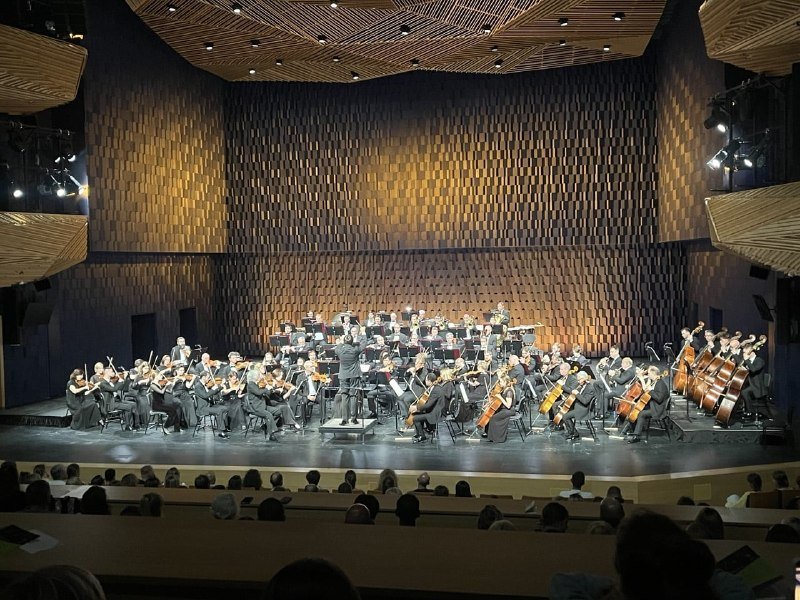
Inside the Paris-Nord Villepinte exhibition centre on 18 June 2026, the most-watched screen at Eurosatory did not belong to a French prime contractor, an American systems house, or a Korean consortium. It belonged to Fire Point, a Ukrainian weapons manufacturer whose stand was running aerial footage of its own munitions striking fuel storage on the eastern edge of Moscow. The clip, captured earlier in the day by Telegram channels monitoring the war, looped without commentary. Visitors recorded the screen. Visitors then posted the recordings, and the recordings looped in turn across the channels that monitor this war. The arms show, in other words, has become a stage on which one of the war's belligerents performs its own operational footage to a defence-industry audience that, in any other year, would have politely pretended not to notice.
What is new is not the footage itself. Ukraine has been releasing strike clips — against Russian refineries, against the Kerch Strait bridge, against Black Sea Fleet infrastructure — since at least the autumn of 2022, with the tempo accelerating as long-range domestic programmes such as Fire Point's FP-5 and FP-7 family matured. What is new is the venue. Eurosatory is the largest land-defence exhibition in Europe, drawing delegations from more than 100 countries and, crucially, the procurement officers who decide what their armies buy next. To screen your own war footage on a public booth at Eurosatory is to convert combat telemetry into a sales pitch in real time. The marketing function has been performed; the rest is a question of taste.
A booth, a brand, a war economy
Fire Point is a relatively young name in the Ukrainian defence cluster, but the cluster it sits inside is not. The wider Ukrainian defence-industrial base, anchored around longer-established firms including Ukroboronprom state enterprises and a constellation of private drone and missile workshops, has built an unusual operating model under wartime conditions: short design cycles, serial production funded by state contracts and diaspora capital, and a public-facing communications arm that treats each successful strike as both a battlefield result and a brand event. The Telegram posts that surfaced the Paris stand — the myLordBebo channel at 16:30 UTC and the Tsaplienko channel at 16:25 UTC on 18 June 2026 — both treated the stand as news in its own right, distinct from the strikes themselves, which had already been public for hours.
That distinction is the story. The strike on Moscow oil storage had already been documented. What had not been documented, and what the two channels made visible, was the decision by a Ukrainian manufacturer to take that footage to a commercial exhibition in a NATO capital and to use it as product demonstration. The venue, in other words, was the message.
The counter-read: marketing, not warfare
A plausible counter-reading is that this is theatre, not a doctrinal shift, and that Eurosatory is precisely the place theatre belongs. Defence exhibitions have always been a hybrid of procurement bazaar, diplomatic back-channel, and industrial theatre. The Saudis have shown cruise-missile mock-ups. The Israelis have run live-fire demonstrations of systems later used in Gaza. The French routinely display exportable systems to domestic audiences uncomfortable with their use in foreign wars. Against that baseline, a Ukrainian manufacturer replaying footage of its own work in front of customers who may one day buy it is hardly an outrage; it is, in fact, the kind of thing the show exists to enable.
Two things separate this episode from that baseline. The first is the absence of any third-party framing on the booth. There was no Western defence journalist, no Western official, no institutional voice between the product and the audience — just the weapon's output on a loop, and a manufacturer's logo. The second is that the strike in question hit the capital of a state with which several Eurosatory exhibitors still maintain commercial relationships. The Russian defence industry is sanctioned out of the show floor, but the optics of Ukrainian strike footage playing in a hall where Turkish, Indian, Egyptian and Gulf delegations browse is its own kind of diplomatic act.
The structural shift: from obscurity to inventory
What this episode crystallises is a change in how modern weapons are sold, or at least in how one category of weapons is being sold. The conventional export model, built around demonstrations to trusted government customers behind closed doors, assumes the product and the customer are the only two parties. The new model, increasingly visible across the Ukrainian defence sector, adds a third: a global online audience that consumes combat footage as a genre, and that an enterprising manufacturer can address directly.
The implications cut in two directions. For procurement officers, a public catalogue of successful strikes reduces information asymmetry; you can see the system working before you buy it. For adversaries, the same catalogue is a free operational record of what the system can do, when, and at what altitude. For everyone else, it normalises the idea that the front line of a war and the showroom floor of a commercial exhibition are parts of the same continuous display. The earlier generation of arms marketing, exemplified by slick videos of guided munitions sinking ships in pristine render footage, has been replaced by the marketing of war itself as a kind of live-streamed product demonstration.
Stakes and what remains uncertain
The immediate stakes for Paris are diplomatic. France has maintained a careful public position on the war — supportive of Ukrainian sovereignty, careful to avoid escalation rhetoric — and the Eurosatory floor is, in part, a French diplomatic instrument. Ukrainian stands that openly advertise strikes on the Russian capital complicate that instrument. Whether Paris will respond through the exhibition organisers, through quiet bilateral pressure on the Ukrainian delegation, or by treating the episode as an isolated marketing choice, the source material does not specify. The longer stakes are industrial. If the Fire Point model — public strike footage as a sales channel — spreads to other Ukrainian and non-Ukrainian firms, the culture of arms exhibitions is likely to shift, and the norms about what can be shown, to whom, and under whose authority, will be tested at every subsequent edition of the show.
What the sources do not resolve is whether the strikes themselves inflicted the kind of damage to Moscow's fuel infrastructure that would impose meaningful operational costs on Russia's war machine, or whether the show-floor impact — the image, the loop, the story — is the main outcome either side is now optimising for. The Telegram channels that surfaced the booth footage are both Ukrainian-aligned, and a full accounting of the strike's effects will have to come from independent technical analysis, not from the channels that benefit from the strike's circulation. Monexus flags that as an open question.
Desk note: where wire coverage of Eurosatory this week has emphasised the show's commercial and diplomatic functions, Monexus has framed the Fire Point episode as a marketing moment whose venue — not the strike itself — is the news. The footage is real; the question is what it does to the culture of arms exhibitions.
Wire provenance
This editorial synthesis draws on the following public wire/social posts:
- https://t.me/myLordBebo
- https://t.me/Tsaplienko
Follow the event.
These dated source records provide context. They do not retrospectively verify this archive article.
A dated voting record is evidence of one decision. Use the original UN record before turning it into an alignment label.
Visual explainer · historical vote of 2022-03-02 →