Hegseth berates NATO over base access as Trump administration opens a parallel front against the alliance
At a meeting of alliance defense ministers in Brussels, Defense Secretary Pete Hegseth publicly attacked NATO members for what he called their 'shameful' response to the US war against Iran, and announced a review of American forces on the continent.
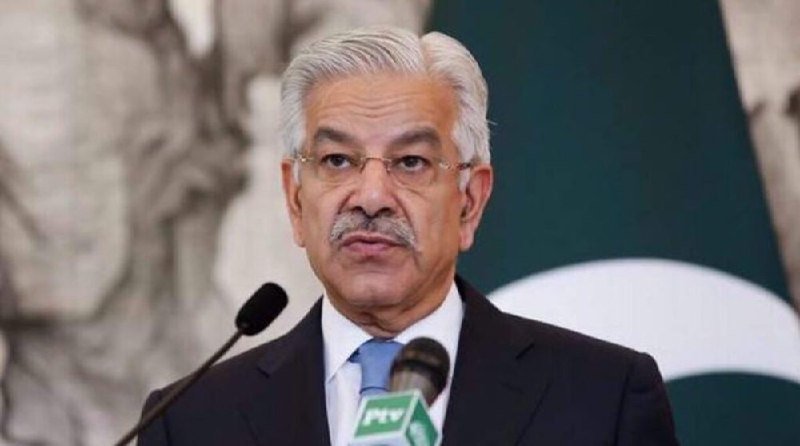
At a NATO defense ministers' meeting in Brussels on 18 June 2026, US Defense Secretary Pete Hegseth publicly berated alliance members for refusing Washington access to European bases during the United States' war against Iran, and announced a sweeping review of American force posture on the continent. The remarks, reported by Reuters and the New York Times on the same day, are the sharpest public break with NATO inside the Trump administration's second term, and they landed while the alliance is still supporting Kyiv against a grinding Russian invasion and absorbing the cost of rearmament across the eastern flank.
The episode is less a tactical dispute than a strategic signal. Washington is opening a parallel front against the very alliance it is asking to help shoulder a Middle East war. Europe's answer, in capitals from Warsaw to Berlin, will shape the transatlantic relationship for the rest of the decade.
What Hegseth actually said
According to reporting by Reuters on 18 June 2026, Hegseth used the NATO ministerial to denounce allied governments for declining to grant the United States operational access to bases on European soil for missions tied to the Iran campaign. The defense secretary framed the refusals as a failure of political will, the New York Times reported, continuing the Trump administration's pattern of treating allied burden-sharing as an accounting ledger rather than a security compact. Hegseth's use of the word 'shameful' to describe allied behavior was on the record; the South China Morning Post's account on 18 June 2026 carried the same characterization and tied it directly to a forthcoming review of US forces in Europe.
The reviews now under way inside the Pentagon will examine every element of the American footprint on the continent — force levels, base agreements, command structures, pre-positioned stocks and exercises — and are likely to be read in allied capitals as a prelude to a partial drawdown. That reading is, for now, an inference. Reuters's reporting on 18 June confirms only that a review has been announced; the size and timing of any redeployment are not in the public record.
Why the timing matters
The diplomatic rupture is not happening in a vacuum. The US war against Iran is the operational backdrop: Washington is fighting a third Middle East conflict of the post-2023 era while its European allies, with the partial exception of the United Kingdom, have refused to participate in strikes or to extend the basing and overflight rights the US military considers routine in coalition operations. That refusal is, in most European capitals, a political choice with domestic constituencies behind it — governments that watched Iraq and Libya burn and are unwilling to be drawn into a war whose endgame is undefined. Hegseth's framing recasts that reluctance as a breach of solidarity rather than as a sovereign decision, a move the New York Times on 18 June described as a continuation of the administration's broader campaign against European security policy.
The second backdrop is Ukraine. NATO's eastern members — Poland and the Baltic states foremost — are deep into a multi-year rearmament cycle built on the assumption that the United States remains the alliance's senior partner and the ultimate guarantor of deterrence. A serious US drawdown in Europe, even one justified by Middle East demands, would force those governments to choose between faster European rearmament and louder calls for a continued American presence. The review Hegseth has announced sharpens that choice.
A structural break, not a tantrum
It is tempting to file the episode under 'Trump-administration turbulence' — another eruption from a White House that has normalised public fights with allies. The reading is incomplete. Three structural shifts are visible underneath the rhetoric.
The first is the relative weight of the Middle East and Europe in US strategic priorities. The administration's Iran campaign is consuming military bandwidth — carrier strike groups, tanker sorties, air-defense interceptors — that, in a prior decade, would have been available for European reassurance missions and African counter-terror task forces. Washington's European allies are being told, in effect, to fund and staff their own security while the United States pursues a war in the Gulf that most NATO governments did not endorse.
The second is the weaponisation of burden-sharing language. The complaint that allies free-ride on US protection is not new; it is older than the alliance itself. The new element is the administration's willingness to use that complaint as leverage across multiple files simultaneously — trade, base access, Iran, Ukraine aid — in ways that deny European governments a stable negotiating position. The Hegseth comments at NATO are the diplomatic equivalent of a creditor publicly downgrading a borrower mid-negotiation.
The third, and least discussed, is the question of what NATO is for in 2026. An alliance designed for Cold War territorial defence has, in the space of four years, been asked to anchor Europe's response to a land war in Ukraine, to absorb two members with active territorial disputes, and now to underwrite, or refuse to underwrite, a US-led war in the Middle East. The 18 June 2026 episode is the first time since the alliance's founding that a sitting US defense secretary has used a NATO ministerial as a platform to attack members for declining to support an active US military operation. Whatever Europe's answer is — and it will be calibrated country by country — the rhetorical ground under the alliance has shifted.
Counterpoint: what the framing leaves out
A reading sympathetic to the administration would point out that US forces in Europe cost American taxpayers roughly $7 billion a year in direct stationing costs in the most recent publicly available estimates, and that European governments have repeatedly promised defense-spending levels they have missed. The complaint that allies shelter under the US nuclear umbrella and the US Navy while contributing only a fraction of GDP to collective defense predates the current administration and is shared by serious analysts across the political spectrum. From that vantage, Hegseth is naming a problem that European politicians prefer to leave unspoken.
That case has real evidentiary weight, but it does not soften what the 18 June 2026 episode actually is: a public dressing-down of allies by a senior US official, delivered at a NATO table, while a US war is being fought. Allies may deserve a sharper conversation about defense spending. They do not deserve to be addressed in those terms while they are hosting US forces, flying Baltic air policing, and training Ukrainian brigades.
Stakes for the next twelve months
The practical question hanging over the alliance is the scale and shape of the review Hegseth has announced. Three trajectories are plausible, and the signals from Washington do not yet let an outside observer distinguish among them.
A modest outcome would see the review produce cosmetic changes — rotation adjustments, exercise consolidations, a sharper demand for cost-sharing — that leave the US posture broadly intact. A serious outcome would see one or more large formations in Germany or Italy reduced, with redeployment to the Indo-Pacific or to the Gulf. A punitive outcome would see the administration use the review as a vehicle to make good on the 'shameful' framing: a deliberate partial withdrawal framed as a lesson in allied responsibility.
Each of these paths closes different doors for European governments. The first allows the alliance's current political centre to manage the public fight. The second forces a serious conversation about European strategic autonomy, French-led and Polish-pressed in different registers. The third creates the conditions for a serious European defense union — one that the continent's capitals have talked about for a decade and have, until now, declined to build.
What remains uncertain
The public record on 18 June 2026 is unusually thin, and a reader should hold that fact in mind. Reuters, the New York Times and the South China Morning Post have confirmed Hegseth's language, the announcement of the review, and the broad European reaction. The sources do not specify the scope of the review, the timeline for its conclusions, which bases or formations are under consideration, or which NATO allies publicly refused the basing requests. Allied briefings, where they have happened, have been off the record. The most consequential details of the dispute — which governments said no, and what they said yes to — are, for now, the part of the story that is missing.
What is not missing is the political signal. A US administration fighting a war in the Middle East has chosen this moment to publicly humiliate the alliance that underwrites half of its global posture. The Hegseth outburst in Brussels is, by itself, only a speech. The review that follows it will be the actual event.
This piece ran on the geopolitics desk. Where the wires ran Hegseth's comments as a one-day diplomatic row, Monexus treats the episode as the opening of a multi-month renegotiation of the transatlantic relationship.
Wire provenance
This editorial synthesis draws on the following public wire/social posts:
- http://reut.rs/4aWNpYB
Follow the event.
These dated source records provide context. They do not retrospectively verify this archive article.
Separate what the nuclear watchdog reported from what it could not determine after the June 2025 strikes.