Hegseth in Brussels: A Pentagon review of US forces in Europe, and an open warning to Iran
In the same 24-hour window, the US defence secretary told NATO the Pentagon will review its force posture in Europe within six months and warned Tehran that Washington is ready to resume military operations if the deal collapses.
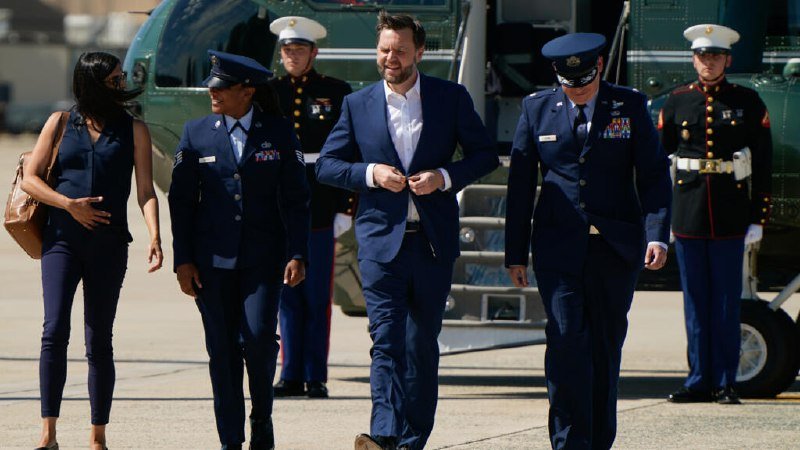
On Thursday, 18 June 2026, US Defence Secretary Pete Hegseth walked into a NATO ministerial in Brussels carrying two messages — and they were pointed in opposite directions. To European defence ministers, he announced that the Pentagon would conduct a formal review of the American military presence on the continent over the next six months. To Tehran, delivered through a separate channel in the same window, he warned that the United States is prepared to resume "military operations" and restore a blockade if Iran fails to meet its obligations under its deal with Washington. The two announcements, made within hours of each other, sketch a US security posture that is simultaneously drawing inward on its European commitments and reaching outward against an adversary in the Gulf.
The administration is signalling two things at once: that the transatlantic alliance is being re-priced, and that any violation of the Iran arrangement will be met with force rather than further diplomacy. Read together, the messages tell allies and adversaries the same uncomfortable fact — that Washington intends to keep the option of fighting a regional war, while asking the Europeans to take more of the burden of keeping the peace on their own continent.
What Hegseth actually told NATO
According to reporting from France 24's English and French services on 18 June, Hegseth told assembled NATO defence ministers that the United States would carry out a review of its force posture in Europe over the next six months. France 24's French-language dispatch framed the announcement as a deliberate intensification of pressure on the Europeans — and Canada — to shoulder more of the conventional defence burden themselves. The English-language wire characterised the review as part of a broader reassessment under way in Washington, language consistent with the Pentagon's stated intention to rebalance forces toward the Indo-Pacific.
A force posture review is not a withdrawal. The distinction matters, and Hegseth's framing — "review," not "redeployment" — leaves the European allies, several of whom have already lifted defence spending toward the alliance's two-percent-of-GDP floor, in a holding pattern. The wire reporting does not specify which formations, bases, or numbers of troops might be affected; the Pentagon has not yet published terms of reference for the review. What is on the table is uncertainty itself, which has its own operational cost: European planners cannot assume today's basing arrangement will hold, and they cannot plan against a number that has not yet been published.
For a NATO that has spent two years arguing about who pays what, the announcement repositions the debate. The question is no longer only whether Berlin, Paris, and Warsaw spend enough; it is whether Washington will keep the strategic reserve that backs them up.
The Iran warning, and how it lands
Within the same 24-hour window, Hegseth's separate comments on Iran — carried by The Cradle on 18 June — put Washington on a war footing contingent on Tehran's compliance with its existing arrangement. The US, Hegseth said, is "prepared to resume 'military operations' and restore a blockade" if Iran fails to meet its obligations under the deal. The Cradle is an outlet that covers the Iran file from a perspective sympathetic to the Axis of Resistance; its reporting here should be read as accurate on the words the Pentagon chief used and as one frame on what those words mean.
The substantive question is what "military operations" denotes. The last round of US–Iran direct combat, in June 2025, was a twelve-day air operation that the United States prosecuted alongside Israel and that included strikes on Iranian nuclear and missile infrastructure. A blockade restoration would be a different instrument — economic and naval — and would test both Iran's oil-export routes through the Strait of Hormuz and the appetite of third-party buyers, principally in Asia, to keep lifting Iranian crude under sanctions enforcement.
For Tehran, the warning is a familiar negotiating posture: threaten force, then test whether the threat ages out. For the Gulf states and for Iraq, the warning is more concrete — a US blockade of the Iranian coast would put American naval assets back into a posture they held only intermittently during the most acute phases of the earlier standoff. For the European NATO allies now absorbing Hegseth's review announcement, the Iran file is also a reminder that the United States is reserving for itself the right to start another shooting war on a different front.
Counter-narrative: what the allies, and Tehran, will say
The European read on Hegseth's review will not be uniform. The Poles, the Baltics, and the Nordics — the NATO members closest to Russia and the most exposed to any reduction in the US conventional guarantee — will argue, privately and in writing, that any drawdown is premature given the war in Ukraine and the long-term Russian force posture. France and Germany will frame the review as a stress test of European autonomy, an opportunity to accelerate the EU's own defence-industrial projects. The British, who sit closest to the United States on capability integration, will press for early clarity on numbers.
On the Iranian side, the warning will be read through the lens of a counter-narrative: that the US is the party that walked away from a prior arrangement in 2018, that blockade enforcement is an act of war under international law, and that any resumption of "military operations" would constitute aggression. That framing is partial — Iran has, on the public record, run nuclear and missile programmes that triggered the sanctions architecture in the first place — but it is the framing Tehran will deploy, and any US administration preparing for renewed operations will need to plan around it. The Cradle's coverage is itself a window into how the Iran-aligned information ecosystem is preparing the regional audience for that message.
The dominant framing, after the evidence is weighed, holds: the United States is signalling willingness to use force if Iran breaks the deal, while the review of European forces is a separate, parallel message about burden-sharing. The two are connected, however, by a single strategic logic — that Washington wants allies who pay more and adversaries who believe it will fight.
Stakes: who wins, who loses, on what horizon
Over a six-to-twelve-month horizon, the Pentagon review is the higher-impact variable for European security. If the review concludes that a meaningful slice of US capability leaves Europe — rotational armour, certain air-defence batteries, sustainment stocks — the political pressure on EU capitals to fund the gap will become acute. Warsaw, which has led NATO's eastern flank with the largest land force on the alliance's border with Russia's Kaliningrad exclave and Belarus, has the most direct exposure. Berlin and Paris have the deepest pockets and the slowest political machines.
The Iran track, over a shorter horizon, is the higher-impact variable for global energy and shipping. A blockade restoration would re-price crude, re-route tanker insurance, and pull US naval combat power back into the Gulf and the Arabian Sea. China, the largest single buyer of Iranian crude outside the domestic Iranian refining system, would face a choice between compliance and quiet workarounds; India's position would be similar.
What remains genuinely uncertain is whether the review and the Iran warning are two halves of a single strategic posture, or two separate decisions whose proximity in time is coincidental. The wire reporting in the public domain does not let us decide that question. The sources do not specify how the Pentagon will reconcile a drawdown in Europe with a willingness to open a second front in the Gulf, and they do not tell us whether the review's timing was influenced by the Iran file or by the domestic budget conversation in Washington. Readers should hold both possibilities open until the review publishes its terms of reference and the administration articulates, on the record, how it intends to keep both commitments.
The desk notes how this piece was framed: the wire services carried the announcements in two separate buckets — Europe-planning and Iran-threat — and Monexus is reading them as a single posture statement. The review is the slower-moving risk; the Iran warning is the faster-moving one. Both deserve equal weight, and neither should be folded into the other.
Wire provenance
This editorial synthesis draws on the following public wire/social posts:
- https://t.me/france24_en
- https://t.me/france24_en
- https://t.me/france24_fr
- https://t.me/thecradlemedia
- https://t.me/TheCradleMedia