Hegseth calls NATO a paper tiger — and the alliance he is scolding has no good answer
The Pentagon chief's broadside against an alliance that refused him basing rights during the Iran war lands at a moment when European capitals are running out of ways to pretend the rupture isn't real.
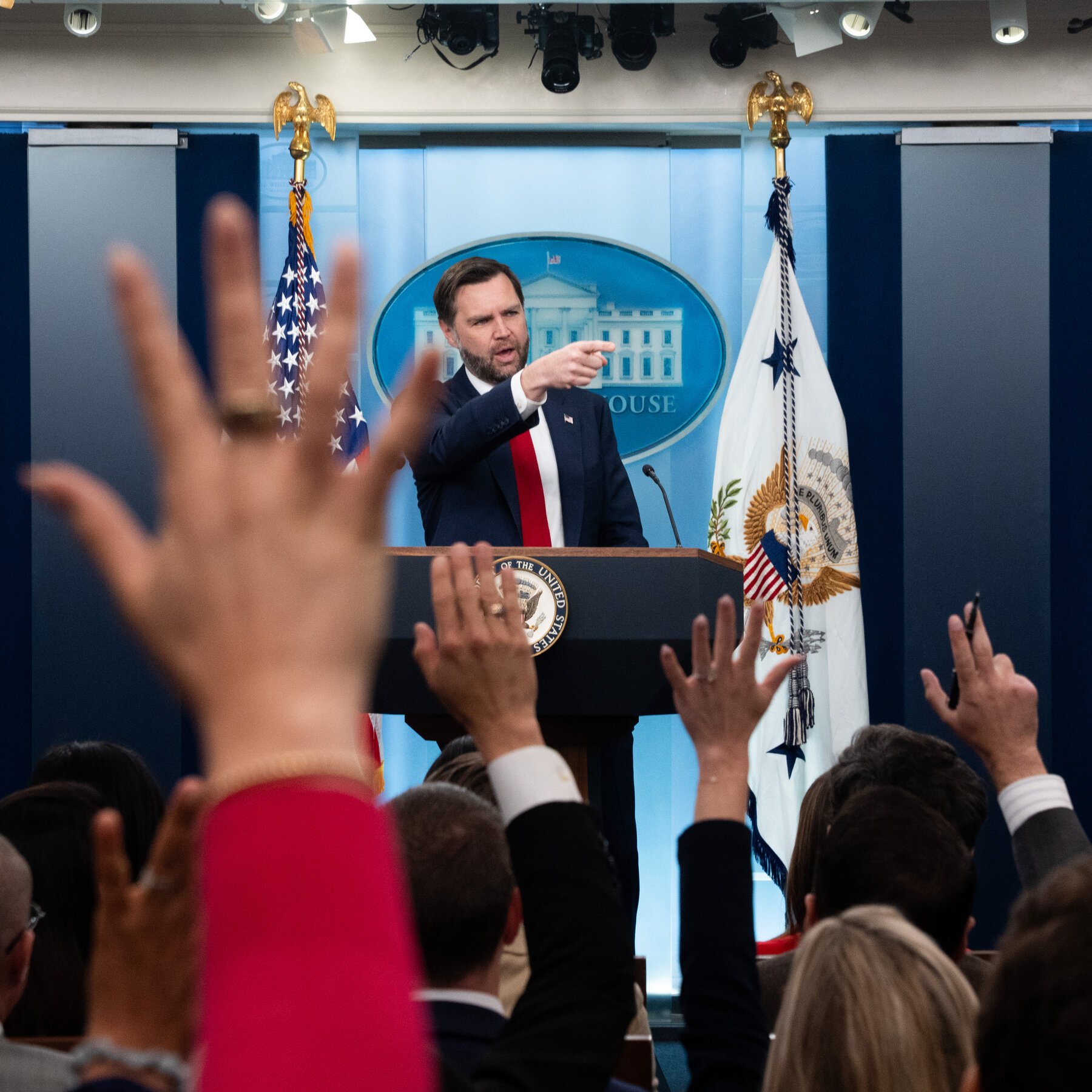
At a press availability in Washington on the morning of 18 June 2026, US Secretary of Defense Pete Hegseth did something that US secretaries of defense are not supposed to do in peacetime: he called a sitting alliance a paper tiger, on the record, in front of cameras. The alliance in question is NATO, and the specific grievance is the refusal of European members to grant Washington access to bases on their territory during the ongoing war with Iran. By the afternoon, the comment had been picked up by Telegram-based wires including Clash Report (2026-06-18T13:28) and by the South China Morning Post under a single, blunt headline: "Hegseth blasts Nato for not giving US access to European bases during Iran war" (SCMP, 2026-06-18T13:00).
The remark is not a slip. It is the first open, on-the-record statement from a sitting US defense secretary that the transatlantic bargain — US protection in exchange for European access, budgets and political deference — is no longer operating on its original terms. Read past the theatre, the row is about a concrete operational ask that was refused. That refusal has now been named in public, by name, in a way that cannot easily be walked back.
What was actually asked, and what was actually refused
According to the South China Morning Post dispatch of 18 June 2026 (13:00 UTC), Hegseth's complaint is narrow and specific: the United States requested access to NATO-member bases on the European side of the alliance's territory, for use in the Iran war, and was turned down. The Clash Report transcript of the same press availability (2026-06-18T13:28) has Hegseth framing the refusal in moral terms — "shameful," "paper tiger" — and a follow-up exchange in which he appears to welcome the fact that the Secretary General is not, in his telling, joining the chorus of European critics. The substance, in other words, is the denial of an operational request, not a generic grudge.
The denial is itself a story. A NATO member denying basing rights to the United States during an active shooting war is, on the face of it, an extraordinary act. It implies that a sufficient number of European governments have concluded that the political cost of visibly enabling US strikes on Iran — at home, in their electorates, and in their relationships with the Gulf and with Beijing — now exceeds the political cost of openly defying Washington. That is a calculation that did not produce a comparable outcome in 2003, in 2011, or in the opening weeks of the air campaign against the Islamic State. Something has changed in the European cost book.
Why Europe is no longer reflexively available
The official NATO line, when pressed, is that the alliance is not a party to the Iran war and that operations on alliance territory require consensus. That is technically true and politically evasive. The honest reading is that the European Union's big three — France, Germany and, in this context above all, the country holding the EU's eastern frontier and the rotating presidency of the Council — have absorbed two lessons from the post-2022 period. First, that US willingness to consult allies has eroded across two administrations. Second, that the political exposure of being seen, on domestic television, as the launch pad for strikes on a Middle Eastern state is no longer offset by the credibility gain of being a reliable US partner. The European public has, across multiple polls, moved toward a posture of strategic autonomy that is no longer fringe.
Hegseth's "paper tiger" line lands in that environment and detonates on contact. It is the kind of language that, in earlier decades, a US defense secretary would have reserved for adversaries. Using it for NATO converts a bureaucratic dispute over a basing request into a public statement about the alliance's viability. The signal to European defense ministries is that Washington has stopped treating the refusal as a negotiation and started treating it as evidence of decline.
The structural read, in plain language
What is unfolding is a slow decoupling disguised as a row over flight clearances. The incumbent security order in the Euro-Atlantic was built on a bargain in which the United States provided hard security, the European members provided territory, budgets and diplomatic cover, and the arrangement was underwritten by the assumption that both sides needed the other more than they resented each other. That assumption is failing on the European side, and the Hegseth outburst is what failure looks like when it reaches the podium. The exchange is not about Iran; it is about whether the United States can still assume that its allies' geography is available on request. For the first time since 1949, the answer from a critical mass of European capitals is: not automatically, and not for this war.
The counter-reading is straightforward and should be taken seriously: a defense secretary is entitled to be furious when an ally refuses a wartime request, and a public rebuke of that refusal is a legitimate pressure tactic. From that vantage, Hegseth is doing his job. The trouble with that reading is that pressure tactics presuppose a relationship in which the pressure can be relieved by the other side conceding. If the underlying European calculation is structural — autonomy, exposure, public opinion, energy exposure in the Gulf — then a sharper tone at the podium will not move it. It will only make the refusal louder.
What it costs, and who pays
The immediate operational cost is borne by the US Central Command planners, who must reroute aircraft and naval assets around European airspace and into longer, more exposed lines of communication. The political cost is borne by NATO, whose public coherence is now visibly fraying in a way that will be read in Moscow, in Beijing, and in Tehran. The medium-term cost is borne by European defense industries, which will now be pushed by their own governments to develop independent enablers — tanker fleets, satellite intelligence, long-range strike — that, in another decade, will be redundant with the US architecture they were originally designed to plug into. Everyone loses something; no one gains enough to call it a win.
The honest summary is that the United States asked Europe for help with a war Europe did not start, did not vote for, and cannot easily explain to its voters, and Europe said no in a way that could not be reversed by a quiet phone call. Hegseth's response was to name the refusal for what it is. The dispute is no longer about bases. It is about whether the transatlantic alliance as it was understood for the last three quarters of a century still exists in operational form, or only in ceremony. The two Telegram-sourced wires that carried the story on 18 June 2026 — Clash Report and the South China Morning Post feed — are the public record of the moment the question stopped being theoretical.
*Desk note: Monexus has relied here on the two wire items from the day — the Clash Report transcript (13:28 UTC) and the SCMP dispatch (13:00 UTC) — and has paraphrased rather than quoted where the transcripts are partial. Where the sources do not specify, this piece has said so: the European governments behind the refusal are not named in the public record we have, and the operational specifics of the basing request remain undisclosed. The structural reading is editorial; the facts are not.
Wire provenance
This editorial synthesis draws on the following public wire/social posts:
- https://t.me/ClashReport
Follow the event.
These dated source records provide context. They do not retrospectively verify this archive article.
Separate what the nuclear watchdog reported from what it could not determine after the June 2025 strikes.