Clashes resume along the southern Lebanon frontier as Hezbollah and IDF exchange fire at Kfar Tebnit
Rocket and artillery fire along the Israel-Lebanon frontier on 18 June 2026 underscores how fragile the post-war lull has become, with both sides reporting active engagements near Kfar Tebnit and Ali Al Tahrir.
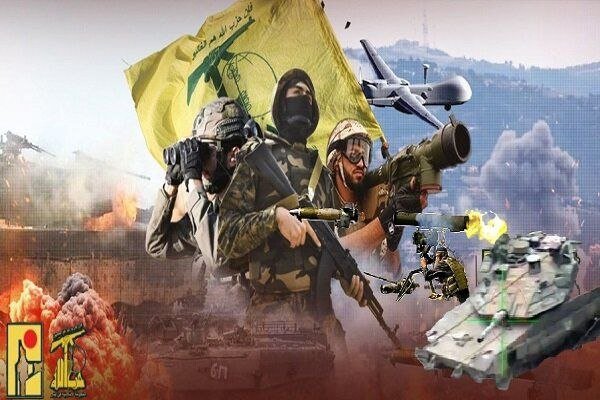
Rocket and artillery exchanges flared along the southern Lebanon frontier on the evening of 18 June 2026, with Iranian state-aligned outlet Press TV reporting that Hezbollah had targeted Israeli occupation forces in Kfar Tebnit, and the open-source channel War Front Witnesses logging Israeli artillery shelling across the Nabatieh region and Israeli jets over southern Lebanon as clashes escalated in the Ali Al Tahrir area. The incidents, compressed into a roughly twenty-minute reporting window between 21:50 and 22:07 UTC, marked one of the more concentrated bursts of activity on the frontier in recent weeks and offered the first public read on whether the post-conflict lull along the Blue Line was holding.
What is unfolding on the ground is less a single event than a rolling contest of fire and counter-fire. The question is no longer whether the frontier is quiet; it is whether the present tempo is a localised flare-up that both sides allow to burn down, or the opening move in a broader reconstitution of armed confrontation between Hezbollah and the Israel Defense Forces.
What the four reporting points describe
The earliest item, timestamped 21:50 UTC and relayed through the RNIntel Telegram channel, frames the exchange in operational terms: Hezbollah fighters clashing with Israeli forces in Ali Al Tahrir, southern Lebanon, with Hezbollah reported to be launching rockets at Israeli positions and the IDF targeting the area in response. Twenty minutes later, at 22:04 UTC, War Front Witnesses logged Israeli artillery fire over Nabatieh and Israeli jets over southern Lebanon, tying the shelling directly to the clashes in Ali Al Tahrir. At 22:07 UTC, Press TV carried a one-line Hezbollah statement claiming that the group had targeted Israeli occupation forces in Kfar Tebnit — a town roughly twelve kilometres east of Nabatieh, on the slopes facing the border.
Read together, the four points describe a chain of action and reaction centred on two adjacent localities in south Lebanon: Ali Al Tahrir, where the ground fighting is reported to be most intense, and Kfar Tebnit, where Hezbollah says it struck IDF personnel. Israeli artillery is reported across the Nabatieh governorate as a whole, and Israeli jets are reported overhead, though neither the IDF spokesperson nor any Western wire had issued an on-the-record briefing in the four source items.
The counter-narrative: what the Iranian-aligned framing leaves out
Press TV is the Iranian state's English-language outlet, and its framing — "Israeli occupation forces," implicit legitimation of the Hezbollah attack as resistance — should be read for what it is. The channel does not quote the IDF, does not cite Israeli or international casualty figures, and does not note that Hezbollah remains a designated terrorist organisation in the United States, the United Kingdom and several other Western jurisdictions, nor that its armed wing sits on the EU's terror list. It also does not address the structural argument advanced by Israeli officials that a militarised, Iranian-armed non-state actor on the northern border represents a standing strategic threat regardless of any specific rocket salvo.
The War Front Witnesses channel, which produced two of the four items, is an open-source account that aggregates frontline footage and unverified frontline claims. Its reporting on this sequence is granular — artillery direction, jet activity, the named village — but does not provide independent verification, casualty counts, or evidence of who struck first. The two channels, in other words, describe the same event from a Hezbollah-sympathetic vantage. That vantage has informational value: it surfaces what the group itself is claiming, in real time, which is itself a fact. But it is not the whole fact.
A structural read: the frontier as the unfinished business of the 2024 conflict
The southern Lebanon frontier is not a separate theatre. It is the unfinished edge of the war that began in October 2023. The November 2024 ceasefire arrangement froze the fighting at a particular line, on particular terms, with the explicit understanding that neither side would use the pause to reconstitute offensive capability. The events of 18 June are legible as a stress test of that freeze: the question is whether what is being reported is a Hezbollah probe, an IDF pre-emption, a localised miscalculation, or the first move in a renewed cycle.
The structural pattern is familiar. A non-state armed group with regional-state backing (Hezbollah, backed by Iran) trades fire with a national army (the IDF) along a border populated by civilians on both sides. Each side communicates through outlets sympathetic to its framing. Each side has an incentive to claim operational success. Each side has an interest in calibrating the level of violence to avoid dragging in a wider set of actors — Iran directly, the United States and France as ceasefire guarantors, and the Lebanese state, which has its own domestic reasons for not wanting a return to open war on its southern border. The pattern does not mean the present tempo is sustainable, nor that it will inevitably escalate. It means that the next forty-eight hours of reporting — Israeli and Lebanese wire confirmation, UNIFIL positioning, casualty figures from either side — will tell more than the next forty-eight hours of Telegram posts.
What is at stake
If the clashes of 18 June are read as a one-off flare-up, the consequences are local: damage in Kfar Tebnit, displacement risk in Ali Al Tahrir, and a diplomatic note from Beirut to the UN Interim Force in Lebanon. If they are read as the opening of a sustained cycle, the consequences are wider. A return to open Hezbollah-IDF confrontation would, by historical precedent, draw Israeli air power into Lebanese population centres, raise the prospect of renewed Israeli ground operations inside Lebanon, and pull Iranian-backed forces across the region into a posture of mutual reinforcement. It would also test the ceasefire architecture directly, and with it the credibility of the United States and France as mediators.
For civilians on both sides of the border, the stakes are concrete and immediate. The communities of northern Israel that absorbed rocket fire through 2024 and into late 2025 are not theoretical targets. The towns and villages of the Nabatieh governorate, which endured intensive Israeli bombardment during the previous war, are likewise not abstract. Any renewed escalation will be paid for first by them.
What remains uncertain
The four source items do not establish, in either direction, who struck first, what was struck, or whether there were casualties. They do not record an IDF statement. They do not record a UNIFIL statement. They do not record a Lebanese Armed Forces statement. They do not record an Israeli or Lebanese civilian-casualty figure, nor a damage assessment. The claims of rocket fire by Hezbollah and artillery fire by the IDF are sourced to channels that have a directional interest in the framing; confirmation from the wire services and from the IDF spokesperson will be the standard against which these initial accounts are measured.
What can be said with confidence on 18 June 2026 is narrower than the headlines will suggest. There is active fighting in at least two named localities in southern Lebanon — Ali Al Tahrir and Kfar Tebnit — involving Hezbollah and the IDF. There is Israeli artillery fire across the Nabatieh governorate. There are Israeli jets over southern Lebanon. The duration, scale, and political consequences of this episode are not yet knowable from the available reporting.
This article is built on four Telegram-channel inputs from the regional wire, two of them from War Front Witnesses, one from Press TV, and one from RNIntel. Monexus has flagged the directional framing of the Iranian-aligned sources and treated their claims as initial reporting, pending IDF, UNIFIL, and Western-wire confirmation.
Wire provenance
This editorial synthesis draws on the following public wire/social posts:
- https://t.me/PressTV/
- https://t.me/wfwitness/
- https://t.me/wfwitness/
- https://t.me/rnintel/
Follow the event.
These dated source records provide context. They do not retrospectively verify this archive article.
Separate what the nuclear watchdog reported from what it could not determine after the June 2025 strikes.