Hormuz Reopens, Missiles Stay: Reading the Trump–Iran 14-Point Memorandum
A 14-point memorandum signed in Washington commits Tehran to reopen the Strait of Hormuz and start nuclear down-blending within 60 days — but leaves Iran's ballistic missile programme, the core of its deterrent, untouched.
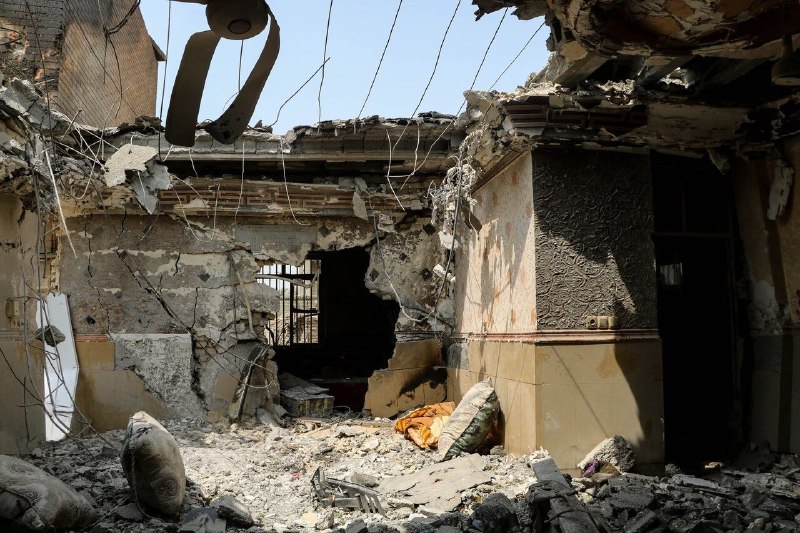
The 14-point memorandum of understanding between the United States and Iran, signed in Washington on 18 June 2026, commits Tehran to reopen the Strait of Hormuz and to enter a 60-day negotiating track aimed at a permanent peace treaty built around nuclear down-blending. It does not, on the evidence now public, touch Iran's ballistic missile programme. That asymmetry — the world's most contested oil chokepoint opened, the country's most consequential deterrent preserved — is the deal's actual architecture, and the reason the same document is being read as historic in chancelleries from Riyadh to Beijing and as a giveaway in Washington commentary circles. The signing closes a chapter that began when Iran closed the strait in the spring, and opens a far more combustible one: can a deal that everyone can live with for sixty days survive the second day after the first one expires?
What was announced on 18 June is, in form, less than a treaty and more than a press release. The 14-point memorandum is the diplomatic scaffolding; the down-blending commitment — converting Iran's near-weapons-grade enriched uranium into a form unusable for a nuclear device — is the verifiable test. A 60-day window is unusually short for a negotiation of this scale, and the public language is correspondingly modest. Trump has framed the outcome in transactional terms. According to the X account Unusual Whales, the president said on 18 June that he worked the deal "to avoid economic catastrophe," a phrase that maps directly to the oil-price spike that followed the Hormuz closure. He was also captured, again per Unusual Whales, joking: "If [the Iran deal] works out, I'm going to take the credit; if it doesn't work out, I'm blaming [Vance]." The line does double duty: it signals to markets that the White House is reading the deal as a hedge against energy shocks, and it pre-positions a political alibi for failure.
What the memorandum actually does
The substantive commitments disclosed in the memorandum are limited and specific. The Strait of Hormuz, through which roughly a fifth of global oil shipments transit, returns to open passage for commercial and energy traffic. Iran enters a 60-day track to negotiate a permanent peace treaty, with nuclear down-blending as the central verifiable concession. The same document, on the public read, leaves Iran's ballistic missile programme outside the negotiation perimeter. That is the single most consequential choice in the text, and it is also the choice least likely to hold. Trump's own remarks — captured on Unusual Whales and corroborated by a separate Polymarket post noting the same quotes — amounted to a public admission that excluding missiles was a deliberate trade. "If other countries have ballistic missiles, it is a little unfair Iran doesn't," the president said, a formulation that legitimises parity with regional missile states while doing nothing to constrain the systems already in Iranian hands. The framing is unusual from a US president; the policy content is closer to the Israeli and Saudi position of the early 2010s, when the constraint list ran to warheads and enrichment, not delivery vehicles.
The Iranian side has read the same text and reached the obvious conclusion: a deal that locks in the strait's reopening and a partial nuclear rollback while leaving the missile deterrent intact is a deal the Islamic Republic can sign. Tehran gets the macroeconomic relief of a flowing strait, retains its regional reach, and accepts an inspection regime on enrichment that, on a 60-day clock, it can shape. The asymmetry is not an oversight. It is the price of an agreement reached under energy-market duress.
The Hormuz context that the deal is designed to escape
Iran's closure of the strait this spring was the lever that made the memorandum possible. The decision to close — and the credible threat to close again — converted Iran's geographic position into a negotiating asset. The 14-point document is, in effect, Iran's exit fee from a posture it could not afford to maintain indefinitely: a closed strait is a wartime instrument, not a peacetime one, and the cost of holding it in place was oil at prices that made even Washington's domestic politics uncomfortable. Trump's "avoid economic catastrophe" line is the same observation in domestic register.
That gives the deal its short shelf life. The memorandum is, in part, a market-stabilisation exercise. The 60-day window is the period during which traders and energy ministries can price in a return to normal Hormuz flows and Iranian crude exports, and during which Iranian and American negotiators can attempt to convert the framework into a treaty. If the window closes without a treaty, the strait question returns. The structure is therefore a two-month truce inside a longer confrontation, not a settlement of it.
The missile question the memorandum does not solve
A deal that commits to nuclear down-blending and a strait reopening but does not constrain ballistic missiles is, from the perspective of the Gulf monarchies and Israel, an incomplete deal. From Tehran's perspective, it is the only deal on offer. The middle ground — limits on range, on warhead count, on solid-fuel production — exists in the technical literature and in prior negotiation tracks, but does not appear in the public read of this memorandum. The White House's argument, signalled in Trump's own comments about regional missile parity, is that missile constraints are a separate file, one that belongs with the Gulf states and Israel rather than in a US-Iran bilateral. That argument is defensible. It is also a statement that two of America's closest regional partners will have to absorb the consequences of a US-Iran accommodation that does not address their core security concern.
The Israeli and Saudi reactions, on the public record so far, are calibrated rather than denunciatory. Neither capital has a public interest in a US-Iran détente that they did not prevent; both have an interest in preserving the US security umbrella. The compromise language being used — "continue to consult," "follow-on talks," "regional architecture" — is the vocabulary of a deal that has been accepted in form and will be tested in implementation.
What the next sixty days will decide
The 60-day window is short by treaty-making standards and long enough for the politics of the deal to harden in three different directions. The first is the negotiating track itself. Down-blending is technically verifiable; the question is the volume, the inspection cadence, and the disposition of the material after down-blending. The second is the Gulf and Israeli response. If the follow-on missile track is not opened early, the regional pressure on Washington to reopen the file will rise with each shipment of Iranian oil that reaches Asian refiners under a reopened strait. The third is the US domestic market. The president's own framing of the deal — economic relief, energy stabilisation, an alibi pre-positioned with the vice president — is the political floor the deal has to stay above. A breach in any of the three directions within the sixty-day window returns the parties to a closure posture that the memorandum is, in the end, designed to prevent.
The sources do not specify the full text of the memorandum, the role of the Gulf states in its negotiation, or the identity of the Iranian signatory. What they do support is a narrower and more durable read: a deal that stabilises the most volatile single point in the global energy system, locks in a partial nuclear constraint, and knowingly leaves Iran's missile deterrent outside the perimeter. That is not nothing. It is also, as Trump himself has acknowledged in the same news cycle, a bet that can fail.
This publication framed the memorandum as an asymmetric settlement — Hormuz reopened, missiles untouched — rather than as a comprehensive peace, in line with the public remarks of the principal US signatory on 18 June 2026.
Wire provenance
This editorial synthesis draws on the following public wire/social posts:
- https://x.com/middleeasteye/status/2067574108842336256
- https://x.com/unusual_whales/status/2067574108842336256
- https://x.com/unusual_whales/status/2067574108842336256
- https://x.com/unusual_whales/status/2067574108842336256
- https://x.com/polymarket/status/2067574108842336256
Follow the event.
These dated source records provide context. They do not retrospectively verify this archive article.
Separate what the nuclear watchdog reported from what it could not determine after the June 2025 strikes.