Iran deal: a sanctions exit and a settlers' blacklist warning arrive in the same news cycle
A reported final-deal framework would unwind US sanctions on Tehran. On the same day, a UN envoy warned settler violence could trigger a blacklist. Both stories will test the new diplomacy.
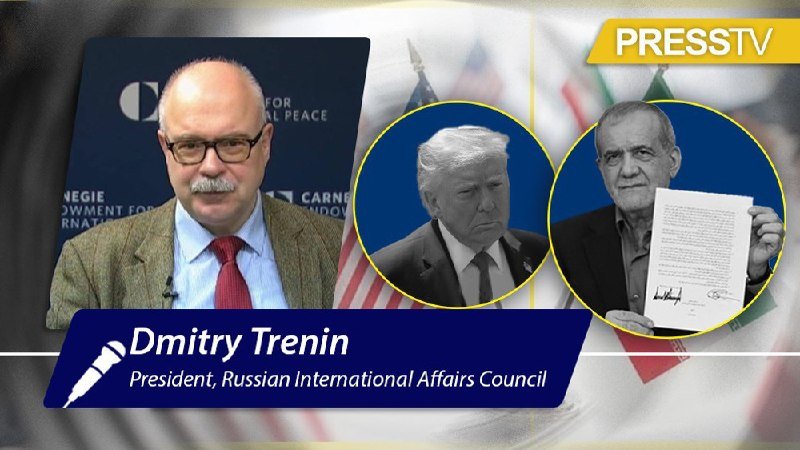
The Wall Street Journal reported on 18 June 2026 that the United States, in a final-phase understanding with Iran, is preparing to terminate its sanctions regime against the Islamic Republic — a move that, if confirmed in signed text, would constitute the most consequential unwinding of US economic coercion since the 2015 Joint Comprehensive Plan of Action. Hours later, Al Alam Arabic carried a separate urgent wire: the UN Special Representative on children in armed conflict had warned that, if settler violations continue, the relevant parties would be placed on a blacklist. Two pieces of news, two different geographies, one day — and together they sketch the operating environment in which any "final deal" will be tested.
The sanctions story is the headline. A US termination order would unwind the architecture built up across four presidencies: the secondary-sanctions spine that has, since 2018, kept most of the global banking system off-limits to Iranian oil exports, and the designations list that has followed Iranian shipping, metals and petrochemical revenues. The reported framework, flagged by US-based markets account Unusual Whales citing the WSJ scoop, lands the same week that Iranian and Tajik presidents exchanged a phone call welcoming "the understanding to end the war" and stressing the consolidation of peace and stability in the region, per Al Alam Arabic. Tehran and a Central Asian partner are publicly framing the moment as a regional peace dividend — language carefully chosen to bring Moscow and Beijing into the rhetorical coalition that legitimises the deal.
What "termination" actually means — and what it does not
Termination is not the same as ratification. Even if a sanctions termination order is signed, the legal mechanics matter: OFAC delistings require specific licence moves; secondary sanctions on third-country buyers unwind on a different timetable; and the snapback provisions that successive UN Security Council resolutions have tied to Iranian non-compliance would need their own quiet burial. The WSJ report, as relayed via the Unusual Whales post on 18 June 2026, signals intent more than execution. Markets will price the unwind the moment OFAC issues general licences; until then, the architecture remains in place, which is why Tehran's state-aligned media continues to use the cautious phrase "the understanding" rather than a deal.
The dollar consequence is the part worth staring at. A terminated US sanctions regime returns Iranian oil — roughly 1.5 million barrels per day at the 2017 baseline, heavily curtailed since — to a market that is, structurally, short of supply. It returns Iranian petrochemical, steel and copper revenue to the formal financial system, and it gives European and Asian buyers cover to resume normal-course purchasing without the secondary-sanctions overhang. For Saudi Arabia and the Gulf petrostate bloc, the deal is an immediate price-suppressant. For China, the largest remaining customer for sanctioned Iranian crude, the deal formalises what the dark fleet already does. For the US Treasury, the deal trades a coercion lever for a verification one — and verification is harder to enforce than a designation.
The settlers' file lands on the same day, deliberately or not
The Al Alam Arabic dispatch on the UN blacklist warning is a separate story about the occupied West Bank, but its timing is the point. Blacklisting under the UN Secretary-General's annual report on children and armed conflict is a procedural mechanism, not a Security Council resolution: it triggers a UN-mandated action plan, monitoring by country task forces, and reporting cycles. The warning's material content is that current trajectories of settler violence against Palestinian communities — destruction of property, displacement, attacks on villages — are crossing the evidentiary threshold. The political content is sharper: a blacklist designation would, in effect, place the relevant Israeli administrative or civilian actors on the same procedural footing as state armed forces under scrutiny, an asymmetry that Israeli diplomacy has historically fought hard to avoid.
If the goal of the day-one messaging is to demonstrate that the deal's regional settlement is not a free pass on every other file, the timing is useful. If the goal is to soften the Iranian-conservative audience that views any US-Iran accommodation as treasonous, the timing is also useful. The two stories do not contradict each other; they triangulate.
Structural frame: coercion, then accommodation, then verification
What is unfolding fits a recognisable pattern in US-Iran history. Coercion builds a bargaining chip; the chip is monetised; the sanctions architecture is partially unwound in exchange for a verification regime. The verification regime is where past deals have failed: the JCPOA's intrusive monitoring was the very feature the Trump administration sought to dismantle in 2018, and the very feature Iran has signalled it will accept only if sanctions termination is, this time, genuinely irreversible. The question is not whether a deal is signed but whether the verification architecture is durable enough to survive a future US administration. Termination orders can be reversed by a successor; the harder-won piece would be the return of Iranian oil revenues to formal banking — the kind of asset that, once restored, is politically very difficult to lock down again.
The structural backdrop is oil-market tightness, not Iranian good behaviour. OPEC+ spare capacity is constrained, Chinese refining demand has surprised to the upside in 2026, and a non-trivial portion of the global tanker fleet is still moving sanctioned barrels at a premium. In that market, the marginal Iranian barrel is a price event regardless of who is in the White House.
What we do not know — and what to watch by Friday
Several things are not in the public record. The WSJ report, as carried by the Unusual Whales account on 18 June 2026, does not name the legal instrument, the scope of the delistings, or the duration of any verification regime. The Iranian-Tajik readout does not specify which "war" is being ended, and Al Alam Arabic is state-aligned; its framing should be read as Tehran's preferred narrative, not as a neutral summary. The UN blacklist warning is procedural and does not, on the available wire, name a specific state party or a specific date for a designation decision.
The markers worth watching before the end of the week: an OFAC general licence signalling actual delistings; a UN Secretary-General's country-task-force announcement; the Brent crude response to the reporting (a sustained drop implies the market believes the unwind is operational, not rhetorical); and any Israeli official statement linking the deal to a wider regional package. Absent those, the 18 June 2026 cycle is signalling rather than substance — and signalling, in the Iran file, has been mistaken for settlement before.
Desk note: Monexus carries the WSJ report as relayed by the Unusual Whales X account, the Al Alam Arabic urgent wires, and the UN procedural warning as three distinct inputs on the same day. We are not treating the deal as concluded; we are treating the reporting as a marker of intent and a test of the verification regime that will follow.
Wire provenance
This editorial synthesis draws on the following public wire/social posts:
- https://t.me/alalamarabic
- https://t.me/alalamarabic
- https://en.wikipedia.org/wiki/Joint_Comprehensive_Plan_of_Action
- https://en.wikipedia.org/wiki/UN_Secretary-General%27s_Annual_Report_on_Children_and_Armed_Conflict