After the strikes, a toll road: Iran floats Hormuz fees as a US draft deal reportedly offers 60 toll-free days
Tehran has begun talking about Hormuz as a service it charges for. Washington, by one account, is bargaining over how many days that service comes free.
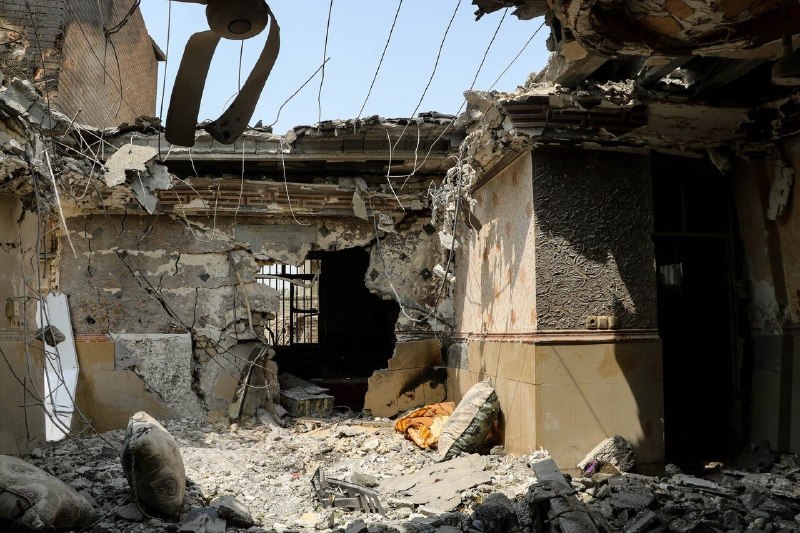
On 18 June 2026, the chokepoint at the centre of the global energy economy suddenly acquired a price tag. Iran announced it would charge a "payment for services" to vessels transiting the Strait of Hormuz, framing the world's most consequential oil corridor as infrastructure it owns, operates, and is now billing for. Hours later, a separate report — circulated on prediction markets and attributed to US–Iran back-channel drafts — described a deal that would suspend any such levy for 60 days. The two announcements, read together, sketch the outlines of a very particular kind of negotiation: one in which the party that just absorbed American and Israeli bombing is converting military damage into a commercial lever, and the party that delivered those bombs is reportedly offering a brief reprieve in exchange for it.
This is the realignment the new Middle East is producing. For decades, the Strait of Hormuz has been treated, in Western strategic writing, as a commons — a waterway too important to be politicised, guaranteed by US naval power and policed by the Fifth Fleet. Tehran's new language reframes it as a service: a man-made compression of geography, a place where a sovereign can sit on the tap and name a price. The 60-day draft, if real, is not a peace deal; it is a discount coupon. And discount coupons, in commodity markets, are often more volatile than the underlying commodity.
What was said, and by whom
The two announcements have very different sources and very different weight. The first came from Iranian officials and was carried by Al Jazeera's English-language breaking news desk on 18 June 2026 at 12:23 UTC: Iran would charge a "payment for services" to ships moving through the Strait of Hormuz. The formulation matters. It does not name a blockade, which would be an act of war under the United Nations Convention on the Law of the Sea. It does not announce a toll schedule, which would imply a permanent regulatory regime. It announces a fee, framed as compensation — for the security, the policing, the implicit guarantee of safe passage that Iran, by virtue of sitting on the northern shore, claims to provide.
The second piece of information emerged in a different register entirely. A 17 June 2026 post on the prediction-market account Polymarket, timestamped 20:03 UTC, described a reported US–Iran draft deal under which the Strait of Hormuz would be "reopened … toll-free for just 60 days." The 60-day figure is doing a great deal of work. It implies a temporary window, after which the Iranian fee regime would presumably snap back. It also implies that someone, somewhere, has been negotiating in writing about a fee that, officially, did not exist 48 hours earlier.
A third data point, harder to verify and easier to discount, surfaced the same morning. Iranian state-aligned outlet Tasnim News English quoted "Professor Robert Pipe, author and expert on military strategy" — described in the post as a "prominent American thinker" — arguing that the recent US–Israeli bombing campaign had not weakened Iran but had instead "made it stronger" and allowed it to "dominate" the Strait of Hormuz. The phrasing is editorial, not analytical, and the named figure does not appear in any verifiable Western register of military strategists. Tasnim did not provide a link to an original interview, a peer-reviewed publication, or a credentialed institution. The claim is best read as a piece of Iranian elite signalling: that the regime wants foreign analysts, real or fabricated, to be seen endorsing the idea that the war produced a strategic dividend.
The corridor as contested infrastructure
The Strait of Hormuz is twenty-one miles wide at its narrowest point, with shipping lanes that compress to two miles in each direction. Roughly a fifth of the world's seaborne oil, and almost a third of its liquefied natural gas, passes through it. It is the only sea route from the Persian Gulf to the open ocean. There is no overland alternative at scale. For the Gulf monarchies, the Iraqi pipeline network, and the Iranian export terminal at Kharg Island, Hormuz is not a convenience; it is a pulmonary artery.
Iran has long retained the technical capacity to close the strait — mine-laying fast boats, anti-ship missile batteries along the coast, submarines in the Gulf. What it has not, until now, retained is the legitimacy claim. The 1982 UN Convention on the Law of the Sea treats transit passage through straits used for international navigation as something that "shall not be impeded." Charging a fee for transit in such a strait is, in the strict legal sense, not permitted. The Iranian formulation — "payment for services" — is a work-around. It recharacterises the relationship: not a foreign ship passing through Iranian waters, but a foreign ship receiving an Iranian service in Iranian-controlled waters, for which a charge is appropriate.
The reframing is audacious but not novel. Egypt charges transit fees for the Suez Canal. Turkey charges transit fees for the Bosphorus and the Dardanelles. Panama charges transit fees for the Panama Canal. In each case, the legal basis is specific: a sovereign canal in sovereign territory, governed by an international treaty. The Hormuz claim is structurally weaker, because the strait is not a man-made waterway and the legal regime is different. But the political logic rhymes. By speaking the language of canal tolls, Iran puts itself in the same sentence as Cairo, Ankara, and Panama City — that is, in the company of states that have monetised geography and have not, historically, been bombed for it.
The 60-day draft, and what it would actually do
A 60-day toll-free window is, on its face, a humanitarian gesture: enough time, perhaps, for a tanker queue to clear, for insurance premiums to relax, for refiners in India and South Korea to renegotiate their July cargoes. It is also a pricing signal. Oil markets are forward-looking, and a 60-day window is, by definition, a known horizon at which the price reverts. Traders do not need to know what the post-60-day regime will look like; they need only know that it will exist, and that it will be Iranian-set.
The draft deal, as described, also implicitly acknowledges the Iranian fee claim. A sovereign that did not believe the fee would hold would not need to negotiate a 60-day exemption from it. The fact that exemption language exists suggests that, on the American side of the table, planners are now operating on the working assumption that Tehran can, in fact, collect.
This is the part of the story that the prediction-market framing tends to flatten. Markets price outcomes, not capabilities; they ask who wins the next 60 days, not who controls the corridor for the next 60 years. But the structural question is the second one. If the US concedes, even briefly, that Hormuz transit is a service Iran can charge for, the concession is not reversible at the end of August. The legal habit will have been built. The pricing infrastructure — billing agents, escrow accounts, the bureaucratic apparatus of transit fees — will exist. Reopening a strait is a physical act; reclosing a billing regime is a political one.
The military-strategic frame, stripped of slogans
The Iranian argument, in its strongest form, is that the United States and Israel struck Iran's nuclear infrastructure and missile production lines, and the strikes did not produce the political collapse the attackers had hoped for. In the months since, Iran's proxies in Lebanon, Iraq, and Yemen have remained operationally active. Iran's missile force has been damaged but not destroyed. The regime has survived. From this, the Iranian reading goes, a logical inference follows: if you cannot break the regime, and you cannot break the strait, you will end up bargaining with both.
The Western counter-argument, also in its strongest form, is that Iran's position is structurally weaker than it appears. The oil and gas infrastructure on the Iranian side of the Gulf is exposed to Israeli air power. Iranian-flagged tankers have been subject to sanctions enforcement in the Indian Ocean, the Red Sea, and the Eastern Mediterranean. Iran's economy is under sustained pressure. The "payment for services" announcement is, in this reading, a sign of distress, not a sign of strength — a revenue-raising exercise disguised as a strategic move.
Both readings have evidence behind them. The most that can be said, on the available reporting, is that Iran has chosen this moment to make a claim that is at once legalistic, commercial, and theatrical — and that the United States, through the reported draft deal, has chosen this moment to acknowledge the claim without explicitly endorsing it. That is the bargaining stance: neither side wants the strait closed, and both sides are signalling that they prefer to monetise it.
What the 60 days buy, and what they cost
The 60-day window, if it materialises, will most directly benefit two categories of actor. The first is the Gulf monarchies — Saudi Arabia, the UAE, Kuwait, Iraq — whose oil exports would otherwise face a regime in which Iran had explicit pricing power over their principal route to market. The second is the major Asian importers — China, India, South Korea, Japan — whose state-owned refiners operate on long-dated cargo contracts and cannot absorb sudden, undefined transit costs. Both groups have been quietly lobbying for a quiet settlement, and the 60-day window is the kind of quiet settlement their diplomats can defend in public without claiming a victory.
The costs fall elsewhere. American prestige takes a hit in any deal that treats Hormuz as a service Iran provides rather than a commons the US Navy secures. Israeli planners, who wagered that strikes would produce a new equilibrium in which Iran could be contained at lower cost, would see their bet unwound. The broader argument that US power is the underwriter of global energy transit — the argument that has justified carrier deployments in the Gulf for forty years — would, in the space of a single signed document, be demoted from fact to aspiration.
For Tehran, the calculus is more contingent. The fee is a revenue stream; the 60-day window, if honoured, is also a revenue stream, because it implies a regime that the regime survives to collect. The worst outcome for Iran is a deal in which the US extracts an Iranian commitment not to charge a fee, in exchange for sanctions relief that never quite arrives. The best outcome is the opposite: a deal that establishes the fee, suspends it briefly, and then lets the post-60-day regime begin with a clear international precedent. Between those two poles, the bargaining of the next two months will happen.
The verification gap
Three caveats, each of which the reader should hold in mind. First, the Iranian "payment for services" announcement has been reported by Al Jazeera's breaking news desk, but the specific fee schedule — the per-barrel figure, the per-vessel tonnage rate, the collection mechanism, the exceptions for Chinese, Indian, and Russian-flagged tankers — has not been disclosed. Without those details, the announcement is a claim of capability, not a market event.
Second, the 60-day figure originates in a Polymarket post attributed to "the reported US–Iran draft deal." Polymarket is a prediction market, not a primary-source news organisation. The post may be quoting a draft text; it may be quoting a US official's read of a draft text; it may be quoting speculation about a draft text. The 60 days should be treated as a circulating figure, not a confirmed term.
Third, the Tasnim-cited "prominent American thinker" — Professor Robert Pipe — does not appear in any readily verifiable public record of US military strategists. The Tasnim framing of the bombing's outcome is consistent with Iranian elite messaging, but the named source is not. Readers should treat the quote as an Iranian editorial line, not as the view of any identifiable American figure.
What the three items do, taken together, is sketch the shape of a negotiation that has not yet been confirmed in detail by any signatory. The shape is plausible. The 60 days, the toll, the rhetorical move from "commons" to "service" — each piece fits the others. But plausible is not the same as verified, and the next 60 days will be, in part, a test of which of these reports holds up to scrutiny and which quietly disappears.
Stakes beyond the strait
The deeper question is whether what is being negotiated in the Gulf is, in fact, a piece of energy infrastructure, or whether it is a piece of the global order. For four decades, the implicit deal has been: the US Navy secures the chokepoints, in exchange for the dollar's role as the currency in which the oil that traverses them is priced. That deal has frayed in stages — through the rise of yuan-denominated crude contracts, through Indian and Turkish arrangements with Iranian refiners, through the slow erosion of the petrodollar's universality. A toll regime in Hormuz, even a brief one, would be the most visible marker yet that the infrastructure layer of the old order is being unbundled and re-priced.
The 60-day window, if it holds, will be remembered less for what it suspended than for what it normalised. By the end of August 2026, the question will not be whether Iran can charge for Hormuz transit — the announcement has already settled that. The question will be who else, in the new geography of contested corridors, decides to do the same.
Wire provenance
This editorial synthesis draws on the following public wire/social posts:
- https://t.me/tasnimnews_en
Follow the event.
These dated source records provide context. They do not retrospectively verify this archive article.
Separate what the nuclear watchdog reported from what it could not determine after the June 2025 strikes.