A phone call to Kuwait, and a quiet expansion of Iran's regional ledger
Iran's foreign minister briefed Kuwait on the Islamabad Memorandum of Understanding, the third Gulf readout in days — a procedural step with structural weight, as Tehran works to embed the agreement into a wider Arab shelf.
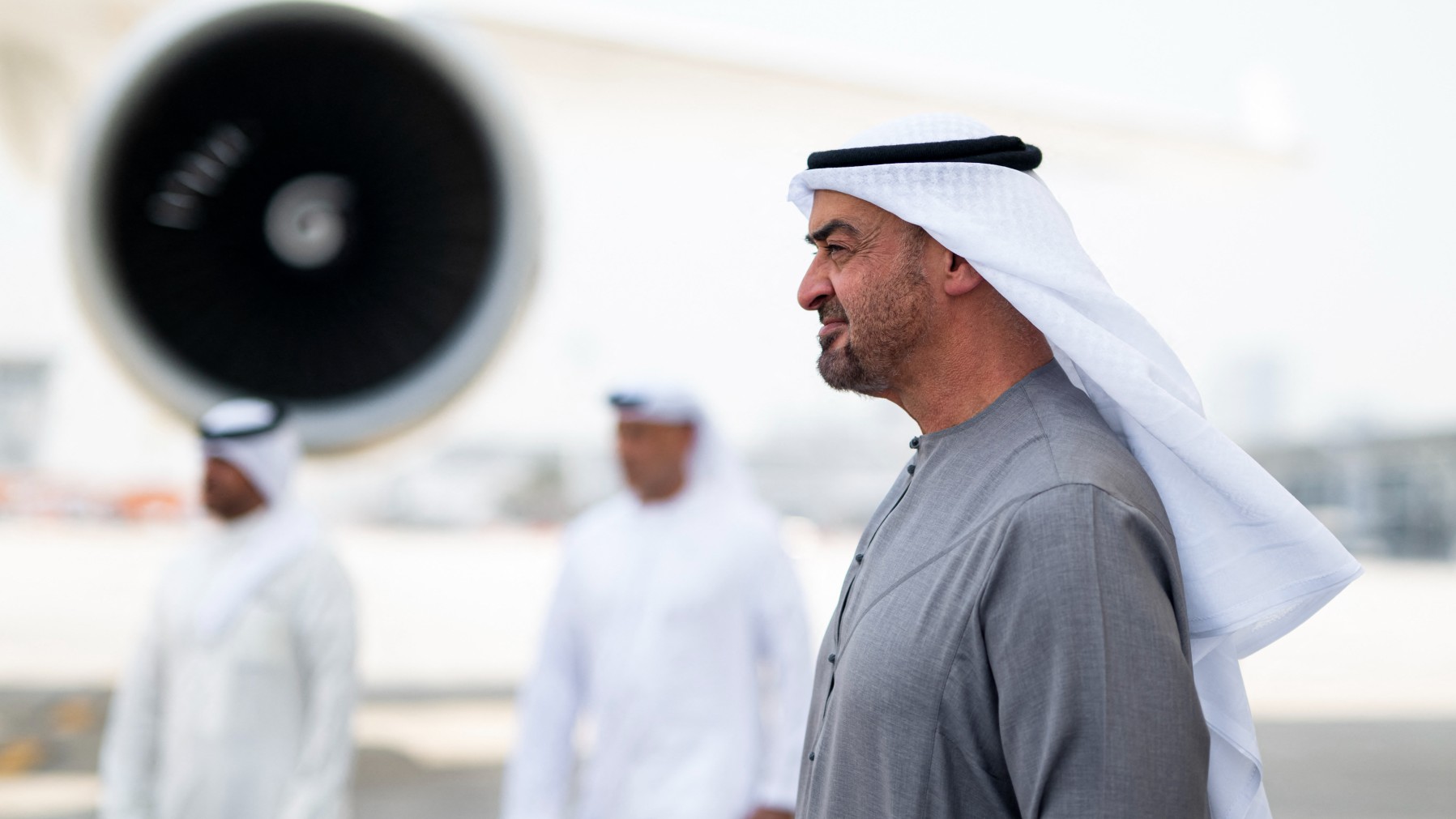
At 11:33 UTC on 18 June 2026, Iran's foreign minister Abbas Araghchi placed a telephone call to his Kuwaiti counterpart, Sheikh Jarrah Jaber Al-Ahmad Al-Sabah, and used it to brief Kuwait on the contents of the Islamabad Memorandum of Understanding. The two readouts carried by Iranian state-aligned outlets describe an essentially procedural exchange: a courtesy call, a recap of the MOU's provisions, and an offer to keep Kuwait informed. Read narrowly, there is almost nothing here. Read in sequence — alongside the other Gulf phone calls that have followed the Islamabad document — the call is a small but legible step in a larger diplomatic pattern, and one that says something useful about how Tehran is now choosing to manage its Arab neighbourhood.
The call fits a familiar Gulf choreography. After a major regional document is signed — particularly one that touches questions of sovereignty, security architecture, or the trajectory of a long-running dispute — ministers place calls. They do it for three reasons that rarely appear in the official lines: to test how the partner interprets the text, to float a working interpretation the signing party would like to see adopted, and to begin constructing a coalition of capitals willing to read the agreement in a particular way. The Kuwait readout belongs to that category of work. The official framing — that Araghchi "briefed" his counterpart on the MOU — is a diplomatic verb with weight. It implies asymmetry of information, and it positions Kuwait as a recipient rather than a co-author. Tehran is announcing, not consulting.
The MOU and what is actually being briefed
The Islamabad Memorandum of Understanding itself has emerged over recent weeks as the operative regional text. Reporting from the three wire items in this thread is consistent in identifying the document, in identifying the principal Iranian interlocutor, and in identifying a coordinated Gulf briefing track. None of the three items published on 18 June 2026 specifies the full text of the MOU; all three describe the Kuwait call as a briefing on its "contents" or "provisions." That linguistic restraint is itself significant. Tehran is choosing to disclose selectively, and to disclose first to specific Gulf foreign ministries rather than to a public press conference or a multilateral gathering. The audience is Gulf capitals. The medium is bilateral. The tempo is a phone call every few days.
What we can say from the thread, with confidence: Araghchi, who serves as Foreign Minister of the Islamic Republic of Iran, spoke by phone on 18 June 2026 with Sheikh Jarrah Jaber Al-Ahmad Al-Sabah, the Foreign Minister of Kuwait. The two readouts (Fars and Tasnim, in English and Farsi respectively) are functionally identical — they are coordinating outlets running a single approved line. A third outlet, Jahan Tasnim, carries a near-verbatim Farsi-language version with the same framing. The lack of divergence between the three is the most informative tell. It signals a unified messaging operation, not three independent reports of the same call.
The Gulf briefing track
The Kuwait call is best read as the third leg of a regional tour-by-telephone. Iranian-aligned outlets have, in recent days, carried similar readouts describing Araghchi's contacts with other Arab foreign ministers following the MOU. The pattern, as it now stands, has three features worth flagging.
First, sequencing. The order in which Gulf capitals are called is not random. The first calls are going to states that have, historically, maintained working channels with Tehran even during acute regional crises — Kuwait, Oman, Qatar among them. They are not going to the loudest opponents of recent Iranian policy. That sequencing is consistent with a coalition-building strategy aimed at building a soft consensus around the MOU's interpretation, rather than a campaign to convert sceptics.
Second, register. The calls are described as briefings, not negotiations. Araghchi is not, on the available record, asking Kuwait to sign anything, endorse anything, or join anything. He is informing. This is the language of a party that has already concluded an arrangement and is now managing perceptions of it. It is closer to post-signification diplomacy than to mid-negotiation diplomacy.
Third, restraint. No public readout from Kuwaiti state media is currently included in the thread. The absence is informative: it tells us the Kuwaiti side has not, as of the timestamps carried by the three Iranian wire items, amplified or contested the Iranian framing. Kuwait is listening, not yet echoing. Whether that silence is the silence of consent, the silence of caution, or the silence of bureaucratic delay is not something the available reporting can resolve.
Why Kuwait specifically
Kuwait is not a random address for this call. The Kuwaiti foreign minister, Sheikh Jarrah Jaber Al-Ahmad Al-Sabah, is the head of a diplomatic service in a state that has long played a mediator role between Tehran and its Gulf critics. Kuwait hosted Iranian-Saudi back-channel talks that produced the 2023 Beijing-brokered rapprochement; it has historically tried to keep a channel open to Tehran even when neighbours have closed theirs; and it sits in a unique institutional position inside the Gulf Cooperation Council as a convener without being a hegemon. It is, in short, a useful first call: a capital that can absorb the briefing, transmit it to other GCC members in its own voice, and either ratify or dilute the Iranian framing without anyone losing face.
That mediator logic also explains why the call's content is being kept narrow. A briefing on the MOU's "provisions" — language used in both the Fars and Tasnim readouts — is a narrower payload than a request for endorsement. It gives Kuwait room to repeat what it has been told without committing to a view, and it gives Tehran a recorded call, three wire items, and a public paper trail that documents its outreach. If the MOU later becomes contested, Tehran will be able to point to this call as evidence that the text was shared, in good faith, with a regional partner in a position to consult with the rest of the Gulf.
The counter-read and the limits of the framing
The dominant framing — that this is a routine courtesy call on a procedural question — holds, and there is no source material in the thread to support a more dramatic reading. The call does not, on the available record, signal a new Iranian alignment with Kuwait, a breakthrough in any outstanding bilateral file, or a concession by either side. The counter-read worth taking seriously is also procedural: that Iran is building a regional paper trail around the MOU specifically because it anticipates contestation, and that Kuwait has been chosen as a witness rather than a partner. The phone call is part of the MOU's hardening, not a softening of it. That reading is consistent with all three readouts and is, if anything, reinforced by the unanimity of their language.
What remains genuinely uncertain is whether Kuwait will eventually produce its own readout, whether other Gulf capitals will be called in the same window, and whether the MOU itself will be made public in full. The three sources do not specify the MOU's clauses, the date of its signing, or the other parties to it. They are also Iranian-aligned and should be read as Tehran's framing of the call rather than as an independent record. The Kuwaiti version of the conversation, when it appears — if it appears — will be the test of how much of the Iranian framing the other side is willing to ratify.
This article is built from three Iranian state-aligned wire items published within fifteen minutes of each other on 18 June 2026. The desk treats Fars, Tasnim, and Jahan Tasnim as legitimate primary sources for Iran's official line, not as neutral reporters, and notes the absence of an independent Kuwaiti readout as the central open question. Monexus frames this as a procedural diplomatic step with structural weight, not as a substantive policy turn.
Wire provenance
This editorial synthesis draws on the following public wire/social posts:
- https://t.me/FarsNewsInt
- https://t.me/JahanTasnim
- https://t.me/tasnimnews_en