Tehran–Islamabad on the Line: How a Cancelled Swiss Detour Put Pakistan at the Centre of Iran's Diplomatic Reopening
A 14:19 UTC phone call between Masoud Pezeshkian and Shahbaz Sharif, and the abrupt 13:57 UTC cancellation of the Pakistani premier's Geneva trip, recast Islamabad as a potential mediator in a war Tehran would rather not fight alone.
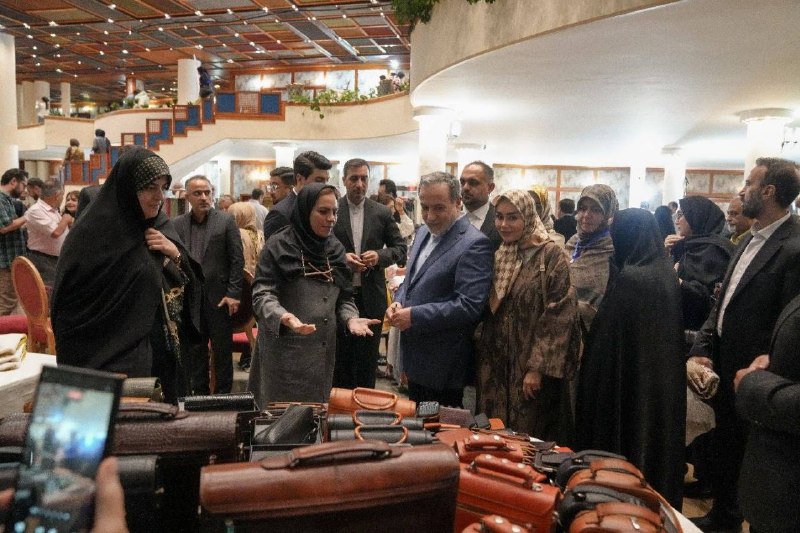
At 14:19 UTC on 18 June 2026, Iranian state media reported that President Masoud Pezeshkian had taken a telephone call from Pakistani Prime Minister Shahbaz Sharif. Within the same hour, two Iranian outlets — Tasnim and Mehr — and a third channel carrying Al Jazeera's reporting moved the same item in lockstep: the planned Sharif visit to Switzerland had been cancelled. The cancellation was attributed, in both Iranian and pan-Arab frames, to Pakistan's domestic broadcaster. Nothing in the three short wire items explains why a Pakistani prime minister would abandon a Swiss trip in the middle of a war month, or what the Tehran call substituted for. Read together, they describe a small but deliberate repositioning: Pakistan, on the record, telling Tehran it intends to stay useful.
The story that the cables leave on the table is bigger than the cables themselves. Islamabad has, in recent weeks, volunteered itself as a broker in a war its army chief has called "a tragedy unfolding in plain sight." Tehran is signalling — through the choice of call, the public thanks, and the swift cancellation of a competing Western itinerary — that it would like the offer taken seriously. Switzerland, in this telling, is what Geneva becomes when mediation stops being convenient: a missed flight.
A call, then a cancellation
The thread of reporting on 18 June is thin by volume and dense by alignment. Tasnim's English wire, the Iranian state outlet that has carried the most direct Pezeshkian quotations in recent weeks, opened the sequence at 13:57 UTC with a single-line bulletin: "Cancellation of Shahbaz Sharif's trip to Switzerland — Al-Jazeera channel, quoting Pakistan TV, reported that the planned visit of Shahbaz Sharif, the Prime Minister of this country, to Switzerland was [cancelled]." Within minutes, Mehr News — the reformist-leaning outlet that often runs as a check on Tasnim's harder line — carried the same Al-Jazeera-via-Pakistan-TV attribution. A third feed, running the Tasnim pool, repeated it again at 13:48 UTC. None of the three named a destination city, a reason, or a successor plan.
Then, at 14:19 UTC, Tasnim's English service carried the substance of what appears to have replaced the trip: the presidential call. Pezeshkian, by Tasnim's summary, thanked Sharif for "Pakistan's efforts towards reaching an agreement to end the war," and Sharif replied that those efforts "will remain in the memory of the Iranian nation." The formulation is not neutral. "Will remain in the memory" is the language of debt recorded — Pakistan is being told that Tehran is on the record about what Islamabad did, and that the receipt matters.
Two structural facts emerge from those four wires. First, the cancellation is sourced to Pakistan TV and Al Jazeera, with the Iranian outlets repeating rather than originating — a quiet but significant inversion of the usual information flow, in which Iranian state media usually frames Iran-Pakistan bilateral news on its own terms. Second, the gratitude is publicly reciprocated rather than privately noted. Both leaders went on the record, in two separate countries' news ecosystems, in the same afternoon.
Why Geneva matters, and why it can be skipped
Switzerland, in the diplomacy of the Middle East and South Asia, is rarely a destination. It is a venue. Geneva hosts the negotiating rooms where UN-led talks, US-Iran back-channel conversations, and various humanitarian tracks have lived for decades. A Sharif visit to Switzerland in mid-June 2026 would have been read, by default, as preparatory: a stop in a city with a known mediation infrastructure, with a known capacity to convene adversaries under discreet cover.
The cancellation matters, then, less as a trip and more as a venue-shift. By declining the Swiss stop and instead taking the call from Tehran — and allowing the call to be reported in real time — Sharif chose to keep his diplomatic capital inside a bilateral, on-the-record channel rather than spend it on the indirect infrastructure Geneva offers. That is a small but real cost. Geneva conversations are plausibly deniable. Presidential phone calls are not.
For Tehran, the calculation is sharper. Iran has, in the period covered by these wires, multiple reasons not to want its mediation conducted through a Western venue. A Swiss-mediated process would inherit the visible fingerprints of the European hosts and, by extension, the negotiating culture of the powers that built the post-2015 nuclear architecture. A Pakistani-mediated process does not. It runs through Islamabad, where the army chief has publicly called the war "a tragedy" and where the foreign policy establishment has spent two decades cultivating the habit of staying useful to every side of a crisis without binding itself to any of them.
What Pakistan is being thanked for
The thread does not specify which "war" Sharif is being credited with helping end. The wording — "an agreement to end the war" — is generic enough to refer to any of the active theatres in which Iran has an interest and Pakistan has standing. The most likely referent, given the timing and the diplomatic traffic of the past month, is the war that has dominated Pakistani public attention since the spring: the conflict in which Iranian and Pakistani theatres have repeatedly intersected, and in which Islamabad has positioned itself, with some success, as the country willing to keep talking to all sides.
The point that the reporting makes structurally is that Pakistan's diplomatic return has a price. Iran is now openly recording the debt. That has consequences for any future moment in which Tehran and Islamabad disagree — over border security, over energy corridors, over the management of militant groups that operate across the Baluch frontier. A country that has been thanked on the record for brokering peace is, by the same record, accountable if peace breaks. Pezeshkian's choice of language — "will remain in the memory of the Iranian nation" — converts a private gesture into a public instrument.
For Pakistan, the upside is also real. A prime minister who can pick up the phone and be thanked by the Iranian president is a prime minister with a continuing role in any settlement architecture. That role does not require Pakistani troops or Pakistani money. It requires Pakistani patience, and a venue in which the antagonists of the moment will accept Pakistani airtime. The Sharif government appears to be investing in exactly that patience.
The regional read
Three plausible readings of the 18 June sequence sit on the table, and the sources do not yet choose between them. The first, and most straightforward, is the one offered by Tasnim: a courtesy call, structured around an explicit thank-you, performed in public because both leaders judged that the message would be louder than the medium. The second, suggested by the cancellation of the Swiss trip, is that Sharif had been preparing for a different and more conventional mediation track in Geneva, and that the Tehran call either replaced it or ran in parallel — with Geneva paused rather than abandoned. The third, more structural, is that Iran is using the Pakistan channel to demonstrate, to multiple audiences simultaneously, that it has options outside the Western-mediated diplomatic infrastructure: that it can be reached through Ankara, through Muscat, through Beijing, and now through Islamabad, and that the choice of channel is itself a negotiating asset.
The dominant framing, as carried by the Iranian wires, supports the third reading. The choice to put the call on the record, in real time, with an explicit and slightly elevated formulation of gratitude, is not the framing of a courtesy exchange. It is the framing of a position being established.
Stakes and what remains open
The short-term stakes are concrete. If Pakistan's mediation role produces a visible diplomatic product in the coming weeks, Sharif's cancellation of the Swiss trip will read, in retrospect, as a turning point — the moment at which a non-Western channel became the working channel. If the role produces nothing visible, the same trip will read as a missed opportunity, and the Iranian public thanks will become a quiet liability in Islamabad's domestic politics. The Tehran call, on its own, costs nothing; the future product of the relationship it has set up will cost whatever it ends up costing.
Three things remain genuinely unresolved. The sources do not name the specific war Sharif is being credited with helping end. They do not specify whether the Swiss trip was postponed or cancelled outright, or whether a successor itinerary exists. And they do not record any third-party readout — neither from a Western capital, nor from any of the parties to the conflict whose settlement Islamabad is being thanked for advancing. Until one of those gaps fills, the 18 June wires describe a relationship being publicly cemented, rather than a settlement being publicly built.
Desk note: Monexus has framed this sequence around the structural fact that Iran is choosing, on the record, to thank a non-Western mediator — and that Pakistan is choosing, on the record, to accept the thanks. Western wires have largely carried the cancellation as a travel item; the Iranian and pan-Arab wires carry it as a diplomatic event. Both readings are supported by the same four items; the choice of frame is where editorial judgement enters.
Wire provenance
This editorial synthesis draws on the following public wire/social posts:
- https://t.me/tasnimnews_en/
- https://t.me/tasnimnews_en/
- https://t.me/mehrnews/
- https://t.me/JahanTasnim/
Follow the event.
These dated source records provide context. They do not retrospectively verify this archive article.
Separate what the nuclear watchdog reported from what it could not determine after the June 2025 strikes.