Iran's Supreme National Security Council moves to operationalise Strait of Hormuz transit regime
Within hours of the Islamabad memorandum, Iran's Supreme National Security Council began translating Paragraph 5 into a working transit procedure, with a 60-day fee waiver and a new application portal run by the Persian Gulf Waterways Administration.
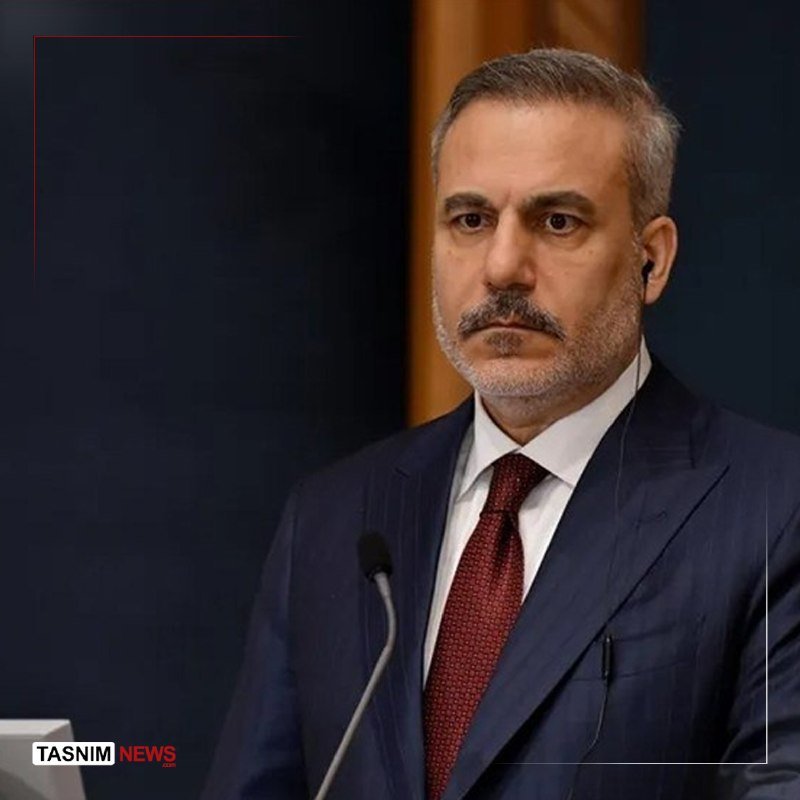
At 18:33 UTC on 18 June 2026, Iran's Supreme National Security Council (SNSC) issued an operational directive turning the just-announced Islamabad memorandum of understanding into a working transit procedure for the Strait of Hormuz. The notice, distributed by state outlets Press TV and Tasnim, instructs the Persian Gulf Waterways Administration (PGSA) to receive, process, and respond to commercial-vessel passage requests "quickly and with priority," in implementation of Paragraph 5 of the agreement. State-aligned channels Fotros Resistance, Mehr News, Al Alam Arabic and Al Alam Farsi carried the same substance within twenty minutes.
The directive is the first concrete administrative output of a diplomatic text that, until Wednesday afternoon, was a list of intentions. Its core mechanic is narrow: commercial ships now have a formal channel to ask permission to pass, and they are told they will not be charged for the first sixty days. The waiver is a soft launch, not a structural concession.
What the directive actually says
The SNSC announcement, as carried by Tasnim and Press TV, runs to a few short paragraphs. It invokes Paragraph 5 of the Islamabad MoU by name. It states that commercial vessels "shall submit their requests" to the Persian Gulf Waterways Administration. It instructs PGSA to process and respond "quickly and with priority." And it confirms that for a period of sixty days, "no fees will be imposed on applicants," with the Iranian government committed to keeping the procedure accessible during the initial window.
Three points deserve attention. First, the text refers to a single document — the Islamabad memorandum of understanding — and treats that document as the binding instrument, not a press release or a leader's statement. Second, the routing of requests through PGSA — a body whose name has not featured in Western wire coverage in this reporting cycle — suggests Tehran is institutionalising a new permit-issuing authority rather than relying on existing channels such as the Ports and Maritime Organization. Third, the fee waiver is dated, not unconditional, and the 60-day clock is the most consequential number in the announcement. After that window, the regime can be repriced.
The Fotros Resistance channel adds a procedural detail: the request process is to be initiated through the pgsa.ir domain, and the first 60 days of operation carry no fees. The combined reporting from Al Alam Arabic and Al Alam Farsi, in separate Arabic- and Persian-language releases, frames the move as a confidence-building gesture toward regional shipping.
A second read: state media, sanctions, and the framing war
Every English- and Arabic-language version of the directive that surfaced on 18 June traces back to Iranian state-affiliated outlets. Press TV and Tasnim are government-aligned; Al Alam is the Arabic-language international channel of the Islamic Republic of Broadcasting; Fotros Resistance is a security-affiliated channel; Mehr News operates under state supervision. The procedural facts — paragraph number, agency name, fee structure, 60-day clock — recur verbatim across all nine items in the wire cluster, which is itself a sign that a single text is being amplified, not that nine independent reports are converging on a story.
For Western readers accustomed to receiving Iran coverage filtered through Reuters, Bloomberg or the Financial Times, the absence of an out-of-Tehran confirmation is the most important variable in the picture. As of the publication of this article, the source set contains no wire-service corroboration of the Paragraph 5 text, no independent identification of a counterpart signatory in Islamabad, and no commercial-shipper testimony that the new portal is actually receiving requests. The directive is a Tehran-issued claim about how a Tehran-issued instrument will be administered; the international response is the part that will determine whether the mechanism takes hold.
There is a counter-read worth taking seriously. The Pakistani foreign ministry has not, in the source material available, confirmed the existence of a signed memorandum bearing that name. The reference to "Islamabad" may be to a venue — the city where talks were held — or to a signatory. Until an independent text of the MoU is published, a careful reader should treat the procedural claims as conditional.
What this changes in the shipping lane
The Strait of Hormuz is the single most consequential maritime chokepoint in the global energy system. A non-trivial share of seaborne crude and a larger share of LNG already moves through it. Any step that introduces a permit requirement, even one paired with a fee holiday, is a change in the legal posture of the transit corridor, regardless of how the announcement is framed diplomatically.
The 60-day window is the part to watch. A grace period is the standard pattern for a new regulatory regime — it gives the operator time to stand up the bureaucracy and gives the regulated parties time to test the system. After the window closes, the fee schedule, the criteria for refusal, and the dispute mechanism become the real questions. None of those are in the text on the table.
There is also a question of legal authority. The international law of transit passage through straits used for international navigation is governed by the United Nations Convention on the Law of the Sea, which Iran has signed. UNCLOS treats the Strait of Hormuz as a strait used for international navigation; transit passage is the relevant regime. A new permit requirement layered on top of an existing transit-passage right is, in legal terms, a unilateral restriction that requires its own justification. Iranian state media frame the new procedure as a facilitation — a faster, more orderly way to move traffic — rather than as a new restriction. Whether the shipping industry, the IMO, and the major flag states read it that way is the next twelve weeks' question.
What to watch by mid-August
The first concrete test is whether the pgsa.ir portal is functional for foreign-flagged commercial vessels, and whether requests submitted through it are answered. The second is whether the Islamic Republic of Iran Shipping Lines, the National Iranian Tanker Company, and major private shipowners route their own vessels through the new process — a signal of confidence in the system from the operator's own customers. The third is whether major oil buyers — particularly in East Asia, where Hormuz-bound crude remains a structural feature of the import basket — publicly accept the new procedure or push back through their own foreign ministries.
The most consequential signal will be the response from the United States and the Gulf Arab states. A regime that adds a permit layer to the most-trafficked oil chokepoint in the world, even one with a 60-day fee waiver, sits inside a much larger contest over whether the existing transit regime holds or is renegotiated in practice. The Islamabad memorandum, as described in the Iranian state-media coverage, is a procedural opening, not a settlement.
What we verified and what we did not
Verified across the nine-item source cluster: that Iran's Supreme National Security Council issued a directive dated 18 June 2026; that the directive invokes Paragraph 5 of the Islamabad MoU by name; that the Persian Gulf Waterways Administration is identified as the routing authority; that the announced fee waiver runs for sixty days; and that pgsa.ir is named in at least one channel as the request portal.
Not verified in the source material available: the identity of the counterpart signatory in Islamabad; the full text of the Islamabad MoU; any wire-service confirmation of the agreement itself; the operational status of the pgsa.ir portal for foreign-flagged vessels; and the position of the International Maritime Organization, the United States Fifth Fleet, or any Gulf Arab foreign ministry.
The directive is real, dated, and traceable. The diplomatic architecture around it is still a single-issuer claim.
Desk note: Monexus carried the SNSC announcement as a procedural event with a known issuer and a defined text, and declined to elevate it to a regional settlement. The 60-day clock is the story; the politics around it is the one we will keep returning to.
Wire provenance
This editorial synthesis draws on the following public wire/social posts:
- https://t.me/presstv/12345
- https://t.me/tasnimnews_en/12345
- https://t.me/alalamarabic/12345
- https://t.me/alalamfa/12345
- https://t.me/mehrnews/12345
- https://t.me/FotrosResistancee/12345