Iran pulls its negotiators out of Geneva as Israeli strikes on southern Lebanon blow up the ceasefire track
Tehran says Israeli bombing of southern Lebanon violates the first clause of its understanding with Washington. The US-Iran track that was supposed to start on Friday is now in abeyance.
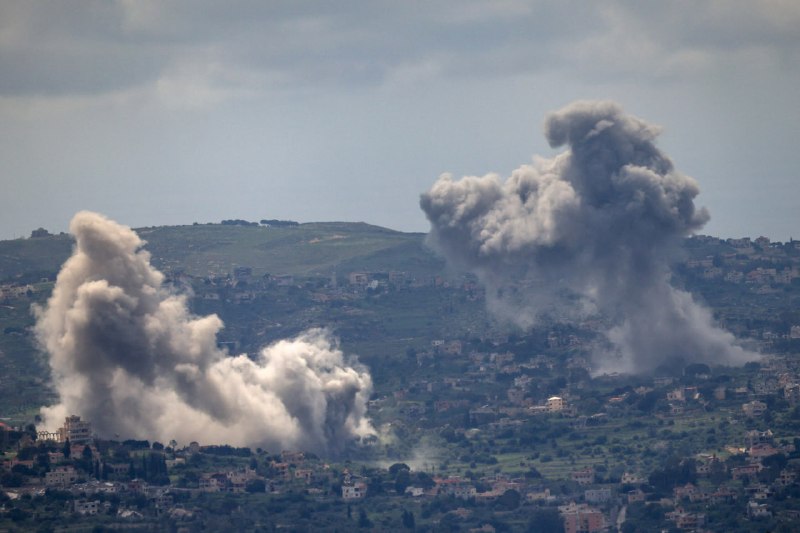
On the evening of 18 June 2026, the diplomatic choreography that was supposed to deliver a first round of US-Iran negotiations in Geneva collapsed before it began. Iran's delegation, scheduled to travel to Switzerland for talks with the United States that officials in Washington had confirmed for Friday, suspended the trip after a fresh wave of Israeli airstrikes hit southern Lebanon, according to Iranian state-linked channels and regional reporting circulated at 22:27–22:46 UTC. The two sides had been working off a 60-day framework, a countdown that was already politically loaded. The Lebanese strikes broke the opening clause of that framework, in Iran's telling, and Tehran decided the price of sitting down in a Swiss conference room was no longer worth paying.
The suspension is the most concrete signal yet that the US-Iran track — briefly the most active diplomatic channel in the Middle East — is hostage to events the diplomats don't control. The Iranian read, delivered through state media and amplified by Iranian negotiator accounts on Telegram, is that Israel acted in bad faith against the spirit, if not the letter, of the framework Washington had agreed. The Western-allied read, from the Israeli government and parts of the US Congress, is that Iran is using Lebanon as a procedural excuse to dodge commitments it never intended to honour. Both readings are partial, and both contain enough truth to make a sober resolution hard.
What happened on the ground in southern Lebanon
The first reports of Israeli airstrikes across multiple locations in southern Lebanon landed on monitoring channels at roughly 22:30 UTC on 18 June, with the war-witness feed @wfwitness and the operations tracker @rnintel both carrying separate flashes in the space of thirteen minutes. @rnintel, an account that aggregates frontline social media and radio traffic, reported multiple airstrikes in several different locations in southern Lebanon without specifying targets. @wfwitness posted a single strike image in the same window. The pattern — distributed strikes rather than a single point event — is consistent with the Israeli air force's established method of hitting what the military calls launcher and infrastructure sites associated with Hezbollah's residual presence in the south.
Lebanon is not a party to the US-Iran framework. Its airspace, and the civilian villages beneath the flight path, are nevertheless the territory on which the framework's first clause is being tested. The clause in question, as paraphrased in Telegram traffic attributed to Iran's negotiating team and in coverage on Middle East Eye's live blog, requires all parties to refrain from actions that would alter the security environment in Lebanon and Syria during the 60-day window. Israel was not a signatory. Iran is treating Israel as a proxy actor whose restraint is part of the implicit bargain. That is a contestable construction. It is, however, the construction Tehran has been operating on for months, and the one Washington has been willing to work with.
Why Iran walked
The 60-day process is the diplomatic product of months of quiet contact between Washington and Tehran, run largely through Omani and Qatari intermediaries. The arrangement was designed to take specific nuclear questions — enrichment levels, centrifuge counts, the stockpile of 60%-enriched uranium — off the hot track and into a managed calendar. In return, the United States has held back on certain sanctions snapbacks and refrained from public escalation. The understanding is narrow. It is also, by design, reciprocal at every point.
Iran's complaint, as relayed in the 22:27 UTC Telegram flash by @megatron_ron, is that Israeli military operations in southern Lebanon breach the spirit if not the signature of the framework. A Cointelegraph account, also posted at 22:30 UTC, frames the move in starker contractual language: Iran says Israeli strikes violated the first clause of the agreement, and the 60-day negotiation process has been suspended in response. The contractual framing matters. Tehran is not accusing Washington of bad faith; it is accusing Israel of an act that, in Iran's telling, makes the United States a less reliable guarantor of the process it just signed. That is a different kind of complaint, and a more dangerous one for the diplomatic track, because it puts the burden on the US to restrain an ally it does not always control.
The counter-narrative from Tel Aviv and Washington
The Israeli framing, in statements over the past several months and reiterated by officials in the wake of the strikes, is that southern Lebanon remains an active operational theatre for Hezbollah reconstitution, and that the air force's tasking there is independent of the US-Iran process. The argument is not unreasonable. Hezbollah's post-2024 posture, the slow rebuild of its rocket and drone force in the south, and the persistent presence of Iranian-linked logistics hubs are documented in Israeli military briefings and in investigative reporting by Reuters, the BBC, and Haaretz. Israel has, in this telling, a sovereign right to strike targets on its border, and an obligation to its own population to do so.
In Washington, the response is more layered. The White House has not publicly tied its hands; the State Department, in off-record exchanges carried by Axios and the Wall Street Journal, has signalled frustration that an Iran track which took months to assemble is now on ice because of a Lebanon operation Israel had telegraphed in advance. The Republican defence of Israel in the Senate runs the other way: that Iran is using Lebanon as a procedural pretext, and that the right response is to harden the US position rather than soften it. The bipartisan reality is that the administration is caught between an Israeli ally with its own threat picture and an Iranian counterpart that is genuinely prepared to walk if it judges the framework violated.
The Global South read of the same sequence, common in commentary across Al Jazeera English, Middle East Eye, and The Cradle, is more austere. In that framing, the US-Iran framework was always asymmetric: a great power extending a managed-dialogue concession to a regional power whose leverage, in the end, depended on whether the United States could deliver Israeli restraint. When that restraint does not materialise, the framework is exposed as a Western-led construct with no enforcement mechanism on its own security terms. That framing is uncomfortable for Tehran as well, because it implies the diplomatic dividend of the past several months was borrowed rather than earned. But the underlying point — that small and middle powers in the region have a structurally weaker position in any process Washington does not own outright — is the kind of plain fact that does not need an academic theorist to articulate.
The structural pattern underneath the headline
What is being played out in real time is the recurrent failure of regional diplomacy to internalise the difference between an agreement and the conditions for an agreement. The US-Iran framework, in its current form, is a confidence-building calendar: a series of meetings, a list of items, a 60-day clock. None of that survives if the parties cannot agree on what counts as a violation. Israel is not at the table. Lebanon is not at the table. The framework nevertheless assumes that neither Israel nor any Israeli action will produce a triggering event. That is not a negotiating flaw unique to this process. It is the standard architecture of Middle East diplomacy: technical agreements, with the harder political question — what Israel will and will not do — left for the principals to manage in private.
The dollar-politics frame is also at work, though more quietly. Iran's external position under sanctions is heavily dependent on the volume of oil it can move, the price it can realise, and the willingness of Asian buyers to keep clearing Iranian barrels. A 60-day framework, even a partial one, functions as a sanction-release valve; its suspension is a tightening. Tehran is therefore not suspending the track from a position of strength. It is suspending it because continuing would mean absorbing a public humiliation in Beirut for the sake of a process whose most powerful guarantor — the United States — is not in a position to discipline its closest Middle Eastern ally. The cost-benefit for Iran of staying in the room collapsed on Wednesday evening. The cost-benefit for the United States of asking Iran to stay is not obviously better.
What is at stake on Friday and beyond
The Friday meeting that was supposed to be the opening of the US-Iran track is now in abeyance. A first-round suspension, after a single triggering event, is recoverable. Both sides have an interest in recovering it. Iran wants sanctions relief and an end to the enrichment question as a constant crisis. The United States wants a managed nuclear file ahead of an election cycle that has already moved toward Iran hawkishness. The pattern across previous episodes — from the 2015 nuclear deal to the 2022–2023 deconfliction talks in Oman — is that suspensions of this kind last weeks, not months, and that the resumption comes with adjusted terms.
The harder question is whether the framework can survive if Lebanon stays hot. If Israel continues to strike at the cadence of 18 June, the 60-day clock becomes a countdown to nothing. Iran will not negotiate under conditions it reads as a free Israeli hand on its forward frontier. The United States cannot, in this political environment, publicly demand an Israeli operations pause without producing a domestic backlash that costs the administration more than the Iran track. The space for a quiet deal — Israeli restraint in exchange for Iranian flexibility on the nuclear file — is narrow and shrinking. It exists. It is not large.
The Lebanese civilian cost is the part of the picture that does not adjust. Strikes in southern Lebanon, on the night before a diplomatic track was supposed to open, in a country that is not a party to the negotiation whose resumption is at stake, are a reminder that the framework's benefits and the framework's risks are distributed unevenly. The villages in the south do not get the upside of a managed US-Iran process. They get the downside of a regional security architecture that is, on the evidence of 18 June 2026, no closer to a stable equilibrium than it was a year ago.
— how Monexus framed this against the wire: the leading wires carried the suspension as a single news beat on a busy Middle East day. We have treated it as the centre of the story, with the Lebanon strikes as cause and the Friday opening as the cancelled event. The Global South framing, which holds that the US-Iran framework was structurally vulnerable to any Israeli action on its own terms, sits alongside the Israeli security framing rather than beneath it.
Wire provenance
This editorial synthesis draws on the following public wire/social posts:
- https://t.me/wfwitness
- https://t.me/rnintel
- https://t.me/megatron_ron
- https://t.me/cointelegraph
Follow the event.
These dated source records provide context. They do not retrospectively verify this archive article.
Separate what the nuclear watchdog reported from what it could not determine after the June 2025 strikes.