Tehran's New Supreme Leader Sends a Foreign-Policy 'Beacon' — and Iran's Diplomatic Corps Lines Up Behind It
Hours after Ayatollah Mojtaba Khamenei addressed the diplomatic corps, Foreign Minister Araghchi called the message a guiding 'beacon' — a signal of continuity, and of how Tehran intends to read the room.
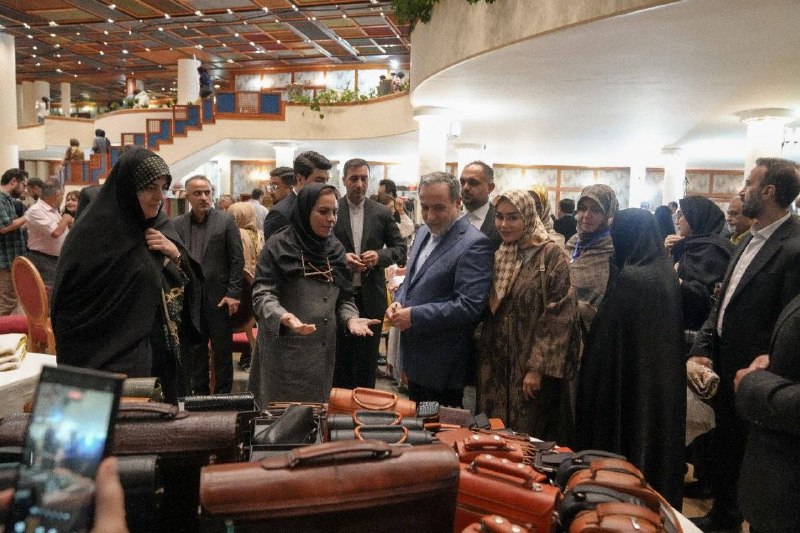
At 19:54 UTC on 18 June 2026, Iran's state-aligned Tasnim channel relayed a brief, effusive dispatch: the country's foreign minister had welcomed what Tasnim described as the "wise and path-breaking message" of the Supreme Leader of the Islamic Revolution, Ayatollah Seyyed Mojtaba Khamenei. Fars News International carried a parallel version minutes later, attributing to Foreign Minister Abbas Araghchi the line that the Leader's message was a "beacon for the agents of foreign policy." Al-Alam, the Arabic-language outlet of Iranian state broadcasting, ran the same framing for its regional audience. The choreography was tight: the Supreme Leader speaks, the cabinet acknowledges, and the diplomatic service is reminded of the line it is meant to hold.
The episode is small in surface detail and large in implication. Iran's foreign-policy machinery is, in the formal constitutional sense, subordinate to the Supreme Leader; the foreign minister executes, the President proposes, the Leader decides. But the public theatre of deference — leader's message, minister's response, state outlets amplifying in unison — is the visible form that hierarchy takes. It is worth reading carefully, because the substance of what was said, and what was not, is itself the news.
What was actually said
The published extracts from Tasnim, Fars and Al-Alam are unusually spare. The Supreme Leader's office, according to the three wires, addressed the diplomatic service; Foreign Minister Araghchi responded in writing on the night of 18 June 2026; and the Fars dispatch summarises the minister's framing as treating the message as a "beacon" — a guide for those conducting the country's external relations. The wire texts available to this publication do not quote the Leader's address in full, do not name a specific crisis as the immediate trigger, and do not specify whether the message was a written statement, a televised address, or an internal communication to the Ministry of Foreign Affairs.
That sparseness is itself the story. When Iranian state media move in coordinated lockstep across Persian, Arabic and English-language platforms within a sixty-minute window, the messaging has usually been prepared. The vocabulary used by Tasnim and Fars — "wise," "path-breaking," "beacon" — is the rhetorical register the Islamic Republic reserves for moments of regime reassertion: anniversaries of the 1979 revolution, declarations on the nuclear file, communiqués following the death of senior figures, or addresses to the diplomatic corps at the start of Nowruz or the month of Ramadan. The choice to deploy that register on a Thursday evening in mid-June suggests the address was not a routine seasonal greeting.
The Araghchi factor
The minister responding is itself significant. Abbas Araghchi is a career diplomat with two decades in the foreign service, including senior roles in the nuclear-negotiation file. He took office as foreign minister under President Masoud Pezeshkian, whose 2024 electoral victory was read in Western capitals as an opening for a more pragmatic foreign-policy line. In practice, the relationship runs the other way: Pezeshkian's cabinet operates inside a security architecture that answers to the Supreme Leader's office, and the foreign minister's authority is conditional on it.
The "beacon" language, then, is not a personal flourish. It is a public reaffirmation by the most senior professional diplomat in the country that the diplomatic line is set above him. The framing matters for any external interlocutor trying to read Iran's negotiating posture, whether on the nuclear file, on regional alignments, or on the long-running question of sanctions relief. When the foreign minister tells his own service to read the Leader's message as a guiding light, he is signalling — both inward and outward — that the room for autonomous diplomacy is bounded by the wording of that message.
This is the structural fact that makes the dispatches worth a second read. Iranian state media are not merely reporting a speech. They are publishing an instruction. The fact that the instruction is wrapped in deference does not soften it; in the Islamic Republic's grammar, deference is the carrier wave of command.
How the Iranian press moved
The three wires are part of a familiar ecosystem: Tasnim, affiliated with the Islamic Revolutionary Guard Corps; Fars, a semi-official news agency with close ties to the security establishment; and Al-Alam, the Arabic service of the Islamic Republic of Iran Broadcasting. They are not independent outlets, and they do not pretend to be. But treating them as a single voice misses the point. The three carry slightly different audiences — Persian conservatives, the security services' own flank, and the Arab-speaking world — and the decision to release near-identical language across the three within minutes of each other is a coordinated communication act, not a coincidence.
A reader in Beirut, Cairo or Baghdad encountering Al-Alam's version at roughly 20:15 UTC would have read the same framing as a reader in Tehran seeing Tasnim's. For Iran's regional interlocutors — the governments and non-state actors who follow the Islamic Republic's diplomatic register closely — that simultaneous release is the signal. It tells the audience that the message is meant to be received, in the same words, by every part of the Iranian-mediated conversation.
What the framing leaves out
The wires do not say what the Supreme Leader told the diplomatic corps he wanted done, or not done, about the specific dossiers now in play. They do not name a counterpart. They do not quantify. The "path-breaking" descriptor and the "beacon" metaphor are doing the work that explicit policy language would do in a Western foreign-ministry readout.
That leaves room for three plausible reads, each consistent with the available text. First, the address could be a domestic signal of consolidation — a reminder to a Pezeshkian-era foreign service that the centre of gravity sits above it, at a moment when Iran's economy is under pressure and regional posture is being contested. Second, it could be calibrated for an external audience: an interlocutor in the Gulf, in Moscow, in Beijing, or in the Western capitals managing the nuclear file, receiving a coordinate rather than a communiqué. Third, it could be both at once — a single message with one face turned inward, another turned outward, and the two faces shaped to look like the same thing.
The Western wire services and the major international outlets have not, as of this writing, published an English-language readout of the address. The Iranian framing therefore stands, for now, as the only read on the public record. That asymmetry is worth naming: when the only narrative in circulation is the state's own, the absence of contradiction is itself a constraint on what can be known about the substance.
The structural read
Iran's foreign-policy direction has, for the better part of two decades, been the joint product of three distinct layers: the elected presidency, the appointed foreign service, and the unelected office of the Supreme Leader. The first sets tone, the second executes, the third decides. The 18 June 2026 communication is a small, almost domestic, piece of evidence that the third layer is, on this evening, asserting its primacy. The foreign minister's response is not a contradiction of that assertion but a translation of it into the working vocabulary of the diplomatic corps.
For external observers, the practical question is whether the "beacon" language corresponds to a hardening of negotiating positions, a softening, or a holding pattern. The available text supports none of the three readings with confidence. What it does support is the more limited but durable conclusion: the architecture of Iranian foreign policy, as publicly performed, continues to place the Supreme Leader at the apex and the foreign service as the implementing instrument. Any diplomacy that fails to internalise that hierarchy is diplomacy that mistakes the messenger for the principal.
This publication framed the dispatch as an act of internal communication with regional spillover, rather than a substantive policy announcement. The wire provenance is wholly Iranian-state and state-adjacent; the sources do not provide the text of the Leader's address, and no claim about its specific content has been made here on that basis.
Wire provenance
This editorial synthesis draws on the following public wire/social posts:
- https://t.me/Tasnimnews
- https://t.me/FarsNewsInt
- https://t.me/AlalamFa
- https://en.wikipedia.org/wiki/Supreme_Leader_of_Iran
- https://en.wikipedia.org/wiki/Abbas_Araghchi
- https://en.wikipedia.org/wiki/Masoud_Pezeshkian
- https://en.wikipedia.org/wiki/Fars_News_Agency
- https://en.wikipedia.org/wiki/Tasnim_News_Agency
- https://t.me/Tasnimnews
- https://t.me/FarsNewsInt
- https://t.me/AlalamFa
- https://en.wikipedia.org/wiki/Supreme_Leader_of_Iran
- https://en.wikipedia.org/wiki/Abbas_Araghchi
- https://en.wikipedia.org/wiki/Masoud_Pezeshkian
- https://en.wikipedia.org/wiki/Fars_News_Agency
- https://en.wikipedia.org/wiki/Tasnim_News_Agency