A ceasefire on paper, artillery in the air: Lebanon's daily toll climbs past 3,900
Three months into a declared halt to hostilities, Lebanese authorities say Israeli fire has killed 3,912 people and wounded 11,873 since 2 March — and that the count keeps rising.
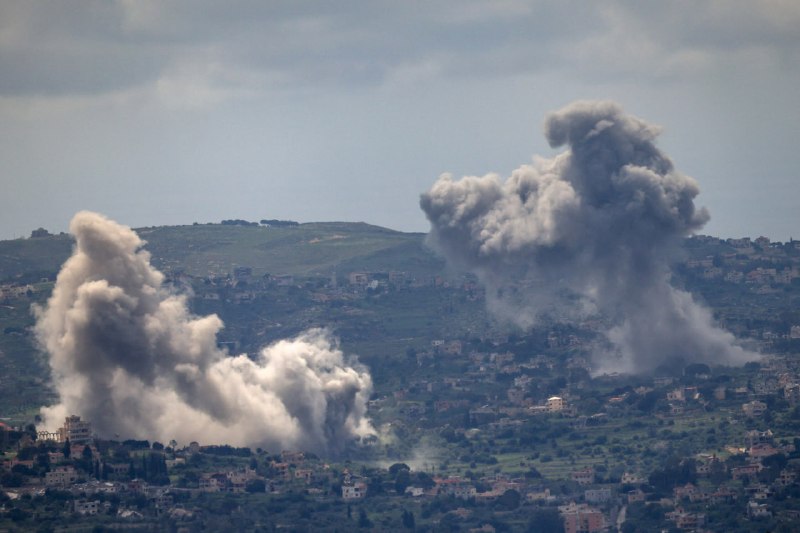
At 13:55 UTC on 18 June 2026, Lebanon's Ministry of Health published a figure that the mediators behind the March ceasefire had hoped would not still be climbing. Since 2 March, the ministry said, 3,912 people have been killed and 11,873 wounded in what it characterises as Israeli aggression against the country. By mid-afternoon the same day, an Al Jazeera correspondent in the south was reporting that Israeli artillery had shelled the heights of Ali al-Tahr — a village pocket in the upper reaches of the Litani-facing frontier, the kind of location that, in the language of the November 2024 arrangement, ought to be quiet. The same wire of ministry-of-health updates and field reports has, with minor variation, run for fourteen weeks. The pattern is the story.
The headline number matters less than what it implies: a ceasefire that is being announced in capitals is not the ceasefire being observed on the ridge-lines. For the diplomats in Beirut, Washington, Paris and Doha who brokered the halt, the gap between paper and practice is now the policy problem. For the civilians counted in the ministry's registry, it is the daily problem.
What the Lebanese side is now reporting
The 18 June update from the Ministry of Health, carried by Mehr News and The Cradle Media, is the clearest single tally of casualties since the cessation of major combat operations was declared. The frame used by both outlets — "Zionist regime's aggression against this country since March 2nd" — is the Lebanese state's framing, and the figure is the Lebanese state's count; it has not been independently audited by a United Nations body in the interval since, and the ministry does not distinguish in this daily summary between civilian and combatant deaths. That distinction is contested, not because the count is invented, but because in a country where a non-state armed presence is woven into the southern landscape, the line between fighter and resident is empirically blurry.
The Cradle's wording adds an editorial layer absent from the ministry release: it describes the strikes as "US-backed." That characterisation is consistent with the long-standing US position of resupply, intelligence sharing and diplomatic cover for Israel's operations, but it is not a statement of operational command. The two are not the same thing, and the difference matters for anyone trying to read the casualty roll as a guide to who is deciding what gets hit.
What the Israeli side has said, and what is missing from the public record
Israeli authorities have, in public statements over the period, distinguished between defensive fire into Lebanon in response to specific threats and broader offensive operations. Fars News, citing Hebrew-language media, reports on 18 June that "the fire of Israeli artillery and drones does not stop in southern Lebanon, despite the claim of stopping the advance of the Israeli army deep in Lebanon by the Hebrew media." The phrasing reflects a real gap: Israeli public affairs has at points suggested a halt to deeper incursions, while residents in the south, and the Lebanese state's count, indicate continued fire. Whether that fire is targeted counter-rocketry, a deliberate slow-motion re-occupation of terrain, or a grinding enforcement of a buffer zone is not, on the public record, settled.
This publication is not in a position to verify the operational intent behind each incident on 18 June from open sources alone. The official Israeli account, the Hezbollah-aligned field account, and the Lebanese state account are three different stories with three different audiences, and a serious read of the day requires holding all three open at once.
Why a daily count is also a political artefact
A casualty roll is not a neutral ledger. The choice of start date — 2 March 2026 — is itself a political act: it brackets the count to the period since the current ceasefire architecture, which means every death added to the register is, on the official Lebanese framing, a violation. The 3,912 figure is the number that the Lebanese state, the Iranian-aligned press, and parts of the pan-Arab media will continue to publish at each round of diplomacy. It will be cited in UN briefings, in Qatari mediation channels, and in opposition press conferences in Beirut. By the time the next major negotiation opens, it will have grown.
The same dynamics apply on the Israeli side, where the count of rockets, drones and anti-tank missiles fired from Lebanon into the north — together with the seven or eight Israeli civilians killed in the early-March wave that prompted the original offensive — sits as the political justification for each subsequent round of return fire. The two registries do not cancel each other out. They compound.
What 3,912 deaths in fourteen weeks actually means
The arithmetic is brutal and straightforward. The Lebanese Ministry of Health's running total, as of 18 June 2026, translates to roughly 280 deaths per week, or about 40 per day, sustained across a hundred days. The wounded-to-killed ratio of roughly three to one is consistent with modern urban and peri-urban warfare involving a mix of high-explosive artillery, drone strikes and building collapses. It is also a ratio that, in a functioning health system, would have generated an enormous and visible caseload of amputees, burn victims and head-injury patients requiring long-term rehabilitation — pressure that the south's health infrastructure, already battered by the 2023–24 war, was not built to absorb.
The number is high enough to be politically significant and low enough to be containable. It is below the threshold that would compel a major-power intervention; it is above the threshold that allows Lebanese and Arab public opinion to frame the period as continued aggression. The ceasefire, in this sense, is functioning as designed: not as a halt, but as a managed rate of attrition.
What the mediators are not saying
The silence of the Western guarantors is itself a kind of answer. The United States, France and the lead Gulf mediators have not, on the public record available to this publication on 18 June, repudiated the Israeli fire; nor have they endorsed it. The result is a kind of de facto acceptance with periodic expressions of concern — the diplomatic equivalent of a shrug. The Lebanese state's count is a pressure tactic, and pressure tactics work only if they are read.
What is striking is what the mediators have not done. They have not, in the public reporting cited above, called for an international monitoring mechanism with a defined presence in the south. They have not, in the public reporting cited above, named a benchmark for what a returning ceasefire would look like in operational terms. The absence of those markers is the message: the current arrangement is being treated as the destination, not as a holding pattern.
The structural frame, in plain language
This is what a hegemonic transition looks like at the village scale. A regional order that once could compel a clean halt — the 2006 arrangement, brokered under very different conditions, produced a measurable quiet for nearly two decades — is now producing an arrangement that holds in the headline and bleeds in the field. The United States can still broker the document; it can no longer, or no longer chooses to, enforce the silence. The gap between the two capacities is the space in which 3,912 deaths have been recorded.
For the Global South audiences and governments that have watched the Lebanon file for decades, the lesson is not new. For the European and North American publics who came to the issue during the 2023–24 war, the lesson is uncomfortable: a ceasefire in this century's Middle East, in the absence of an enforcement mechanism, is a permission slip for slower war.
Stakes over the next quarter
If the trajectory continues, the 3,912 figure will pass 5,000 before the end of the northern summer, and the political pressure on the Lebanese government to formally repudiate the arrangement will become very hard to manage. The southern displacement — already in the hundreds of thousands — will harden into a permanent feature of the country's geography, and the reconstruction conversation that follows will be conducted against a backdrop of unresolved fire. The Israeli side, for its part, will continue to absorb rocket and drone fire from the north at a rate that the domestic security conversation will not tolerate indefinitely, and the political gravity in Tel Aviv will shift accordingly.
The most likely next phase, on the evidence of 18 June, is not a clean return to the November 2024 arrangement, nor a major re-escalation, but a slow drift into a managed attritional status quo that no one signs and no one admits. The Lebanese state's running count is the most legible indicator we have of how that drift is being priced in human terms.
This publication framed 18 June as a test of the existing ceasefire architecture, drawing on Lebanese state, pan-Arab and Iranian-aligned press; the Western wire reporting on the day's events was not available in the public record at the time of writing, and the Israeli public-affairs account has been read through the prism of Hebrew-language reporting cited in Fars News rather than through a primary Israeli spokesperson briefing.
Wire provenance
This editorial synthesis draws on the following public wire/social posts:
- https://t.me/mehrnews
- https://t.me/mehrnews
- https://t.me/TheCradleMedia
- https://t.me/thecradlemedia
- https://t.me/FarsNewsInt
- https://en.wikipedia.org/wiki/South_Lebanon_conflict_(2023%E2%80%93present)
- https://en.wikipedia.org/wiki/2024_Lebanon_war
- https://en.wikipedia.org/wiki/Ali_al-Tahr