Makerfield, Burnham and the Labour knife-edge: a by-election becomes a referendum on Starmer
Polls closed in Makerfield on the evening of 18 June 2026 with Andy Burnham openly positioning the contest as the start of a leadership challenge to Keir Starmer — and Labour's own MPs already dividing over the result.
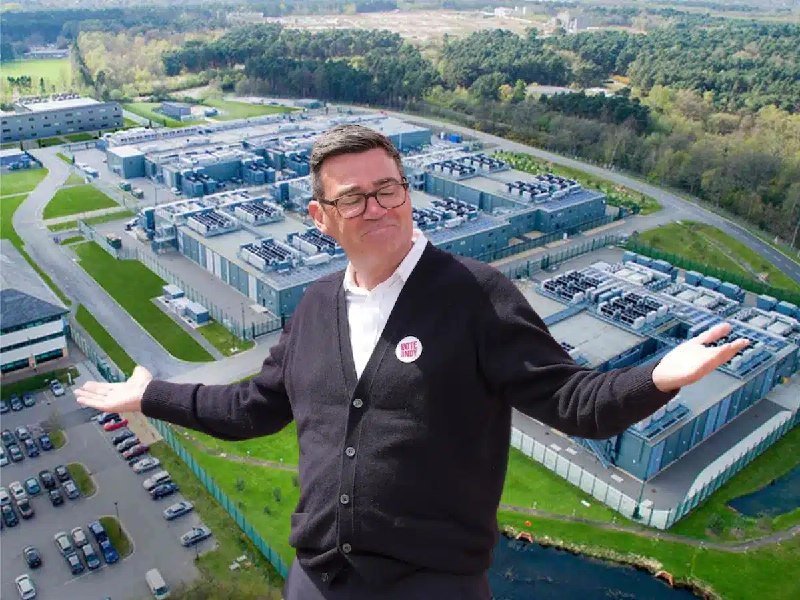
Polls closed in Makerfield at 21:00 UTC on 18 June 2026 in a Greater Manchester by-election that Labour had spent the campaign trying to keep narrow, and that Andy Burnham had spent the campaign trying to make national. With the count not expected until the early hours of 19 June, the political meaning of the night was already being written in London, not Wigan — and it was being written about Keir Starmer, not about the seat.
The framing has shifted decisively in the last 48 hours. A midweek story about a council tax row has hardened into a referendum. Burnham, the Greater Manchester mayor, is reported by the New Statesman to be preparing to hand Keir Starmer a list of 80 Labour MPs willing to demand a change at the top of the party. The Guardian's live blog frames the contest as one that could "pave way for end of Starmer" if Burnham wins convincingly against Reform UK. A separate Guardian piece is blunter still: Burnham is "eyeing No 10." The by-election has stopped being a local test of organisation and become the first measurable vote on whether the Parliamentary Labour Party will tolerate a challenge to its leader.
The race on the ground
Makerfield has been a Labour seat for so long that the interesting question is not who finishes first, but the size of the bruise. Burnham is the bookmakers' favourite to win, and to win well; the live question, set by the campaign's own coverage, is the swing from Labour to Reform UK and whether that number reads as a warning shot or an extinction event for Starmer's authority inside the Commons. Coverage from the wires treats a Burnham victory as the base case and a Reform upset as the political earthquake. A comfortable Burnham hold, on this framing, is paradoxically the worst outcome for the Prime Minister: proof that the party can win without him as its face, with the man who can plausibly succeed him campaigning in the constituency.
A counter-reading is available. By-elections in safe seats are noisy instruments; turnout collapses, the residual vote fragments, and the headline swing overstates the national mood. A Burnham win in those conditions tells the commentariat what it already wants to hear — that Labour has a popular alternative waiting in the wings — more than it tells voters in Doncaster or Gillingham anything new. Reform UK, for its part, has treated the contest as a platform rather than a target: a chance to test ground-game in the post-industrial Lancashire seats that will decide the next general election. The plausible read is that both parties leave Makerfield with the story they walked in wanting to tell.
The parliamentary arithmetic
The harder fact is in Westminster. Eighty names is not a leadership challenge on its own — a challenger needs the signatures of 20% of the parliamentary party to force a contest under current rules — but it is enough to make a challenge credible. Burnham's reported approach is calibrated: a list, not a letter, presented rather than sent. It is the geometry of a man who would rather be drafted than run. The New Statesman reporting puts the move in the week of the by-election, when the Prime Minister is at his weakest and the party at its most suggestible. Starmer's allies have publicly dismissed the manoeuvring; privately, the operation of a counter-list of loyalists would be the more telling sign.
There is a longer pattern here. Labour's modern leadership crises have rarely been settled by votes in the Commons; they have been settled by the withdrawal of permission from people who never appear on the ballot paper. The 2016 challenge to Jeremy Corbyn began with a shadow-cabinet resignation, not a parliamentary motion. The 2007 transition from Tony Blair to Gordon Brown was negotiated in offices, not on the floor. Burnham's reported method — building a list of names that exists as leverage rather than as a formal trigger — fits that older British pattern. The by-election is the weather; the list is the climate.
What a Burnham premiership would actually change
The Westminster lobby has spent the week sketching a Burnham government in broad strokes: more devolution, a softer line on planning reform, a warmer relationship with the unionised public sector, a return to the rhetorical register of municipal Labour. Less noted is what it would not change. The fiscal envelope is set by the Treasury and the bond market, not the leader's accent. The defence review, the posture towards the United States, the line on the Russia–Ukraine war and the broader European security debate — these have hardened into cross-party positions in the British mainstream and would not unwind on a leadership change. A Burnham-led Labour would inherit, not redesign, the post-2024 foreign policy consensus.
On the domestic side, the difference would be more visible but narrower than the press suggests. Devolution is the area where a Greater Manchester mayor would bring genuine institutional weight; the English regions are the part of the state that has been most consistently under-built since 2010, and the political coalition for deeper regional government spans Labour, the Liberal Democrats and large parts of the Conservative benches in the Commons. A Burnham government could plausibly legislate where a Starmer government could not, because the case for regional mayors is being made in a language Conservative MPs from those areas can already half-speak.
Stakes, and the night ahead
If Burnham wins comfortably, the story writes itself: a popular Labour mayor with a national mandate, a Prime Minister presiding over a by-election that became his own, and a parliamentary party that has spent the week doing the maths. If the swing to Reform is smaller than the internal critics feared, the story is more awkward — a win that vindicates the leadership, but on Burnham's terms and inside Burnham's camera frame. If Reform UK takes the seat outright, the conversation moves on to whether Labour is still a party of government in the North. None of those outcomes settles the leadership question, but the first two sharpen it.
The honest read is that the count, when it comes in the early hours of 19 June, will tell us less than the next 72 hours of commentary will claim it does. By-elections are blunt instruments; the moves around them are precise. The list Burnham is reportedly preparing, the counter-list Starmer's allies are presumed to be assembling, the framing of the Guardian and the New Statesman — these are the actual vote. Makerfield is the scoreboard they are using to play it.
Desk note: the wire coverage leans into the leadership narrative, with the Guardian's live blog and the New Statesman report setting the frame that this by-election is a Starmer referendum. Monexus treats that frame as dominant but tests it against the counter-read that safe-seat by-elections are noisy instruments — and gives the Burnham-as-drafted-not-running reading equal weight, since it tracks the historical British pattern of leadership change.
Wire provenance
This editorial synthesis draws on the following public wire/social posts:
- https://t.me/rnintel