Messi vs. Ronaldo, World Cup odds, and the political sorting of football fans
Prediction markets rate Messi an 88% favourite to out-score Ronaldo at the 2026 World Cup, while a new study claims political ideology is now the strongest predictor of which superstar fans root for. The numbers are sillier than the framing suggests.
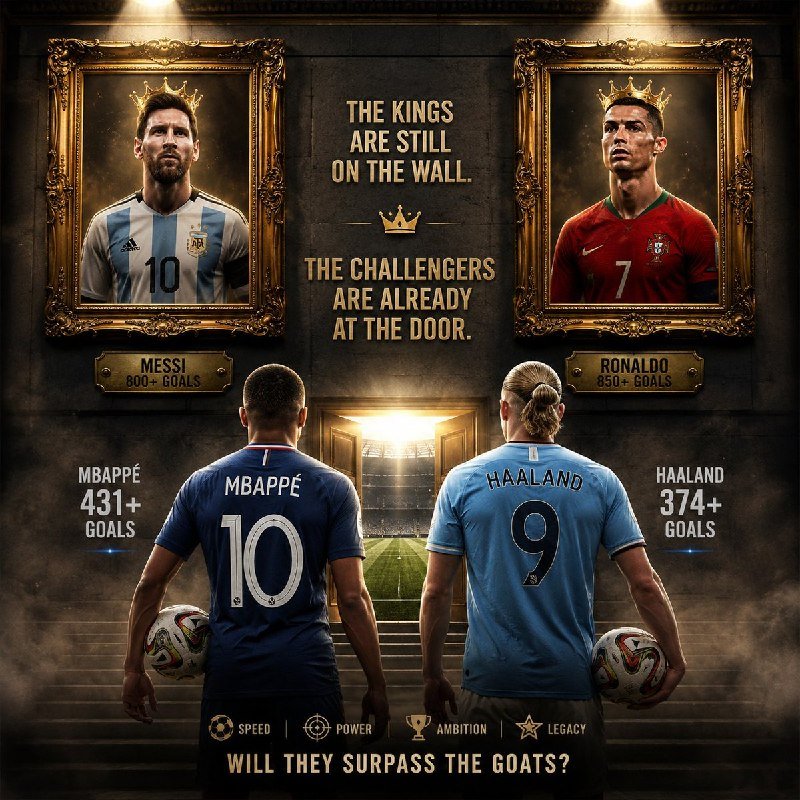
On 18 June 2026, with the World Cup roughly a week from kickoff in North America, Polymarket's prediction market put the chances of Lionel Messi out-scoring Cristiano Ronaldo at the tournament at 88%, against a 12% line for the Portuguese forward. The same platform briefly put the implied probability of Ronaldo crying on camera at the World Cup "north of 60%" — a softer market that, in the platform's own framing, tracks a mood as much as an outcome. Both are the kind of contracts that did not exist a decade ago and that, taken together, sketch a snapshot of the tournament's pre-kickoff attention economy.
The two men, who have defined a generation of club and country football since the late 2000s, will almost certainly be playing their final World Cup. That fact is doing most of the work in the betting line. The market is not predicting performance so much as it is pricing inevitability: age, squad role, and the brutal mathematics of minutes on the pitch in a one-month tournament. The Ronaldo-crying market is doing something different — it is monetising a personality, and a recognisable one. Together they tell the same story from opposite ends. One is a sober probability; the other is a wink.
The line and what is actually in it
The Messi-over-Ronaldo goals contract sat at 88% on the afternoon of 18 June, according to Polymarket's event page, with a corresponding 12% on the inverse. Markets of this kind are not bookmaker odds; they aggregate small-stakes positions from many users and adjust continuously. They can be moved by information — an injury, a lineup leak, a managerial comment — and they can also be moved by the crowd that uses them. The size of the open position on either side is not published, so the strength of the price is harder to read than the price itself.
What the market is implicitly saying is straightforward. Argentina are, on paper, the deeper tournament team, with a younger supporting cast around Messi and a manager in Lionel Scaloni who has built a structure around his captain. Portugal, by contrast, enter the tournament with a squad in transition, a manager under scrutiny, and Ronaldo still occupying the central No. 9 role he is no longer obviously suited to at club level. The market is pricing in minutes and service, not reputation. That is the only honest read of an 88% line between two players whose careers are closer than any headline number suggests.
When fandom becomes a political identity
A separate thread on the same day pointed to a new study claiming that political ideology is now the strongest predictor of which of the two players a fan prefers — progressives leaning Messi, conservatives leaning Ronaldo. The framing is provocative and almost certainly overstated, but the underlying observation is real. For roughly a decade, the Messi-Ronaldo split has tracked other cultural lines: aesthetic versus physical, collective versus individual, a soft consensus that maps imperfectly onto a hard left-right axis in Europe and the Americas.
What the study probably captures, more than ideology, is media diet. The outlets that built their audiences around Ronaldo's heroic individualism, and around a particular reading of masculinity and national pride, are not the same outlets that mythologise Messi's smallness, his shyness, his Argentine reluctance. Fans self-sort into those audiences and absorb their framings. The political overlay is downstream of a media-sorting problem that football did not invent but has absorbed.
The point worth holding onto: this is not a story about two men. It is a story about how a generation of fans got handed two distinct packages of meaning and was then told, by the algorithm and the commentary class, that the choice was a moral one.
The 60% line on tears
The third market — the implied probability, posted 18 June, that Ronaldo will be seen crying at the tournament, sitting "north of 60%" — is the one that most rewards caution. Polymarket itself frames the contract in language that hedges. The 60% is a function of how Ronaldo has reacted in past high-stakes moments: missed penalties, injury substitutions, trophy lifts both won and lost. The market is also a function of selection bias. Cameras follow him more than almost any other player in the competition. Tears that would not register on a younger teammate become a market event when the face belongs to a five-time Ballon d'Or winner.
It is also a market that says something unflattering about the audience. The implied question is not whether Ronaldo will experience emotion at a World Cup, which he manifestly will, but whether that emotion will be captured and circulated in a way that the platform can monetise. The high implied probability is partly a referendum on camera placement and editorial appetite.
What the markets do not see
None of these contracts can price the parts of a World Cup that matter most. They cannot price a hamstring on the eve of the quarter-final, a red card in the 35th minute, a manager's decision to start a 21-year-old in place of a legend, or the specific gravity of a knockout game between two South American sides in front of a crowd that has waited a lifetime for it. They are good at condensing a mood. They are poor at predicting a tournament. The 88% line is a snapshot of how the world sees the goals race on 18 June 2026 at 18:55 UTC. By the final, it will either look prescient or absurd, and the gap between those two readings is the tournament itself.
For a fan base that has spent two decades arguing about which of the two is greater, the prediction market offers an unsatisfying verdict in advance and a more interesting one after. The interesting one will not be priced. It will be played.
Desk note: Monexus treated Polymarket's contracts as a wire for fan sentiment and platform behaviour, not as a forecast — a distinction the markets themselves are sometimes careful to make and their press coverage often is not.
Wire provenance
This editorial synthesis draws on the following public wire/social posts:
- https://x.com/polymarket/status/2067682149789020160
- https://x.com/polymarket/status/2067616699243790336
- https://x.com/polymarket/status/2067470123456789012