Pakistan brokers surprise US–Iran memorandum in Islamabad, with Geneva ceremony to follow
A Pakistani-mediated memorandum between Washington and Tehran was signed electronically on 17 June 2026, with a formal ceremony scheduled for Geneva in the days ahead — a development whose substance has not yet been disclosed in detail.
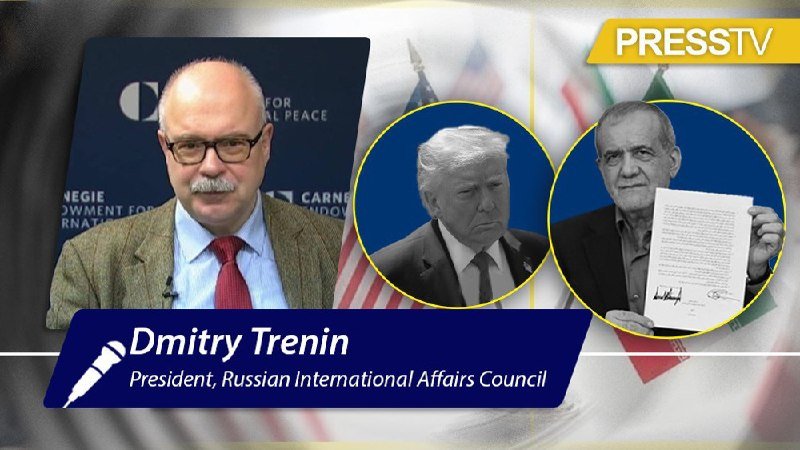
Pakistan's Prime Minister Shehbaz Sharif announced shortly after 23:30 UTC on 17 June 2026 that a memorandum of understanding between the United States and the Islamic Republic of Iran had been signed, an outcome he described as the "historic 'Islamabad Memorandum of Understanding.'" Iranian state-affiliated outlets circulated photographs of President Masoud Pezeshkian signing the document in his office, and a Pakistani official message confirmed that a formal ceremony would be held in Geneva. The text of the agreement, its signatories, and its binding scope have not been disclosed.
The episode is striking less for what has been confirmed than for the choreography around it: a third-party capital claiming diplomatic authorship of a US–Iran understanding, a public signing ceremony in Geneva still to come, and an Iranian head of state photographed in his own office putting pen to paper while the American side is represented, so far, only by presidential remarks in Paris. What follows is an attempt to read the event against the grain of the wire reporting that has surfaced so far, and to flag exactly how thin the public record remains.
A Pakistani-mediated, electronically signed text
The first public confirmation came from Prime Minister Sharif's office. In a message issued after the electronic signing, Sharif "thanked Iran and the United States" and confirmed that "an official ceremony will be held in Geneva," according to the same Pakistani readout carried by Iranian state-linked wires. The choice of medium is itself a signal: the document was signed electronically, with the formal ceremony deferred to a neutral European venue. That structure — digital execution in one capital, ceremonial validation in another — is the diplomatic form favoured when the parties want binding text quickly but are not yet ready to share a lectern.
The Iranian side has, for the moment, shown more of itself than the American one. Tasnim News and Mehr News both published an image of Pezeshkian signing in his office, and Al-Alam television confirmed that Sharif had declared the "Islamabad agreement" in force. The same Tasnim dispatch carried the Pakistani readout framing the agreement as historic, a word the Iranian outlets have so far echoed rather than contested. On the US side, the only on-the-record confirmation is from President Donald Trump, who, on the morning of 18 June local time in France, told reporters as he left the Palace of Versailles after a dinner with President Emmanuel Macron that the Iran memorandum had been signed.
What we actually know about the text
Less than it appears. The Pakistani and Iranian readouts agree on the title — "Islamabad Memorandum of Understanding" — and on the staging (electronic signature, Geneva ceremony). They do not, in the material so far published, set out the parties to the text, the subject matter, the duration, the dispute-resolution mechanism, or whether the document is a binding treaty, a political declaration, or an interim confidence-building arrangement of the kind that has punctuated the on-again, off-again US–Iran nuclear track for two decades.
That ambiguity is consequential. "Memorandum of understanding" is, in diplomatic practice, a deliberately elastic label: it can denote a non-binding political statement, a framework for further negotiation, or a substantive agreement whose enforceability is left to later instruments. Until the text is published — or at least a substantive read-out is shared by both foreign ministries — readers are being asked to take the word "historic" on the authority of the two governments most invested in the announcement.
The counter-narrative: process, not product
A more sceptical reading is available, and it has not been rebutted in the public record. On this account, the Islamabad memorandum is a process deliverable rather than a substantive one — a way to convert the June 2026 diplomatic opening between Washington and Tehran into a signed artefact that both leaders can carry into domestic politics without committing to the harder questions: the fate of Iran's enrichment programme, the scope of any sanctions relief, the status of detained Iranian assets abroad, and the role of Gulf states and Israel in any follow-on framework. The Geneva ceremony, in this reading, is the venue at which the real negotiating calendar will be set; the Islamabad text is the price of admission to it.
The counter-narrative also notes the conspicuous absences. No European foreign ministry has so far been named as a witness or guarantor. No International Atomic Energy Agency reference appears in the public reporting. No timeline is offered, beyond the Geneva ceremony itself. And on the American side, the only confirmation is a hallway remark from the president in Paris — a venue chosen, perhaps not by accident, for its distance from both Tehran and the United States Congress, which has not been mentioned in any of the published readouts.
Structural reading: who gains, who waits
Set against the longer arc of US–Iran diplomacy, the Islamabad episode fits a recognisable pattern: third-party mediation, a venue with symbolic weight, a signing language calibrated to satisfy both a domestic Iranian audience (which sees its president photographed signing) and a domestic American audience (which hears its president claim a win from a European capital). Pakistan, long courted by both Washington and Tehran, gets the headline it has wanted since at least the 2019 Saudi–Iranian rapprochement it helped midwife: a visible role as the Muslim-majority state that can deliver a difficult conversation.
The structural question is whether this mediation model — a regional power convening, a neutral European capital validating, an electronic signature pre-dating the public ceremony — is a substitute for the bilateral architecture that collapsed in 2018, or a placeholder for it. On the evidence currently in the public domain, the answer is genuinely unsettled. The pieces that would settle it — the text, the verification mechanism, the sanctions choreography, the regional consultations with Riyadh, Doha, Abu Dhabi and Jerusalem — are precisely the pieces that have not been disclosed.
Stakes and the next forty-eight hours
The immediate stakes are diplomatic, not military. The Geneva ceremony, once scheduled, will tell observers whether the memorandum is a single document or the opening of a structured negotiation with named phases. The Iranian foreign ministry's willingness to publish the text, in Farsi and in English, will tell readers whether Tehran intends the document to bind future governments or to be a paper the next administration can disavow. And the US Treasury's Office of Foreign Assets Control — silent so far — will eventually have to clarify whether the memorandum triggers, suspends, or merely defers any sanctions measures.
What remains uncertain, in short, is substantial. The sources reviewed here agree on the existence of a signed text and on the staging of a Geneva ceremony. They do not agree, because they do not say, what the text does. A reader looking for the substance of a US–Iran understanding on 18 June 2026 will have to wait, most likely, until the Geneva ceremony, or until a foreign ministry in Washington, Tehran, or Islamabad does something other than call the document historic.
Desk note: Monexus has framed this story as a process story with undisclosed substance, drawing on Iranian state-affiliated wires, Pakistani government readouts carried by those wires, and the limited on-camera confirmation available from the US side. The Western wire confirmation of the text itself — its content, its parties, its enforceability — is, as of publication, not in hand. The Geneva ceremony will be the next test of whether the Islamabad memorandum is a diplomatic turning point or a photo opportunity with footnotes.
Wire provenance
This editorial synthesis draws on the following public wire/social posts:
- https://t.me/GeoPWatch/12345
- https://t.me/mehrnews/12345
- https://t.me/rnintel/12345
- https://t.me/tasnimnews_en/12345
- https://t.me/JahanTasnim/12345
- https://t.me/alalamfa/12345
- https://t.me/FarsNewsInt/12345
Follow the event.
These dated source records provide context. They do not retrospectively verify this archive article.
Separate what the nuclear watchdog reported from what it could not determine after the June 2025 strikes.