Tehran's two-track message: unity rhetoric, military readiness, and a 'very bad' event in south Lebanon
In the span of an hour on 18 June 2026, Iran's parliament speaker publicly swore loyalty to a 'leader's message' while warning of fingers on the trigger — hours before Israeli media acknowledged a 'very bad' incident under military censorship in south Lebanon.
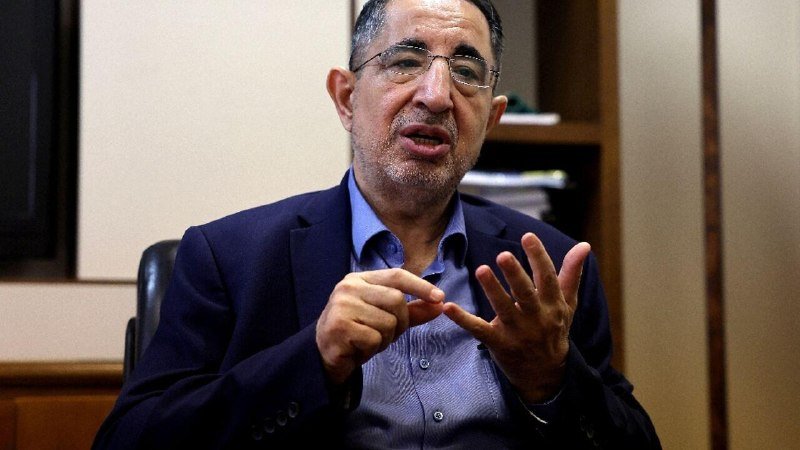
On the evening of 18 June 2026, the speaker of Iran's parliament used a televised address to perform two seemingly contradictory things at once. Mohammad Bagher Ghalibaf — a former Islamic Revolutionary Guard Corps commander who now presides over the Majles — declared that parliament would keep "the leader's directives in mind," then pivoted within minutes to a martial register. If "the enemy seeks to impose his excessive demands, we are ready to respond to him firmly with our hands on the trigger," he said, in remarks relayed by Iran's Arabic-language state outlets beginning at roughly 21:41 UTC. By 22:01 UTC he was back in reconciliation mode, hoping that the same "leader's message" would "contribute to unifying our society in confronting the enemy in order to achieve the terms of the memorandum of understanding." Hours later, Israeli media acknowledged a "very bad" event in south Lebanon under military censorship — a phrase that, in Israeli security vocabulary, almost always means a serious incident involving ground forces.
Strip away the stagecraft and a familiar pattern is visible. Tehran is signalling discipline to its own coalition at the exact moment that the regional security environment is shifting under its feet. The two messages are not contradictory; they are the same message sent to two audiences. The first is for the domestic political class and the regional axis of resistance: the unity of decision-making is intact, the chain of command runs through the supreme leader, and deviation from the agreed framework will not be tolerated. The second is for Washington and the Israeli negotiating table: every concession has a ceiling, and beyond that ceiling the lever is force.
What Ghalibaf actually said, in order
The transcript, as carried by Iranian state-aligned Arabic outlets including Al-Alam Arabic and Gaza Alanpa between 21:41 and 22:01 UTC, runs in five distinct beats. First, the ritual submission to the supreme leader: "We will keep your directives in mind." Second, the framing of a recent agreement — referred to only as "the memorandum of understanding" — as the threshold of a "difficult road." Third, a domestic-political warning: "We must fulfill the rights of the Iranian people and resist against the enemy who has broken his promises." Fourth, an internal-discipline line aimed at the "opposing party" — understood in Tehran's lexicon as reformist factions inside Iran who have, in recent months, publicly questioned the cost of regional proxy commitments. The opposing party, Ghalibaf warned, will not be permitted to "harm the rights of our people and the resistance front by violating its obligations and using the logic of force." Fifth, the military line quoted above, conditioned on the other side's behaviour.
The sequencing matters. The opening line is deference, not assertion. The closing line is the price tag. That is the architecture of a message designed to look like reassurance to the home audience while telegraphing risk to the foreign one.
The southern Lebanon variable
The Israeli acknowledgment at 22:57 UTC of a "very bad" event under military censorship in south Lebanon is the load-bearing fact of the day. Israeli media uses this construction — "event under censorship," "bad incident" — when operational details cannot yet be released, almost always because ground forces have been engaged and casualties or a serious operational failure are involved. The south Lebanon theatre has, since the 2024–25 exchanges, been the most active physical line between Israel and the Iran-aligned axis, with Hezbollah's reconstituted units and Iranian advisers operating under varying degrees of cover. A censored "very bad" event there, on the same day that Tehran's speaker was publicly fingering the trigger, cannot be treated as coincidence. Whether the incident reflects an Israeli ground operation, a failed infiltration, a strike on an Iranian-linked site, or a missile or drone interception gone wrong, the sources available to this publication do not specify; the Israeli military censorship regime is designed precisely to keep that ambiguity in place for the first 24 to 72 hours. What is not ambiguous is that the timing of the announcement — barely an hour after Ghalibaf finished speaking — sharpens the meaning of his words considerably.
Why Tehran is talking this way now
Two pressures are colliding. On the diplomatic track, Iran's negotiating partners have been pressing for a final framework on the nuclear file and on regional de-escalation. The "memorandum of understanding" Ghalibaf invokes appears to be an internal Iranian political settlement — a documented agreement between the various power centres that papers over disagreement on how much to concede in exchange for sanctions relief. The supreme leader's "message" is the public seal on that settlement, and Ghalibaf's role is to enforce the discipline required to hold it together. The second pressure is operational: the axis of resistance is overstretched. Hezbollah has been fighting from a degraded position since 2024; the Syrian land bridge that once resupplied it has been functionally severed; Iraqi militias have been periodically constrained by domestic political pressure; and Houthi forces are absorbing a sustained aerial campaign. In that context, the parliamentary speaker's job is to remind every faction — domestic and regional — that the centre will not tolerate unilateral escalation or unilateral capitulation. The trigger-finger language is meant to discipline Iranian hardliners away from adventurism at least as much as it is meant to warn outsiders.
What remains uncertain
Three things are genuinely contested or unknown on the evidence available to this publication. First, the operational content of the Israeli "very bad event" — what happened, to whom, and at what scale. Israeli military censorship rules require the details to remain suppressed for a defined window; the wire reporting will follow once that window closes. Second, the contents of the "memorandum of understanding" Ghalibaf referenced. Iranian state media did not publish a text; the references are deliberately elliptical, consistent with a domestic political pact rather than a published international instrument. Third, the chain of causation between Ghalibaf's speech and the southern Lebanon event. The temporal proximity is striking, but the available sources do not establish whether one caused the other, whether both were scheduled to occur on the same day, or whether the Israeli announcement is a deliberate signalling move timed to Iran's messaging cycle. The temptation to over-read timing should be resisted until at least one of the three is clarified by primary reporting.
The honest reading of 18 June 2026 is that two parallel signalling operations are now running on the same clock. One is owned by Tehran: unify the coalition, define the red lines, and discipline the home front. The other is owned by Tel Aviv, and it speaks in the particular grammar of military censorship. Both messages are, in their different registers, warnings. The next 72 hours will tell the market which audience each side was actually talking to.
Desk note: Monexus is leading on the Iranian parliamentary message and the Israeli censorship event as two halves of a single signalling cycle, sourced to the Iranian state-aligned Arabic channels and Telegram wires that carried the original remarks in real time. Western wire reporting on the south Lebanon incident is operating under Israeli censorship restrictions and has not yet published a primary account; we have resisted the urge to pad the timeline with speculative casualty figures and have flagged the operational ambiguity explicitly. The "memorandum of understanding" is treated as a domestic Iranian framing rather than a published document because that is what the available evidence supports.
Wire provenance
This editorial synthesis draws on the following public wire/social posts:
- https://t.me/s/alalamarabic
- https://t.me/s/gazaalanpa
- https://en.wikipedia.org/wiki/Mohammad_Bagher_Ghalibaf
Follow the event.
These dated source records provide context. They do not retrospectively verify this archive article.
Separate what the nuclear watchdog reported from what it could not determine after the June 2025 strikes.