Russia's war economy hits a wall: how deep strikes on Moscow refineries are redrawing the cost of occupation
A Bloomberg-led reading of the Russian budget and a fresh round of Ukrainian long-range strikes on Moscow-area refineries point to the same conclusion: the cost of sustaining the invasion is rising faster than the Kremlin's fiscal scaffolding can absorb.
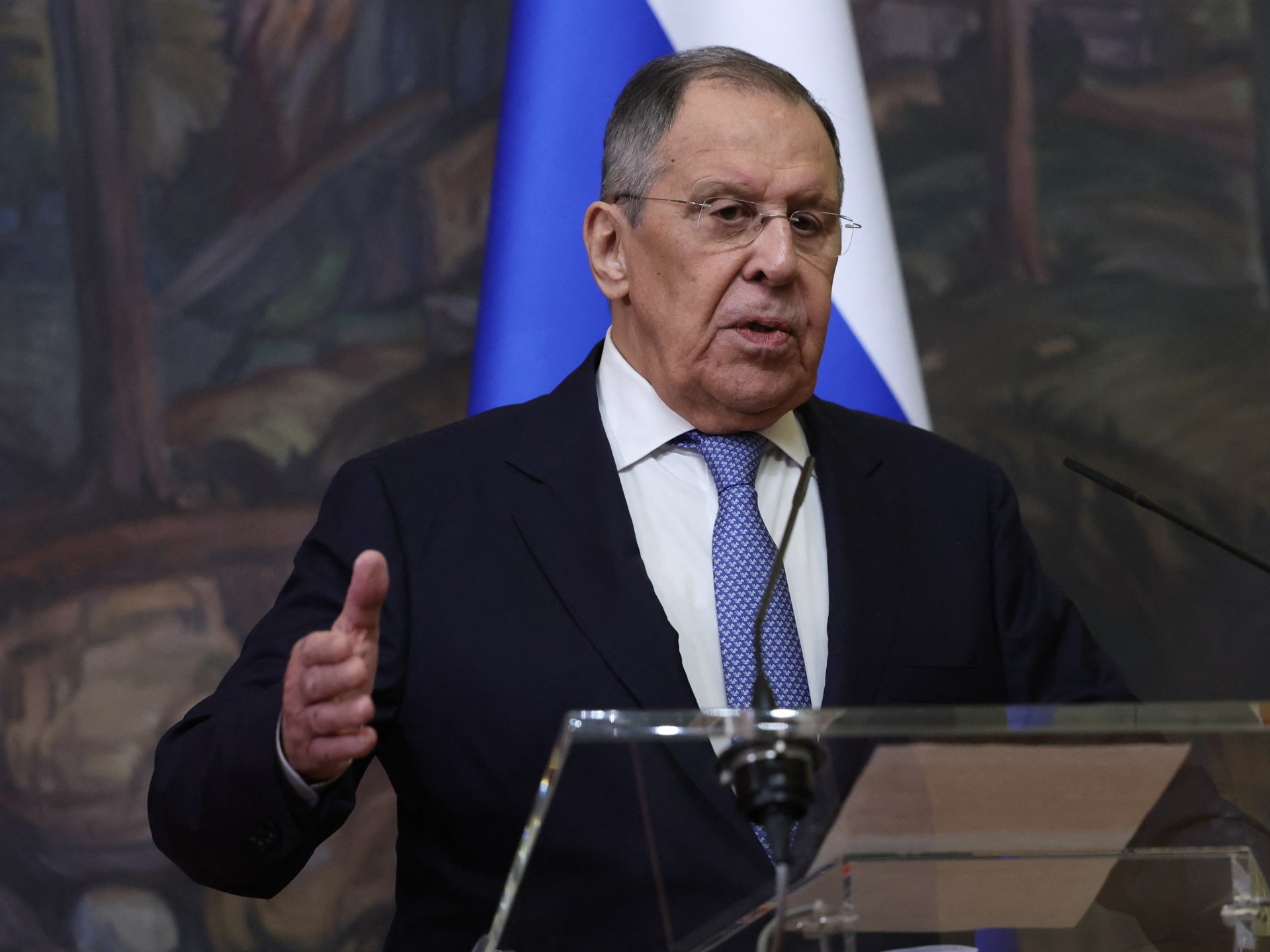
On the morning of 18 June 2026, two separate reports landed within thirty minutes of each other. The first, circulated by the Ukrainian public broadcaster TSN citing a Bloomberg analysis, warned that Russia is "entering a dangerous financial zone," with the cost of the full-scale invasion outpacing the fiscal scaffolding the Kremlin has built around it. The second, confirmed by Telegram channels associated with Ukrainian military intelligence, was operational: the SSO (Special Operations Forces) and the SBU (Security Service of Ukraine) publicly stated that they were the ones who struck targets inside the Russian capital overnight, hitting a Moscow oil refinery. By mid-morning, President Volodymyr Zelensky had appeared on camera with a message aimed at Moscow: "It's time to end this war, and Russia must take the necessary steps in diplomacy."
The two threads — fiscal stress inside the Russian state, and a Ukrainian campaign of deep strikes on the infrastructure that pays for the war — have been running in parallel for months. What changed this week is the timing. They are now visibly converging. The Bloomberg reading circulated by TSN argues that the marginal rouble of war spending is doing less work than it did a year ago, while the SSO/SBU strikes inside the Moscow ring road are physically removing the refining capacity that converts Russian crude into the diesel, jet fuel and gasoline that fund the front. Each side, in its own language, is saying the same thing: the war is becoming more expensive, and the bill is coming due.
This is what the front of the curve now looks like.
A budget under structural pressure
The Bloomberg framing, as relayed by TSN on 18 June, is less about any single line item than about the trajectory. Russian federal spending has been running at a wartime tempo since at least 2023, with defence and security consistently the largest single category of the consolidated budget. What the analysis reportedly identifies is the gap between that spending and the revenue base that is supposed to support it, once oil-and-gas receipts, non-oil tax revenue, and borrowing are netted against one another. With Brent crude still trading well below the implicit price the Russian treasury needs to balance the budget without dipping further into the National Wealth Fund, the fiscal cushion is thinning month by month.
That does not mean the war is about to be lost on a balance sheet. Russia remains a major hydrocarbon exporter, its central bank has built a war-finance architecture that has so far kept inflation and the rouble within a manageable band, and the budget process in Moscow is not transparent enough to allow outsiders to verify a hard cliff. What it does mean, and what the Bloomberg framing underlines, is that the cost of each additional month of occupation is rising. Industrial-policy spending on dual-use production, subsidies to keep interest rates tolerable, and the social bill for casualty payments and veteran benefits all sit on the same ledger. The further the war goes, the larger the unfunded liability grows.
For Ukraine and its partners, the operational implication is straightforward: the fiscal trajectory is now a target. Strikes that meaningfully remove refining capacity do not need to bankrupt Moscow to shift the cost curve. They need to force the Kremlin to choose between spending on the front and spending on the social compact at home.
The Moscow strikes — what was hit, and by whom
The overnight strikes on 18 June, confirmed by the SSO and the SBU themselves, hit a Moscow oil refinery and, according to Zelensky's own statement, a tank farm, a crude oil primary processing unit (CDU/AVT) and other downstream infrastructure. Zelensky's framing, published on his official channels and relayed by the Ukrainian news agency UNIAN, was direct: Russia must take "the necessary steps in diplomacy" and end the war.
This is not the first time Ukrainian long-range systems have reached into the Moscow metropolitan area. It is, however, the first time in this phase of the campaign that the SSO and the SBU have publicly confirmed a joint operation against the capital's refining cluster on the same day the operation itself took place. The disclosure is itself a political signal. The Ukrainian messaging is no longer only that it can strike; it is that it is willing to own the strike in real time, in plain language, and to attach a diplomatic ask to it.
The target set matters as much as the geography. Refineries and tank farms are the chokepoint between Russian oil fields and the diesel that powers Russian logistics, the gasoline that keeps domestic consumption politically manageable, and the petroleum product exports that have been one of the workarounds for the European price cap. Damage to a CDU/AVT unit in particular is not quickly repaired; primary distillation is the most capital-intensive part of a refinery, and rebuild times run into years rather than weeks. Even a partial outage at a Moscow-area plant removes a meaningful slice of national capacity for an extended period.
What the Kremlin says, and why the framing matters
Russian state-aligned coverage of the overnight operation, as relayed through channels such as Clash Report, has continued to present strikes inside Russia as nuisance-level events. The dominant message from Russian officialdom and the milblogger ecosystem is that air-defence crews intercepted most of what was launched, that the damage was contained, and that civilian life in the capital was unaffected. The visual record from Moscow — a major Russian capital city under repeated overnight strike — sits in obvious tension with that framing.
That gap between official Russian framing and the visible pattern is itself part of the story. Inside Russia, the war has been presented, where possible, as a distant operation conducted on someone else's territory. Strikes on Moscow refineries puncture that framing. They do not, by themselves, change the political weight of the war inside Russia — the domestic information environment is too tightly managed for a single night of strikes to swing opinion — but they raise the salience of the war among the Moscow-region middle class that the regime has been most careful to insulate. Each successful strike incrementally narrows the gap between the official story and the lived experience of the population that the official story is trying to manage.
The structural point is that the Russian state's fiscal strain and the Ukrainian strike campaign are now reinforcing one another. Fiscal strain gives the strikes strategic weight; the strikes, in turn, accelerate fiscal strain by removing the very refining capacity that converts raw crude into exportable product and tax revenue.
A hegenomic transition in slow motion
Step back from the operational detail and the larger pattern is hard to miss. For most of the post-2022 period, the dominant Western framing of the war's economic dimension has been about Russian resilience — the budget holding, the rouble holding, oil flows routed through shadow fleets, and sanctions enforcement losing its bite. That framing was never wrong, exactly, but it was always describing a snapshot. It measured the cost of a single additional year of war, not the cumulative cost of a war that has now run for more than four years with no end in sight.
What the Bloomberg reading and the SSO/SBU confirmation together suggest is that the snapshot is changing. The Russian state is not collapsing, the rouble is not in free fall, and the energy export machine is not about to seize up. But the marginal cost of the war is rising, the fiscal scaffolding is showing visible stress, and the instruments that have so far masked that stress — Asian oil buyers, parallel financial rails, defence-industry overtime — are themselves beginning to show wear. The Ukrainian deep-strike campaign, by deliberately targeting refining rather than production, is aimed at the most labour-intensive and slowest-to-rebuild part of that machine.
This is the kind of slow pivot that does not produce a single dramatic turning point. It produces a long arc in which the cost of continuing the war rises in Moscow at the same time that the willingness of Ukraine's partners to continue underwriting its defence is being tested in Washington, Berlin and Brussels. The two curves are now moving in opposite directions: Ukrainian fiscal backing is constrained and politically conditional, Russian fiscal backing is large but visibly thinning. The question of 2026, on the present evidence, is which curve bends first.
What remains uncertain
A few things are worth saying plainly about what the source material does and does not establish. The Bloomberg analysis cited by TSN is being reported at one remove; the exact thresholds, the precise fiscal gap, and the specific revenue assumptions behind the "dangerous financial zone" language are not laid out in the public Telegram relay, and the underlying Bloomberg piece is not in the thread's link set. The damage assessment at the Moscow refinery is, similarly, partial. Ukrainian sources, including Zelensky's office and the UNIAN wire, describe a hit on a tank farm, a crude primary processing unit and other infrastructure. Russian-aligned channels describe interception and limited impact. The true production loss, the timeline to any partial restart, and the downstream effect on regional fuel supply will only become clear over weeks, not hours.
The diplomatic ask — that Russia take "the necessary steps" — is also worth reading with care. It is a public signal, not a negotiation. It tells us that Ukraine is willing to put a political frame around a kinetic operation in the same breath, and that Zelensky is now framing the war as one in which Moscow's own fiscal pressure is a lever. It does not, by itself, indicate that a negotiating track has opened. The sources do not contain a Russian counter-offer, a third-party mediation, or any indication that the Kremlin is yet treating the financial pressure as a reason to move.
Desk note: Monexus framed the Bloomberg analysis and the SSO/SBU confirmation as two halves of the same story, rather than as a financial dispatch and a military dispatch in adjacent slots. The wire cycle has tended to treat them as separate beats; the convergence is the story.
Wire provenance
This editorial synthesis draws on the following public wire/social posts:
- https://t.me/TSN_ua
- https://t.me/ClashReport
- https://t.me/Tsaplienko
- https://t.me/uniannet
- https://t.me/TSN_ua
- https://t.me/uniannet
- https://t.me/ClashReport
- https://t.me/Tsaplienko
Follow the event.
These dated source records provide context. They do not retrospectively verify this archive article.
A dated voting record is evidence of one decision. Use the original UN record before turning it into an alignment label.
Visual explainer · historical vote of 2022-03-02 →