As Russian EW crumbles, Ukraine turns the Moscow night into a drone highway
A four-year electronic-warfare campaign that once grounded Ukrainian drones is breaking down under the weight of swarm tactics, deep strikes on fuel depots, and a Moscow air-defence net visibly struggling to keep up.
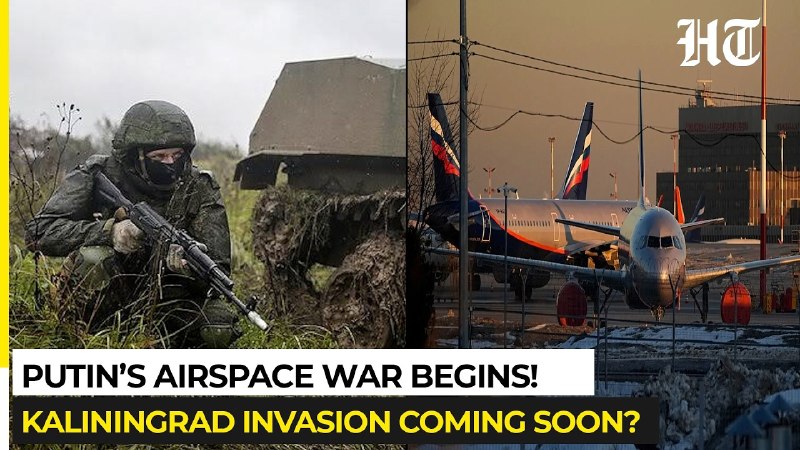
For most of the past four years, the single most important piece of battlefield hardware in the Russia–Ukraine war was not a tank, a missile, or a fighter jet. It was the boxy, truck-mounted Pole-21, R-330Zh "Zhitel," or Krasukha-4 jammer, the anonymous machine parked behind a tree line somewhere in Kursk or Zaporizhzhia, its antennas radiating the radio energy that decides whether a Ukrainian drone ever reaches the target or simply tilts, stutters, and falls into a wheat field. On the night of 17–18 June 2026, that system — replicated across the contact line in hundreds of units — showed, in public, just how thin its margin of superiority has become. Ukrainian forces flew 194 long-range drones at Moscow and the Moscow region in a single night; Russian air-defence units intercepted most but not all of them, and at least one of the machines that got through ignited a fire at a Moscow oil refinery, according to posts on X by @boweschay at 11:04 UTC on 18 June 2026. The same 24 hours brought a separate Ukrainian strike on a Russian fuel depot, captured on video by Telegram channel @Megatron_ron at 11:37 UTC and forwarded by WarTranslated at 11:47 UTC, in which a storage tank is lifted off the depot's roof by the blast. Taken together, the two episodes describe a war in which the side once written off as technologically inferior is now saturating the side with the larger industrial base, forcing it to spend interceptors and credibility at a rate that the maths will not long support.
What the overnight footage actually shows is the slow collapse of the electronic-warfare regime that defined the first three years of the invasion. Russian forces pioneered the use of GPS-spoofing, controller-jamming, and barrage-style radio suppression at scale, and for a long while the effect was decisive: Ukrainian cheap quadcopters would lose link, drift, and crash. The Russian EW umbrella was, in effect, a tax on every Ukrainian sortie, and the tax was high enough to make the cheap-drone strategy unworkable in many sectors. The visible degradation of that umbrella, captured in the WarTranslated video circulating on 18 June 2026, is the technical story inside the political story: when jammers no longer jam, the cost equation flips. A $500 drone that reaches a fuel tank is a different strategic object from a $500 drone that spirals into a ditch. The whole Ukrainian deep-strike campaign of 2025–26 — the refinery fires, the railway substation attacks, the ammunition-warehouse blazes visible on NASA FIRMS — rests on the assumption that the flip has, in fact, happened. The Moscow night suggests the assumption is defensible.
The 194-drone night, in context
A 194-drone salvo aimed at a single metropolitan area is not, on its own, a tactical event. It is an industrial event. To put it in scale, it is roughly the daily drone-intercept count that Russian officials in late 2024 cited for the entire country over a week, compressed into hours and pointed at one city. The figure, circulated by @boweschay on X at 11:04 UTC on 18 June 2026, sits alongside footage of a fire at one of Moscow's oil refineries — the exact facility not specified in the source material, a gap the open-source record has not yet closed. Russian air-defence operators said publicly, in the same reporting window, that most of the incoming aircraft were intercepted; the visible refinery fire suggests the boast is, in the literal sense of the word, partial. A defence system that intercepts 180 of 194 drones and still loses a refinery has not, in any operational sense, done its job. The relevant comparison is not interception rate but damage inflicted per salvo, and on that metric the Russian surface-to-air missile and EW complex is leaking.
The technical mechanism behind the salvo is now well-understood in open sources, even if Russian doctrine does not publicly acknowledge it. A modern long-range strike drone, of the kind Ukraine has been producing domestically in growing volumes through 2025 and 2026, combines inertial navigation, terrain-matching, terminal-optical or terminal-radar homing, and a datalink that is hardened against the most common Russian jamming waveforms. The first generation of Russian EW gear was tuned to defeat the much simpler 2014–2022 drones, and the iterative answer from Ukrainian manufacturers has been to take the datalink off the critical path for the terminal phase of the flight. The drone flies a pre-planned route by inertial and terrain reference, and only uses its radio link in the last kilometre or two. By the time the jammer notices it, the drone is too close to spoof. The WarTranslated video circulated on 18 June 2026 makes the operational consequence explicit in its title and framing: the consequences of the Russian EW operation. The framing is that EW, once an asymmetric Russian advantage, is now being deliberately rendered irrelevant by a counter-doctrine that simply routes around it.
Why the fuel depot matters more than the headline count
The Moscow refinery fire is the kind of single incident that will dominate the news cycle for 24 hours and then be subsumed into the rolling background of war. The strike on the Russian fuel depot, captured on the @Megatron_ron Telegram channel at 11:37 UTC on 18 June 2026, deserves more attention than it will get. A drone strike that lifts a storage tank off a rooftop is a different class of event from a drone strike that punctures a roof. The footage shows a structural failure of the tank itself under the overpressure of a near-direct hit, which is consistent with a weapon arriving from above rather than from the side. The geometry matters because it implies terminal-phase accuracy that defeats not just EW but also the crude roof-mounted camouflage netting that Russian fuel depots adopted in 2024–25. Camouflage that hides a tank from an oblique satellite pass does not hide a tank from a drone diving vertically through the netting.
The deeper point is logistical. Russian ground forces in Ukraine have been running on a fuel-consumption tempo that, by independent open-source estimates, exceeds the pre-war peaceline by a factor of two or three. The reserves are real, but they are not infinite, and they are vulnerable in a way that Russian armoured formations are not. A tank can be repaired in the field; a 5,000-cubic-metre fuel tank, once it has been lifted off its pad by an internal explosion, is a write-off. The cumulative effect of the 2025–26 strike campaign on Russian refining and storage capacity is now visible in satellite imagery, and the operational effect is visible in the lengthening Russian logistics tail, with railheads pushed further back from the front and refuelling convoys forced to make longer, more dangerous runs. The 18 June 2026 footage is one frame in a much longer film.
The counter-narrative, and why it does not quite hold
The Russian counter-narrative, in the framing offered by Russian state media and Russian milblogger channels, is consistent and partly defensible. It runs as follows: yes, Ukraine flew 194 drones at Moscow; Russia intercepted the overwhelming majority; the few that got through caused limited, repairable damage; the cost exchange ratio still favours Russia, because each Ukrainian drone costs more in Western-supplied components than the Russian interceptor missile or EW engagement cycle used to kill it; and the political effect of a 194-drone salvo is, in any case, to harden Russian public opinion behind the war, not to break it. The first three points of that narrative are probably true in the narrow technical sense. The fourth is contested, and the fifth is, on present evidence, false.
The cost-exchange argument is the most durable. A long-range Ukrainian strike drone, with its Western-supplied guidance components and imported autopilot chip, is materially more expensive than the Russian cruise missile or Shahed-type drone it is often compared to. Russian air-defence interceptors, by contrast, are cheaper per round than the drones they are shooting down, and EW engagements are cheaper still, costing only diesel and operator time. If the exchange ratio were the whole story, the Russian position would be sustainable. The exchange ratio is not the whole story. The Russian position is also buying time, and time is now the relevant currency. A defence that intercepts 180 of 194 drones a night can sustain the present tempo; a defence that has to intercept 400 drones a night, then 800, then 1,600, cannot, because interceptor magazines and EW crews are not infinitely scalable, and the interceptor industrial base is itself under sanctions pressure. The Russian position is sustainable at 194 drones a night, and not sustainable at the trajectory the trajectory implies. That is the gap that the counter-narrative does not close.
The political-effect argument cuts the other way and is, on the evidence, weaker than Russian official framing suggests. Independent Russian polling on the war is thin and partly compromised, but the visible migration of Russian war commentary from triumphalism in 2022 to stoicism in 2024 to weariness in early 2026 is consistent across opposition, establishment, and milblogger sources. A 194-drone night over Moscow is a symbolic event as much as a military one. It tells the Moscow middle class, in a language that requires no translation, that the war is no longer happening somewhere else. Symbolic events have a way of accumulating, and the cumulative curve is not the Russian official curve.
What we are actually watching, in plain language
Strip the rhetoric away and the structural picture is straightforward. Two industrial systems are now in direct competition, and the side with the deeper bench is losing on the metric that matters most — continuity of supply to its own ground forces. Ukraine is producing, in 2026, more long-range strike drones per month than at any point in the war, with a domestic supply chain that is partly insulated from external shocks. Russia is producing more interceptors and more EW systems per month than at any point in the war, with a supply chain that is partly insulated from external sanctions by parallel-import arrangements. The two curves are both rising. The question is which one is rising faster, and on present open-source evidence, the Ukrainian curve is rising faster relative to the problem it is being asked to solve. The Russian system is being asked to defend a homeland that is nine time zones wide, with a fleet of interceptors and EW systems optimised for the close fight in Donbas. The mismatch is not a secret; it is the central problem of Russian air defence as it has been configured since 2022, and the 18 June 2026 events are simply the most legible demonstration of it yet.
A second structural feature is worth naming plainly, because it is the part of the story most often missed in Western commentary. The war in Ukraine is, increasingly, a war about radio spectrum. The early phases were about artillery and manoeuvre. The middle phases were about HIMARS and tube rocket artillery duels. The current phase is about who controls the electromagnetic environment in the last ten kilometres of a strike. Russian EW is a real capability, built up over a decade and a half of investment, and dismissing it would be a mistake. But the counter-doctrine now visible in the Ukrainian drone programme — inertial-only cruise, terrain-matching, terminal-phase autonomy, frequency-hopping datalinks hardened against the most common Russian waveforms — is a doctrinal answer, not just a technical one. Doctrinal answers take time to develop and longer to industrialise. The 18 June 2026 footage is evidence that the doctrinal answer is now being industrialised at scale.
The stakes, in concrete terms
If the trajectory visible on 18 June 2026 continues — and the open-source record gives no reason to think it will not — the operational implications fall in three directions. First, Russian ground forces in Ukraine will, over the coming months, see a measurable tightening of fuel availability at the tactical edge, with knock-on effects on the tempo of armoured manoeuvre. The first signs of this tightening are already visible in the lengthening Russian logistics tail and in the increasing use of railhead-to-truck-to-track resupply patterns that are more vulnerable to Ukrainian strike than the old pipe-to-truck pattern. Second, the Russian defence-industrial base will come under increasing pressure to produce more interceptors and more EW systems faster, against an interceptor production curve that is itself constrained by the same sanctions environment that constrains the rest of the Russian high-tech industrial base. Third, and most speculatively, the political centre of gravity inside Russia will continue to drift, at the margin, toward those voices — both inside and outside the official security establishment — who argue for a negotiated end to the war before the cost curve reaches a politically intolerable level. None of these effects is certain. All of them are visible, in embryonic form, in the overnight footage from 18 June 2026.
The honest caveats matter. The 194-drone figure comes from a single X account, @boweschay, posting at 11:04 UTC on 18 June 2026, and the open-source record has not yet independently confirmed the exact tally. The refinery fire is documented in the same reporting window, but the specific refinery is not identified in the source material, and the damage assessment will not be public for some days. The fuel-depot strike documented by @Megatron_ron at 11:37 UTC is on video, and the visual evidence of structural damage to the storage tank is unambiguous, but the location of the depot and the unit cost of the destroyed tank are not in the open record. The Russian counter-narrative on cost-exchange ratios and on public-opinion resilience is partly defensible, and a serious analysis cannot dismiss it. What the open-source record does establish, beyond reasonable doubt, is that Ukrainian long-range strike capacity is operating, on the night of 17–18 June 2026, at a tempo and with a terminal-phase accuracy that would have been impossible twelve months earlier, and that Russian air defence and EW, despite the very real investments of the past four years, is no longer able to neutralise that capacity at acceptable cost. The structural frame is clear, even if the specific numbers are still being audited by open-source analysts in the days ahead.
This publication treats the Russia–Ukraine war as an invasion and frames the coverage accordingly. Ukrainian strikes on Russian military and energy infrastructure on Russian territory are reported as legitimate responses to an aggressor; Russian air-defence operations are reported as Russian operations, with Russian-aligned claims cited as Russian-aligned claims rather than as stand-alone fact. The overnight footage cited above is drawn from open-source channels that, by the nature of wartime social-media reporting, are subject to the same verification limits as any single-source claim; readers are encouraged to cross-reference the primary footage against independent geolocation and damage-assessment work as it becomes available in the days after publication.
Wire provenance
This editorial synthesis draws on the following public wire/social posts:
- https://twitter.com/wartranslated/status/2067573683019784242/video/1
- https://t.me/megatron_ron
Follow the event.
These dated source records provide context. They do not retrospectively verify this archive article.
A dated voting record is evidence of one decision. Use the original UN record before turning it into an alignment label.
Visual explainer · historical vote of 2022-03-02 →