Saudi Arabia draws a line: the Strait of Hormuz was fine before Israel started bombing
Riyadh's foreign minister uses a public forum to warn that Israel's military-only doctrine is self-defeating — and to remind the West that the waterway the world relies on was navigable until very recently.
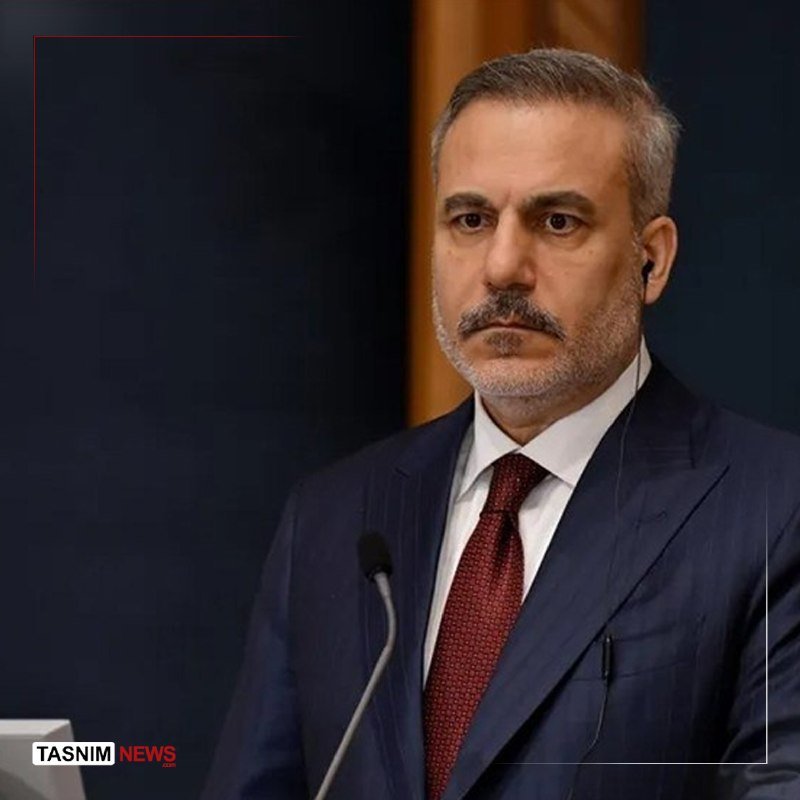
Saudi Arabia's top diplomat used a public appearance on 18 June 2026 to deliver two messages that, taken together, sketch the geography of an emerging regional crisis. The first was a warning to Israel: a long-term military-only doctrine is, in his words, "very detrimental to Israel's interest." The second was a pointed reminder to anyone shipping oil through the Strait of Hormuz — the chokepoint through which a meaningful share of global petroleum passes — that "the management of the strait was working fine before the conflict," that ships were "navigating freely," and that there was, until recently, "no safe"-passage problem.
The implication is plain. Riyadh is telling external powers, in calm diplomatic language, that the recent instability in one of the world's most economically consequential waterways is the product of a war the Kingdom did not start and cannot unilaterally end, and that the price of continuing that war on the present trajectory will not be paid in Jerusalem or Tel Aviv alone.
What Prince Faisal actually said
In remarks circulated by the Telegram channel ClashReport, Prince Faisal bin Farhan Al Saud — the foreign minister of Saudi Arabia — addressed four points in sequence. First, the Strait of Hormuz: management of the waterway was functional before the current conflict, with ships navigating freely and no safe-passage issue. Second, Israel: insisting "solely on the military approach in the long term will be very detrimental to Israel's interest." Third, regional belonging: "Israel is part of the region … but Palestine is also part of the region," a formulation that recasts the diplomatic question from recognition to co-existence. Fourth, Iran: "Iran attacked not just the Kingdom but all of the countries of the GCC. That has created a significant loss of trust between all of us."
That last line is the one Western analysts should underline. It is the closest a Saudi foreign minister has come in public, in this exchange, to naming the trust deficit that the Iran-Israel confrontation has opened inside the Gulf. It is also a piece of pressure, applied gently, on Tehran: the Kingdom is reminding the Islamic Republic that an attack on one Gulf state is now read as an attack on all of them.
The counter-narrative Western readers are getting
The Western wire framing of the same weeks has tended to emphasise two things: Israeli operational successes against Iranian proxies, and the diplomatic choreography around a possible normalisation track. That framing has a real basis in events, but it tends to leave out the diplomatic cost being billed to states that are not at the table. Prince Faisal's intervention is a polite way of issuing an invoice.
The structural problem is straightforward. The Gulf states are the guardians of the energy arteries on which the global economy, including Israel's economy, runs. If those guardians come to believe that the cost of the Israel-Iran war in lost trust, in destabilised chokepoints, and in forced regional realignments exceeds the cost of telling their security partners some hard truths, the diplomatic weather changes. Prince Faisal's remarks read as the early phase of that recalculation.
What the structural picture actually looks like
Strip away the personalities and the picture is one of asymmetric exposure. The Kingdom and its Gulf neighbours sit on top of the shipping lanes and the spare capacity that the rest of the world reaches for in a crisis. They are not combatants in the Israel-Iran war, and they have, at significant diplomatic cost, kept themselves out of it. The trade they are being offered in return is normalisation with Israel on terms shaped in Washington, and quiet acceptance of a regional security architecture in which the Gulf states are consulted but not the senior partners.
Prince Faisal's framing pushes back against both halves of that arrangement. The Strait of Hormuz line says: the waterway was not a problem until your war made it one, and the bill will arrive. The "military-only approach" line says: a doctrine that produces recurring rounds of escalation is not a security policy, it is a debt instrument with the Gulf states as the implicit underwriter. The "Palestine is also part of the region" line says: the regional conversation Riyadh wants is not the one being designed for it.
The stakes if the trajectory holds
If the diplomatic weather continues to shift along the lines Prince Faisal has sketched, three things follow. The first is a hardening of Gulf resistance to being treated as automatic ballast for any Israeli military campaign against Iran, however telegraphed. The second is a more explicit Saudi and Emirati willingness to use the language of energy security — Strait of Hormuz transit, OPEC+ spare capacity, downstream investment — as a diplomatic instrument rather than a neutral technical matter. The third is a slow but real erosion of the working assumption, in Western capitals, that Gulf states will continue to underwrite a security order whose principal beneficiaries are elsewhere.
None of this is a rupture. The Kingdom has too much invested in its current external posture to walk away from it. But the polite vocabulary Prince Faisal chose — "very detrimental," "significant loss of trust," "the regional conversation" — is the vocabulary of a state laying the groundwork for harder language later, if harder language becomes necessary.
What remains uncertain
The public remarks do not specify which episodes of Strait of Hormuz disruption Prince Faisal is referring to, nor whether the Kingdom is preparing any specific policy response beyond diplomatic signalling. The trust deficit he describes between the GCC and Iran is described as significant but not quantified. And the diplomatic effect on Israel — whose government has, on past form, treated Saudi criticism as background noise rather than actionable input — is genuinely hard to predict from a single set of remarks.
What is clear is that the diplomatic weather around the Israel-Iran war has acquired a new voice, and that voice is speaking in measured but unmistakable terms.
— Monexus framed this against the wire consensus on Israel-Iran by treating the Saudi intervention as a structural signal rather than a colour quote; the Strait of Hormuz reference is the load-bearing line and we led with it.
Wire provenance
This editorial synthesis draws on the following public wire/social posts:
- https://t.me/ClashReport
- https://t.me/ClashReport
- https://t.me/ClashReport
- https://t.me/ClashReport
Follow the event.
These dated source records provide context. They do not retrospectively verify this archive article.
Separate what the nuclear watchdog reported from what it could not determine after the June 2025 strikes.