A Russian caricaturist killed in Warsaw: the politics of an artist who drew himself into exile
Polish police detained a suspect within hours of the daylight shooting of Semyon Skrepetsky, a Russian caricaturist whose pen drove him into exile and, eventually, into a Polish apartment. The case now sits at the seam between refugee protection, Kremlin accountability, and Europe's long struggle over dissident artists.
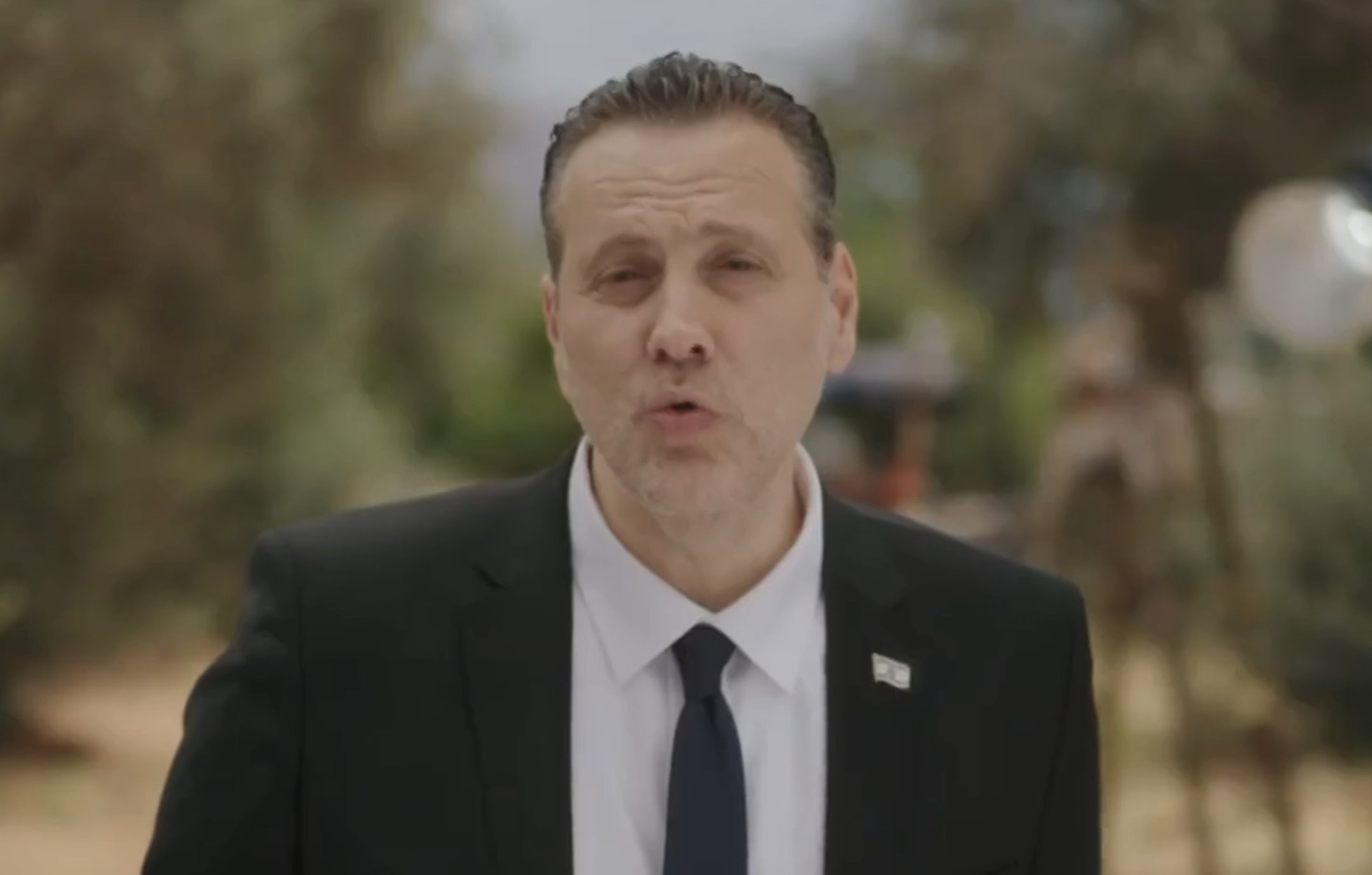
Polish police on Thursday detained a suspect in the daylight killing of a Russian artist known as Semyon Skrepetsky, a caricaturist whose unsparing portraits of senior political figures had already driven him out of his home country. Prime Minister Donald Tusk confirmed the detention in remarks carried by French state broadcaster France 24, hours after the shooting was reported in the Polish capital. The case moves a story that had, until now, circulated in cultural pages — the émigré artist abroad, the censored pen, the long tail of Russian political pressure on its own diaspora — into a criminal and security frame that Warsaw cannot avoid.
Skrepetsky's killing is, on the surface, a single act of urban violence. It is also a test of how a frontline NATO and EU state handles a Russian dissident killed on its soil, in a country that has spent the last three and a half years absorbing the political shockwaves of a war next door.
A pen, then a flight, then a name on a list
The artist had built a public identity around caricature — work that ridiculed prominent Russian political figures in drawings sharp enough to be unpublishable inside Russia. According to France 24's 12:01 UTC dispatch on 18 June 2026, the caricatures were the reason he was known abroad at all, and the reason he was unsafe at home. The thread of cause and effect is, in this sense, ordinary for the genre: the pen made the artist visible, the visibility made him a target, and the targeting made him an exile.
That sequence is now familiar across Eastern Europe. Journalists, novelists, playwrights, and illustrators who crossed lines drawn by the Russian state have, for more than a decade, been pushed into a slow diaspora centred on Tbilisi, Yerevan, Berlin, and Warsaw. Warsaw in particular has positioned itself, since 2022, as a city of refuge for Ukrainians and for Russians fleeing the political consequences of dissent. The presence of artists in that flow is not incidental. It is a quiet measure of how the cultural field inside Russia has been thinned out, and of how neighbouring states have absorbed the people left over.
The Polish response — and the political signal it sends
Tusk's confirmation of the detention, on the same day, was quick by European standards. A daylight killing in a major capital produces pressure on the security services to produce a name within twenty-four hours; Tusk's office did so inside that window. Two things follow from the speed. First, the operational claim is that Polish law enforcement had the means to identify a suspect almost immediately — a competence that Warsaw will want foreign readers, including those in Moscow, to register. Second, the political claim is that a Russian dissident killed in Poland will not become a cold case.
The framing matters because Skrepetsky is not a generic foreign national. He is a Russian whose work attacked the Russian leadership, killed in a country that hosts NATO's eastern flank and that has, since February 2022, been the single largest hub of material support for an invaded neighbour. A slow investigation would have read, in Moscow and in European opposition pages alike, as indifference. A fast one reads as a statement.
It is worth being clear-eyed about what such a statement can and cannot do. Polish authorities have not, in the materials available on the day of the shooting, named a motive or a sponsor, and they have not linked the killing to a foreign service. A murder investigation can move from a street-level suspect to a state-level patron; it can also stop at a street-level suspect. The sources do not yet specify which path the evidence supports. That uncertainty is, for now, the most important fact in the case.
The structural frame: dissident artists as standing targets
The pattern that the Skrepetsky case sits inside is older than this particular killing. Across the past two decades, Russian political opposition figures, journalists, and defectors have been killed, poisoned, beaten, and pushed into suicide in cities from London to Berlin to Tbilisi. The cases that resulted in confirmed state involvement — the Litvinenko polonium trail, the Skripal novichok attack, the Berlin park murder of a Georgian citizen of Georgian-Tsakhur and Chechen descent in 2019 — produced diplomatic ruptures that lasted years. The cases that did not produce confirmed state involvement produced, instead, a quiet condition in which exile itself became a permanent state of risk.
Artists occupy a particular corner of that pattern. A caricaturist's power is to make the powerful look ridiculous; the cost of that power is that the powerful have a long institutional memory. Skrepetsky's work, by the account circulated in the France 24 report, was unsparing and consistent — the kind of output that makes a person not merely disagreeable but durable as a named object of resentment. The fact that he was killed in Warsaw, rather than in Tbilisi or Berlin, does not change the structural pattern. It does, however, change which European government now carries the political weight of the case.
Stakes, and what remains unresolved
For Warsaw, the immediate stakes are operational and reputational. Operationally, prosecutors must build a case that survives scrutiny from a sceptical Russian foreign-policy apparatus and from a Russian opposition diaspora that watches every move. Reputationally, the government must show that an artist in exile under Polish protection is not a soft target. The case will be read in Kyiv, in Vilnius, in Berlin, and in Moscow simultaneously, and read differently in each.
For European cultural policy, the longer stakes are about the treatment of an entire class of person. Exiled Russian artists, writers, and journalists are now a recognised constituency inside EU member states. Their protection has been uneven — concentrated in a few cities, dependent on private foundations and a small number of sympathetic institutions, vulnerable to the same housing and visa constraints that affect any non-EU national. The killing of one such artist, in a major EU capital, exposes how thin that protection is. A detained suspect is a beginning, not a resolution.
The evidence available at the time of writing does not yet specify a motive, a sponsor, or a method beyond the fact of the shooting. France 24's reporting, dated 12:01 UTC on 18 June 2026, names the detained suspect, the victim, and the venue of the prime minister's confirmation, and stops there. A fuller account will depend on prosecutorial filings and, possibly, on diplomatic consequences that are not yet on the record. What the case already shows, with the sources on hand, is that the cost of drawing a Russian leader as a fool has, in 2026, become high enough to be paid for in a Polish street.
How Monexus framed this vs the wire: the French state broadcaster's report on 18 June 2026 leads with the detention and the official confirmation; Monexus treats the same facts as a hinge between cultural reporting and European security politics, and is explicit about what the current evidence does and does not establish.