Reading the South Lebanon front through Iranian state wire
A small cluster of Tasnim dispatches on 18 June 2026 reads less like battlefield news and more like a template — and the template deserves scrutiny.
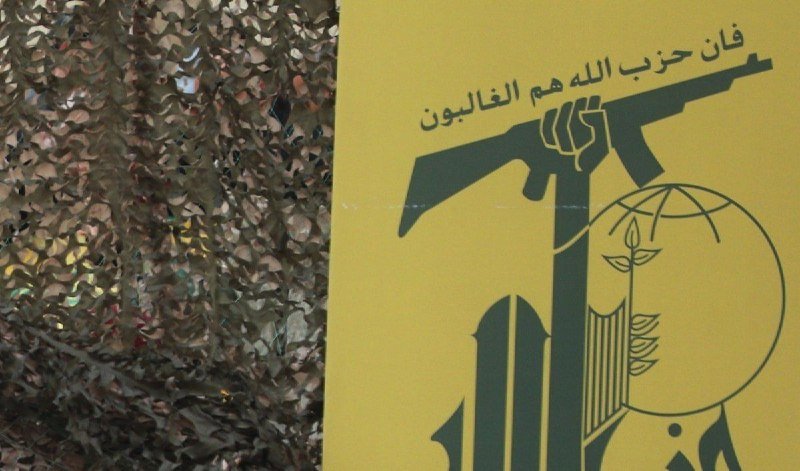
On the morning of 18 June 2026, between 03:35 and 03:58 UTC, three near-identical bulletins landed on the English and Persian feeds of Iran's Tasnim News Agency. A soldier of Israel's 36th Division had been killed in southern Lebanon, the agency reported. Seven soldiers from the same unit, the agency added, had been wounded by an improvised explosive device. The wire ran the same claim twice in roughly twenty minutes, once in English and once through its Persian sister channel, and attached the same framing language both times: "Zionist aggressor army," "the army of the aggressor Zionist regime," "the battles of southern Lebanon."
Taken at face value, that is a small piece of battlefield news — one Israeli fatality, seven wounded, on a border that has been grinding since October 2023. Taken as a media artefact, it is something more instructive. It shows, in real time, what a state-aligned newsroom looks like when it is not just reporting an event but processing it for a foreign audience. The repetition is the point. The vocabulary is the point. The omissions are also the point.
What the bulletins actually say
Strip away the editorial coating and three claims survive. A soldier of the 36th Division was killed in southern Lebanon. Seven soldiers from the 36th Division and the Golani Brigade were wounded by an IED in the same theatre. Both items are attributed to the Israeli military by Tasnim, meaning the underlying factual claim is sourced — at one remove — from the IDF itself. The language wrapping that claim is Tasnim's own.
The English bulletins land at 03:35 and 03:58 UTC. The Persian bulletin, from Tasnim's Jahan Tasnim account, follows at 03:54 UTC. The sequence matters less for chronology than for visibility. A reader in Beirut, in Baghdad, or in any diaspora living room scanning an English-language wire sees the story arrive twice in a tight window — once on the agency account, once through a thematic sister channel. That doubling is the operation. It is how a state-aligned outlet converts a casualty report into a recurring theme of the day.
What the bulletins leave out
The headlines carry no date stamp on the incident itself, no named location within southern Lebanon, and no mention of the operation in which the soldiers were involved. There is no reference to a specific Hezbollah unit, no claim of responsibility, and no detail of the device. The 36th Division is named; the town's name is not. The Golani Brigade is named; the wider context of the ground campaign along the Litani is not.
That asymmetry is the editorial fingerprint. The Israeli side is specific enough to be falsifiable — unit numbers, brigade names, fatality vs wounded. The non-Israeli side is diffuse, collective, anonymous. "The battles of southern Lebanon" could be a sentence about a single IED strike, a multi-day operation, or a month-long attritional campaign. By design, the bulletin works in both registers at once. It is verifiable enough to be reported on by outlets that want the casualty figure, and vague enough to be re-used as ambient atmosphere in outlets that want the framing.
Reading the wire in plain terms
The mainstream wire line on the Israel-Lebanon border has, for most of the post-October 2023 period, been a Hezbollah-Israel exchange: Israeli strikes on Hezbollah infrastructure in the south, Hezbollah rocket and drone fire into the north, displacement on both sides of the line. Casualty reports flow in both directions, mostly in fragments, mostly from military spokespeople on each side and from stringers on the ground.
What the Iranian state press does with that underlying reality is consistent: it translates the Israeli side of the ledger into a single recurring noun — "Zionist aggressor" — and the non-Israeli side into a featureless mass. The structural effect is to convert a two-sided border war into a one-sided narrative of resistance, in which the only named actor is the enemy. That is not unique to Tasnim; it is the basic move of any state-aligned newsroom operating abroad. It is worth naming plainly because Western readers often receive these dispatches as if they were wire copy, and they are not. They are processed copy. The raw data inside them is real; the frame around it is editorial.
What remains uncertain
The bulletins do not specify when the IED detonation or the fatality occurred, nor whether the seven wounded and the single fatality are the same incident or two separate events. The thread does not record an Israeli military confirmation, a Hezbollah claim of responsibility, or independent reporting from a non-aligned outlet on the ground. The number of casualties may stand up; the narrative scaffolding around it cannot be verified from the source set alone, and a responsible desk note here is that the figure and the framing are separable claims. This publication treats the casualty report as plausibly sourced through Tasnim's relay of an Israeli statement, and treats the surrounding vocabulary as exactly what it is: a foreign-policy instrument, dressed as a news bulletin.
Desk note: Where mainstream wire coverage of the south-Lebanon front typically leads with Israeli or Western-confirmed reporting and adds Hezbollah or Lebanese context on the second beat, the Iranian state wire inverts the order — naming Israeli units in the headline and leaving the resistance side as ambient atmosphere. Monexus flags that inversion so readers can calibrate the input.
Wire provenance
This editorial synthesis draws on the following public wire/social posts:
- https://t.me/tasnimnews_en/
- https://t.me/tasnimnews_en/
- https://t.me/JahanTasnim/
Follow the event.
These dated source records provide context. They do not retrospectively verify this archive article.
Separate what the nuclear watchdog reported from what it could not determine after the June 2025 strikes.