Stablecoin rule-making meets an Israel reservist in India: a snapshot of three live fronts on 18 June 2026
On a single June day, the Fed opened a public comment window on stablecoin customer verification, a US court ordered $2.49 million forfeited from a cocaine trafficker, and an Israeli reservist fled India ahead of a war-crimes complaint — three threads that read differently together than they do apart.
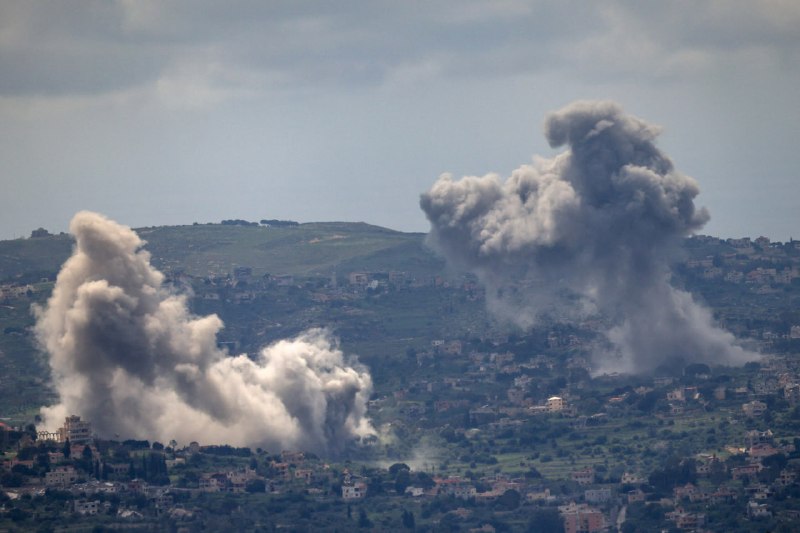
At 20:50 UTC on 18 June 2026, Middle East Eye published a report that an Israeli army reservist had left India after a war-crimes allegation was filed against him there. A few minutes later, a US federal court order moving $2.49 million in cocaine-trafficking proceeds into forfeiture was on the wires. By 13:48 UTC, the Federal Reserve had put out a request for public input on how stablecoin issuers should verify their customers. The three items travelled on different desks, into different inboxes, and they will probably stay there. That is itself the story.
The point of pulling them together is not to manufacture a connection that does not exist. It is to notice that the news cycle on a single Thursday in mid-June 2026 is a reasonable cross-section of the pressures now bearing on the international order: a fragmenting legal geography, where the same conduct can be pursued in some jurisdictions and not in others; a payments architecture that regulators are still learning to supervise; and a war in Gaza whose externalities are showing up in places — a courtroom in New York, a courthouse complaint in Bengaluru — that the war's commanders did not design. Read in isolation, each item is a minor data point. Read together, they describe an order that is, in plain terms, no longer centralised.
The Fed opens the door on stablecoin KYC
The Federal Reserve's 18 June 2026 request for comment, summarised by Crypto Briefing, is the technical-looking piece of the three and probably the most consequential over a five-year horizon. The Fed is asking the public, in effect, what customer-identification and ongoing-monitoring standards stablecoin issuers should be expected to meet. The framing is dry — know-your-customer, anti-money-laundering, sanctions screening — but the underlying question is whether the dollar-denominated token economy will be brought inside the same perimeter that has governed bank deposits since the Bank Secrecy Act of 1970, or whether it will continue to sit in a lighter regime.
This matters for reasons that have nothing to do with crypto. Stablecoin issuers, the largest of which are pegged one-for-one to the US dollar and hold the bulk of their reserves in short-dated US Treasury bills, are now a meaningful source of incremental demand for US government debt. A tightening of the verification regime would not change that, but it would change who is allowed to issue the tokens in the first place, and through which banks the reserve cash moves. Critics in the European Central Bank and the Bank of England have already warned, in speeches over the past year, that a lightly regulated dollar-stablecoin sector is, in practice, a subsidy from US monetary credibility to non-US issuers. The Fed's consultation is, among other things, a way of measuring how much of that critique has travelled inside the Federal Reserve System itself.
The corporate counter-position, heard in industry filings and trade-press coverage, is that an over-broad verification regime will simply push the issuance offshore, where US authorities cannot reach it. That is a serious argument, not a straw man: the offshore path is real, and several issuers already maintain parallel legal entities in Singapore, Switzerland and the UAE. But the structural fact remains that the same regulators who would be writing the rule are also the ones who can cut a US bank off from the correspondent network, and that asymmetry has not gone away.
A cocaine case, and a court that is not shy about forfeiture
At 21:02 UTC, the Epoch Times's wire carried a federal court order forfeiting more than $2.49 million that the US Department of Justice had identified as the gross proceeds of an individual's cocaine business. The order is unremarkable as a piece of criminal law: large narcotics cases have generated forfeiture orders in this range for years, and the judicial language is formulaic. What is worth noticing is the instrument.
Asset forfeiture is one of the few policy tools that US authorities can use against foreign persons, in foreign jurisdictions, without asking permission. The same architecture that lets the DOJ seize a trafficker's Miami condo lets it, in principle, attach the reserve assets of a sanctioned foreign central bank — as the cases around Russian sovereign assets since 2022 have shown. When a forfeiture order lands, the question that follows is not whether the underlying conduct was criminal. It is whether the dollar-clearing system has the appetite to keep using the tool at scale against actors that are harder to put in handcuffs. On the evidence of the past four years, the answer has generally been yes.
An Israeli reservist, a complaint filed in India, and the geography of accountability
The third item is the one with the most obvious human weight, and the one whose facts the public record will need to settle over coming months. According to Middle East Eye's 18 June 2026 report, an Israeli army reservist fled India after a war-crimes allegation was filed there. The complaint relies, in part, on the same body of evidence — open-source footage, hospital records, statements from medics and from displaced civilians — that has been under examination by courts in other jurisdictions.
The legal geography of the Gaza war is, by mid-2026, genuinely plural. Domestic Israeli courts have been the venue of choice for most accountability efforts to date, with several high-profile cases against reservists and against senior decision-makers. In parallel, the International Criminal Court has moved on arrest warrants, and a number of states — South Africa, among others — have filed or signalled complaints under the Genocide Convention. India's filing of a complaint against an individual reservist, on Indian territory, is a different and more pointed move: it treats the conduct as a matter of ordinary criminal jurisdiction, asserted by a state that is not a party to the underlying conflict, against a person who happened to be physically present.
Two readings of that move are plausible. The first is that India is asserting universal-jurisdiction principles it has historically been cautious about, and the diplomatic cost of doing so will be borne in New Delhi's relationship with Israel and with the United States. The second is that the filing is, in practice, a way of signalling without enforcing: the reservist has reportedly left Indian territory, the complaint moves into a queue, and the political signal is sent without the state having to take further action. Both readings can be true at once. What is harder to deny is that the complaint exists, in writing, in a court record, and that it is no longer the only one of its kind.
What the three items share
The temptation, when three stories land in the same hour, is to over-fit. They are not the same story. The Fed consultation is administrative; the forfeiture order is a routine criminal outcome; the Indian complaint is an early-stage legal step in a war that has already lasted longer than most outside observers expected when it began. The temptation should be resisted.
What they do share is the structure. Each of the three is an instance of a system — financial, legal, diplomatic — being asked to do something it was not originally designed to do at the scale now being requested of it. The dollar-clearing system was built for trade settlement, not for sanctions enforcement at the volume of the present moment. Universal-jurisdiction criminal procedure was written for the piracy cases of the early twentieth century, not for contemporary war-crimes complaints filed in third countries. And the stablecoin regime, such as it is, was not designed with the Treasury market in mind. In each case, the question is whether the existing architecture bends to the new demand, or whether the new demand finds a way around it.
The honest answer, on the evidence of 18 June 2026, is that it is doing both. Bend and bypass, at the same time, on the same day. That is the picture of an order in transition, and it is a picture a reader can recognise without recourse to any theorist's name.
Desk note: Monexus treats the three items as discrete news events that share a structural reading, not as parts of a single narrative. The Fed consultation is reported as a regulatory fact; the forfeiture order is reported as a criminal-procedure fact; the Indian complaint is reported with the caveat that the underlying allegation is unproven and that the reservist named in Middle East Eye's reporting has not, on the public record available to us, been charged by an Indian court. Where the day's wire cycle connects them, the connection is the editor's — not the source's.
Wire provenance
This editorial synthesis draws on the following public wire/social posts:
- https://t.me/CryptoBriefing
- https://t.me/TSN_ua
- https://t.me/TSN_ua
- https://t.me/epochtimes
- https://t.me/CryptoBriefing
- https://t.me/middleeasteye