Strait of Hormuz traffic resumes as Iran–US memorandum takes effect
Shipping data shows traffic moving again through the Strait of Hormuz after an Iran–US memorandum, while the IEA's Fatih Birol insists the waterway must reopen "without conditions."
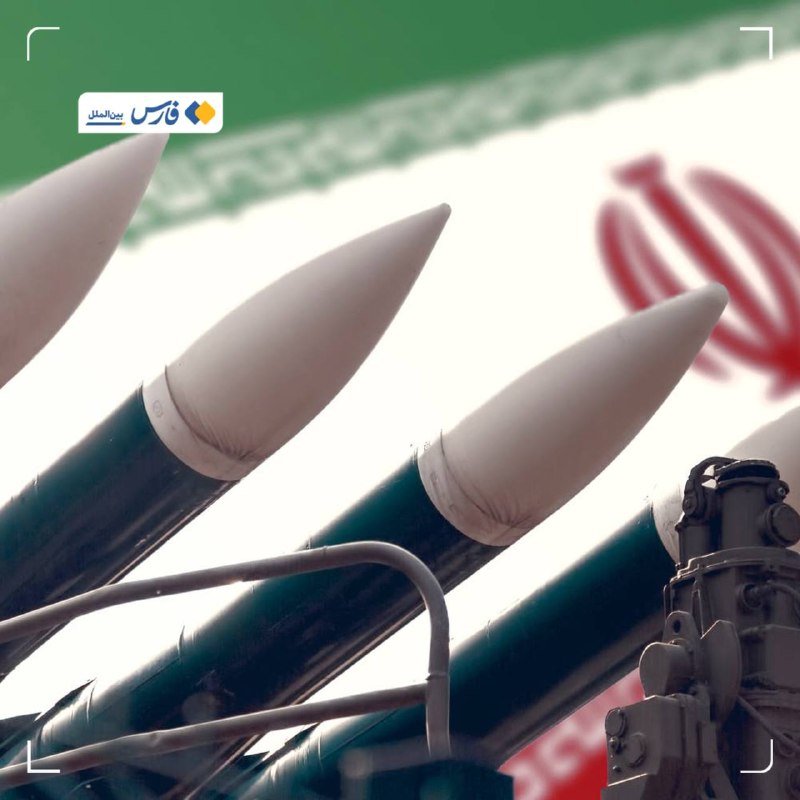
Maritime traffic is moving again through the Strait of Hormuz, according to shipping data cited by Iranian state outlets on 18 June 2026, hours after Tehran and Washington announced a Memorandum of Understanding intended to lower the temperature on one of the world's most sensitive energy corridors. The reopening, partial or full, lands the same day the head of the International Energy Agency publicly insisted the chokepoint must operate "without conditions" — a distinction that may decide whether the calm lasts.
What looks, on first reading, like a routine diplomatic thaw is in fact a stress test of two competing logics. Iran's framing — a managed return to normalcy built on reciprocal recognition with Washington — and the IEA's framing — an unconditional right of transit, regardless of who is on which side of the negotiating table — are not the same statement. One treats the strait as a bargaining chip; the other treats it as infrastructure. The next 72 hours will tell which logic the market prices.
What the data shows
Iranian state outlets Tasnim and PressTV both reported on the afternoon of 18 June (UTC) that sea traffic through the Strait of Hormuz had resumed in the wake of the Iran–US memorandum. Tasnim's account, posted at 17:48 UTC, cited "new data" indicating resumption of transit. PressTV, at 17:15 UTC, carried the same framing — that the memorandum had produced a measurable return of vessel movement. Both outlets framed the deal as a vindication of Tehran's diplomatic posture: pressure applied, concessions extracted, the corridor restored.
The IEA's executive director, Fatih Birol, speaking earlier the same day at 18:10 UTC in remarks carried by Reuters, took a harder line. Birol said the Strait of Hormuz "must reopen without conditions" — language that implicitly rejects any arrangement in which transit is contingent on political compliance by either side. For an agency whose mandate is energy-market stability, the message is straightforward: the strait is a public utility, not a hostage.
The two framings are not yet in open conflict, but they are not aligned either. Tehran's preferred read is that a deal with the United States is what brought the ships back; Birol's preferred read is that the ships should have been moving all along, and any deal that conditions their movement is itself the problem.
Why the strait matters — and why conditions matter
Roughly a fifth of global oil trade, and a comparable share of liquefied natural gas, transits the Strait of Hormuz. There is no convenient detour. Theoretically, a small portion of Gulf crude can move via the Abu Dhabi–Fujairah pipeline and the Habshan–Fujairah route, but the capacity there is a rounding error against the volumes that move by sea. When the strait is constrained, the world notices within hours: freight rates spike, insurance premiums for tankers in the Gulf multiply, and any sustained disruption pushes benchmark prices into territory that exports inflation into every importing economy.
The IEA's "without conditions" language is therefore not a flourish. It is the agency's institutional red line. If transit is treated as something Tehran can withhold in exchange for sanctions relief, then every future round of negotiation carries the implicit threat of closure. If transit is treated as something that simply must move — because the global economy depends on it — then the bargaining chip is taken off the table. Birol's framing effectively says: the strait is not negotiable; only the politics around it are.
Iran's position, as expressed in state media, is more transactional. Tehran portrays the resumption of traffic as the dividend of an agreement it negotiated on its own terms. From that vantage point, the memorandum is an asset, not a concession — and any future discussion of "conditions" is an attempt by outsiders to deny Iran the fruits of a deal it won.
What the memorandum does — and does not — say
The source material available as of 18 June does not include the full text of the Iran–US Memorandum of Understanding. What is on the public record is that an arrangement exists, that Iranian state media describe it as having produced a resumption of traffic, and that the IEA's director used the moment to insist the corridor reopen unconditionally. The Reuters report carries Birol's quote and the framing of his remarks; the Iranian outlets carry their own characterisation of what the deal delivered.
That gap — a public document not yet in circulation, and characterisation flowing in two directions from the same event — is the most important fact about the day. A memorandum can mean many things. It can be a binding political commitment; it can be a procedural note that lets both sides claim a win without giving up much; it can be a placeholder for a fuller deal that follows. Without the text, observers are reading tone rather than substance, and tone is precisely where Iran and the United States diverge.
The reasonable working assumption is that traffic has resumed at least partially, because both Iranian state outlets and the IEA's public posture are consistent with that reading. The assumption that should not yet be made is that the resumption is unconditional, because the document that would prove or disprove that has not been published as of this writing.
The structural frame
For all the regional theatre — IRGC frigates, US carrier strike groups, ceasefire chatter — the deeper story of the Strait of Hormuz is about who gets to set the terms under which a global commons operates. For decades the answer has been straightforward: the United States Navy, underwritten by the broader US security guarantee to Gulf monarchies, has underwritten the freedom of navigation through the strait. That arrangement has always been uneasy for Iran, which sits on one bank of the corridor and has had to negotiate its own access rather than simply exercise it.
What the June 2026 memorandum signals, on the most generous reading, is a partial renegotiation of that arrangement. Iran gains formal recognition that it can participate in setting the rules of the corridor; the United States gains a reduction in the probability of a kinetic event; the IEA and other consumer-country voices gain the explicit framing that transit is non-negotiable. On the least generous reading, it is a face-saving pause in a contest that resumes the moment either side believes the other has stopped reciprocating.
The Birol quote is best understood as consumer-country insistence that the global-public-goods interpretation of the strait not be quietly traded away in a bilateral deal. That is not an anti-Iran position — it is, if anything, an insistence on the principle that even Iran's own access to its own ports depends on the same freedom-of-navigation rules that everyone else relies on.
Stakes and what to watch
If the memorandum holds and traffic normalises through the rest of June, the immediate market impact will be downward pressure on war-risk premia, tanker insurance rates, and benchmark crude — at least relative to the counterfactual of a closed or contested corridor. Iran's oil exports, which have been the unspoken subject of every recent round of sanctions debate, will be the most sensitive indicator: any visible easing of US enforcement on Iranian crude sales would be the strongest evidence that the deal has real teeth.
If the deal frays, the IEA's "without conditions" framing will become a liability rather than a safeguard. A consumer-world insistence that the strait must be unconditional is powerful only when transit is actually occurring. The moment it stops, that framing becomes the line Iran and the United States are arguing over rather than the rule they are both observing.
Three things to watch over the next 72 hours. First, the publication, or non-publication, of the memorandum text — that single document will determine whether the deal is a framework or a footnote. Second, vessel-tracking services such as MarineTraffic and Kpler, which will show whether the Iranian reports of resumption hold up against independent measurement. Third, any movement on Iranian crude exports through normal commercial channels — the clearest test of whether the United States has translated political language into operational reality.
What remains uncertain, and contested even among the available sources, is whether the Iranian and IEA framings can be reconciled. Both can be true at once — that traffic has resumed because of a bilateral deal, and that traffic should resume regardless of any deal — but the practical question of who enforces the second proposition if the first one collapses is not answered by either outlet's reporting on 18 June. The honest read is that the corridor is open, the document is unpublished, and the language around the event is being used by each side to stake out the next round.
Desk note: Monexus treated the resumption of traffic as the lead, on the strength of two independent Iranian state-media reports; the IEA's "without conditions" line was given equal weight as the principal counter-framing rather than relegated to a quote box. The full text of the memorandum is not yet public, and this article does not assume its contents.
Wire provenance
This editorial synthesis draws on the following public wire/social posts:
- http://reut.rs/4vjrbIu
- https://t.me/s/tasnimplus
- https://t.me/s/presstv