The Vance Doctrine: How a "Non-Concession" Became the Architecture of a US-Iran Settlement
A vice president who never served in uniform has just told the world's most militarised Middle East ally that it cannot bomb its way to safety. The 18 June Geneva MoU is being sold, in Washington, as victory by other means — but the architecture of the deal is less an Iranian climbdown than a recognition that the regional cost of finishing the war has finally exceeded the political cost of ending it.
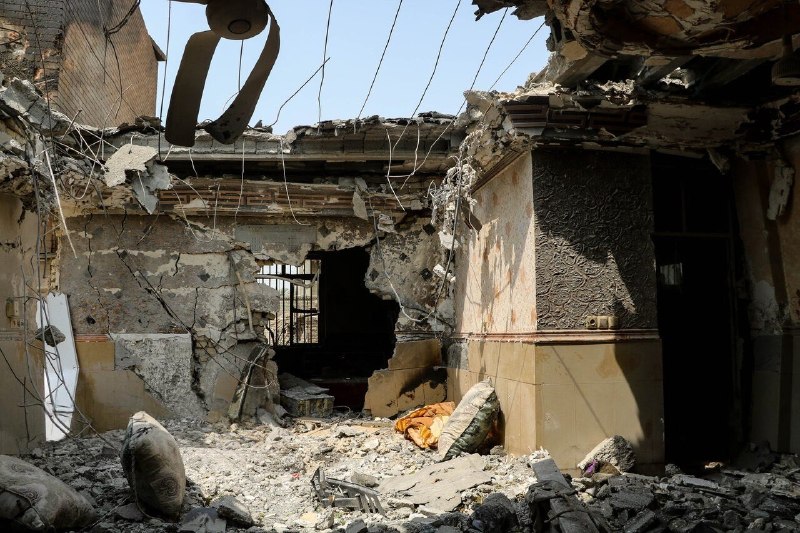
Theodore Roosevelt once told the world to speak softly and carry a big stick. J.D. Vance, speaking to reporters aboard Air Force Two on the evening of 18 June 2026, has updated the formula: speak loudly about the war you have just won, carry a memorandum of understanding, and tell your closest regional partner that the killing is over whether it likes it or not. In remarks carried first by Iranian diaspora channels and within hours by every major wire, the Vice President confirmed that Washington and Tehran will sign a peace accord in Geneva on Friday — and framed the months of US-Israeli military action against the Islamic Republic as a victory for the United States regardless of how the document is eventually read in Tehran, Jerusalem, or the Gulf. "We didn't see this as a big concession to the Iranians," Vance said of the sanctions-lifting component of the package, in a line that has already done more than any cable or briefing to define what the Vance Doctrine actually is: the open denial, by the senior elected official of the United States, that any side in a negotiation ever gives anything up at all. In an unscripted exchange that the Fotros Resistance channel and Middle East Eye's live blog both captured within minutes of delivery, Vance went further, telling Israel directly that "you can't kill your way out" of its security predicament, a sentence almost designed to detonate in the Knesset cafeteria the morning after it was uttered.
The Geneva MoU is not yet a treaty, and the Vice President was careful to avoid the word. It is, on the face of what has been disclosed, a framework that lifts a defined subset of US secondary sanctions on Iranian oil, banking, and port access, in exchange for verified Iranian de-escalation along three corridors: the Strait of Hormuz shipping lane, the Iraqi-Syrian land bridge used by Iran-aligned militia logistics, and the nuclear enrichment infrastructure at Natanz and Fordow. The text is still being finalised. What the Vance remarks confirm, however, is that the diplomatic centre of gravity has moved decisively away from the maximalist position of late 2024 and early 2025 — when congressional hawks of both parties treated any sanctions relief as a strategic surrender — and toward a transactional architecture in which relief is a tool of pressure management rather than a reward. In that framing, Iran is not being paid to behave. It is being allowed to keep selling hydrocarbons to a list of pre-cleared buyers, on a published schedule, so that the alternative — an open-ended war in which the United States sustains the cost of the regional order — does not have to be paid for in additional carrier strike groups.
A war that ended before the document was signed
It is worth saying plainly what the Geneva text is not. It is not the deal that the Biden administration spent eighteen months trying to conclude in 2023 and 2024. It is not a return to the Joint Comprehensive Plan of Action. It does not restore the unfrozen Iranian central bank reserves that were swept up in 2018, nor does it grant Tehran the unfettered access to dollar clearing that the regime's hydrocarbon customers were quietly routing around through the years of maximum pressure. The Vance remarks, in fact, treat the question of whether the package is even a concession as a category error. The Vice President's position, as conveyed in the 18 June appearance, is that the lifting of sanctions that have demonstrably failed to change Iranian behaviour is not a gift; it is a recognition that the United States was spending billions to maintain a sanction regime that the rest of the sanctioned world had already routed around, and that the political return on the next dollar of enforcement was negative. The Iranian position, as relayed by Tehran's negotiating team to regional outlets, is the mirror image: nothing in the MoU, Iranian officials have signalled, should be read by domestic audiences as a concession either, because what was being lifted was not, in their telling, a legitimate restriction in the first place. Two governments claiming simultaneously that they have paid nothing to get something is either the most elegant diplomacy of the decade or the most cynical. It is, in either case, the operating logic of the Vance Doctrine: the explicit refusal to acknowledge that the structure of the deal has changed, while the structure of the deal has unmistakably changed.
The counter-narrative in Washington — and the one that will dominate the Senate Foreign Relations Committee's first hearing on the MoU — is that the United States has in fact paid a price, and that the price is Israeli confidence in the American umbrella. The Vance line to Israel, captured in the Al Jazeera wire within an hour of delivery, was not a casual aside. "You can't kill your way out" of a security problem, the Vice President said in effect, is not the language a White House uses when it believes its regional partner can still be brought along quietly. It is the language a White House uses when it has concluded that the partner cannot be brought along quietly, and that the cost of managing Israeli disappointment is now lower than the cost of managing an indefinite continuation of the campaign. Israeli officials, in the immediate aftermath, were careful not to escalate publicly. The careful tone, however, is a tell. The Netanyahu government invested considerable political capital in the proposition that a kinetic end-state — the degradation of Iranian proxy capability and the explicit rollback of enrichment capacity — was both achievable and affordable. The Geneva MoU concedes neither of those propositions in the text, but it concedes both in spirit: sanctions relief is the price of an Iranian decision to stand down, and the Iranian decision to stand down is the price of an American decision that the war has already been won, narratively, and that the marginal military month is buying less than the marginal diplomatic month would.
The structural frame: dollar politics and the cost of the order
Stripped of its theatre, the Geneva package is a settlement about who pays to maintain the architecture of the US-dollar energy system in the Persian Gulf. The orthodox account — the one that has dominated Western think tanks since the first JCPOA negotiations — is that the dollar's reserve status is a function of American security guarantees over Middle East energy supply. Under that account, the United States provides the navy, the umbrella, and the diplomatic backstop; the Gulf recycles petrodollars into Treasuries; and the rest of the world accepts dollar invoicing because the alternative is a US Treasury account at the receiving end of secondary sanctions. The 2024–2026 war on Iran was, on this reading, the most expensive single defence of that system in a generation. Carrier strike groups burned months of high-end readiness. Munitions stocks were drawn down to the lowest levels since the early 2000s. The political cost of holding the coalition together — Saudi quiet acquiescence, Emirati logistical support, Israeli operational autonomy — was paid in quiet concessions that have not yet been publicly tallied. At some point in early 2026, the math stopped working. The Vance Doctrine is, in this light, the public admission of that math. By allowing Iran to sell a defined quantum of oil to a defined set of buyers, the United States is conceding a thin slice of the petrodollar monopoly in order to preserve the much larger monopoly of the dollar as the invoicing currency for the Gulf states that remain inside the system. The concession is being framed, by the Vice President personally, as nothing of the kind. The framing is the policy.
There is a second structural reading that sits alongside the first, and that is harder to talk about in Washington. Iran's hydrocarbon customers, over the last three years, have not been waiting for sanctions relief to find ways to buy Iranian crude. Chinese teapot refineries have processed Iranian barrels rebranded as Malaysian or Omani. Indian state buyers have routed payments through rupee-based escrow arrangements that bypassed dollar clearing entirely. The Houthi disruption of Red Sea shipping has, paradoxically, given Iran leverage over the alternative routings that those workaround trades have depended on. A sanctions regime that is being routed around by half the buyers it was designed to constrain is, in functional terms, a tax that only compliant importers pay. Lifting it, on this reading, is not a concession to Iran; it is a concession to the United States' own energy-importing allies, who have been absorbing the cost of the workaround economy in the form of higher delivered prices and longer insurance premiums. The Vance framing, which denies the existence of any concession at all, is in this sense accurate. Both sides have been paying for a war whose principal effect has been to redistribute rents. The Geneva MoU is, in part, the recognition of that redistribution by other means.
The Israel question that will not go away
The Vice President's most consequential sentence on 18 June was not the sanctions line. It was the line about Israel. "You can't kill your way out" of a security problem is, in the standard vocabulary of US-Israel relations, the kind of formulation that gets ambassadors recalled for consultations. That the Vice President said it in public, on the same day that the MoU was confirmed for Friday signature, suggests one of two things. Either the White House has concluded that Israeli public objections cannot be contained through the private channel that has historically managed them, and has chosen to force the disagreement into the open in order to lock in the diplomatic outcome. Or the White House has concluded that the Israeli government will, in the end, accept the framework because the alternative — open rupture with a Republican administration that has otherwise been the most pro-Israel administration in memory — is a cost no sitting prime minister can bear. The evidence so far points to a third possibility, which is that both readings are true at once. The Israeli public signalling has been conspicuously measured. The Israeli private signalling, by every indication available to the regional press, has been furious. The Geneva MoU will be signed on Friday in any case, because the schedule is now an American political fact, not a negotiable item. The question that Vance's remark actually answers is what happens after Friday. If the Israeli response is to escalate unilaterally against Iranian assets in Syria or Lebanon — as the operational pattern of the last eighteen months would predict — the Vance Doctrine will be tested in real time. A Vice President who has publicly told Israel that it cannot bomb its way out of its problems will then have to decide whether the next Israeli strike is treated as a policy disagreement to be managed or a strategic challenge to be confronted. That decision has not been made, and the sources do not yet indicate which way it will go.
The secondary Israeli question is domestic. The opposition in the Knesset, across the spectrum from Yesh Atid to Otzma Yehudit, will frame the Geneva text as a betrayal of the October 7 dead and of the hostages who have not returned. That framing is politically powerful, and it is not, on the substance, an unreasonable read. The Iranian nuclear and proxy infrastructure that the 2024–2026 campaign was launched to degrade has not been eliminated. It has been, in some respects, re-routed. A Vice President who has spent the last year telling American audiences that the campaign was a victory is now telling Israeli audiences, in effect, that the victory is sufficient and that the next phase is diplomatic. The internal Israeli argument will be that sufficient is not the same as complete, and that the next round of Iranian enrichment — when it comes, because the technical knowledge does not un-invent itself — will be paid for in Israeli blood that the Geneva text has already discounted. The Vance response, if one is to infer it from the public record, is that the alternative is a permanent campaign in which American carriers are the air force of last resort for Israeli decisions, and that the United States has, in the end, other customers for its naval aviation. That is not a sentence the Vice President has said. It is the structure of what he has said, and the structure is what the next six months of US-Israel relations will be built around.
The stakes: who wins, who loses, and over what horizon
The Geneva MoU, if it is signed on Friday and survives the first Israeli response, redraws three sets of stakes at once. The first is the Iranian domestic stake. The regime goes into the signing with a sanctions-relief package it can present to a hard-pressed population as proof that confrontation with the United States is winnable on Iranian terms, even when the United States retains the conventional military advantage. The framing is dishonest in detail and defensible in structure. Tehran's negotiating position was that the sanctions had failed; the Geneva text, by lifting a defined subset of them, concedes the argument. The internal political dividend for the Islamic Republic is real, even if the dollar value of the relief is smaller than the most optimistic Iranian projections had assumed. The second stake is the Gulf Arab stake. The Saudi and Emirati position, throughout the campaign, has been quiet alignment with American security architecture and a willingness to absorb the inflationary and reputational costs of that alignment. The Geneva text confirms that the United States remains the security provider of first resort, while also confirming that the United States is now willing to relieve pressure on a regional rival in order to manage its own costs. The Gulf states, in the medium term, will be required to make their own quiet accommodations with the Iranian state, and the Geneva text is the green light for that diplomacy. The third stake is the American domestic one. The Vance Doctrine, in its first iteration, is a doctrine of denial: a refusal to acknowledge the cost of the deal as a cost. That denial is sustainable through a signing ceremony. It is not sustainable through a three-year implementation. The first Iranian enrichment breakout, the first Iranian proxy reconstitution, the first Israeli unilateral strike in response to either — each of these will be a moment at which the denial becomes harder to maintain. The Vance Doctrine's durability, in other words, is a function of the patience of the events it is designed to outlast. The patience of events is, historically, the variable that doctrines of denial underestimate.
What remains uncertain, on the public record available at 1807 UTC on 18 June 2026, is narrower than the public argument suggests. The signing will happen in Geneva on Friday, the schedule is fixed, and the text is sufficiently close to final that Vance's reference to the sanctions component as a non-concession is itself part of the negotiating record. The two open questions are Israeli operational behaviour in the first hundred days after signature, and the durability of the Iranian domestic political settlement that the regime will need to sell the deal to its own base. The sources do not yet provide a definitive answer to either. The Fotros Resistance channel, the Middle East Eye live blog, and the Al Jazeera wire feed all confirm the existence of the framework and the Vice President's public framing of it. None of them, as of the timestamps above, provide a copy of the text, a list of the defined subset of secondary sanctions being lifted, the schedule of the relief tranches, or the verification protocol for the Iranian de-escalation commitments. Until those details emerge, the Vance Doctrine will continue to be read, in capitals from Washington to Tel Aviv to Riyadh to Tehran, as the diplomatic event that the Vice President has already declared it to be. The reading will harden once the text is public. The harder reading, on either side, is the one the Geneva signing is designed to defer.
Desk note: the wire coverage on 18 June has so far framed the Geneva MoU as either an Iranian climbdown (the maximalist read, dominant in the Senate Foreign Relations Committee's expected talking points) or an American climbdown (the Israeli opposition read, dominant in the morning-after commentary on Channel 12 and in the English-language Israeli press). Monexus finds that the more accurate structural reading is the third one, in which the deal is a mutual recognition of the cost of the war as it was actually being fought, rather than as it was being marketed. The Vance remarks, in that reading, are not spin. They are the policy, and the policy is the admission that the marginal diplomatic month is now worth more than the marginal military one. We will update this piece as the text is released and as the Israeli response crystallises.
Wire provenance
This editorial synthesis draws on the following public wire/social posts:
- https://t.me/s/FotrosResistancee
- https://t.me/s/FotrosResistancee
- https://t.me/s/FotrosResistancee
Follow the event.
These dated source records provide context. They do not retrospectively verify this archive article.
Separate what the nuclear watchdog reported from what it could not determine after the June 2025 strikes.