Trump denies US role in $300bn Iran reconstruction fund as Geneva accord draws fire at home
A $300 billion reconstruction memorandum of understanding signed in Geneva is becoming a domestic political flashpoint, with the US president publicly denying American funding while lawmakers probe who, if anyone, will pay.
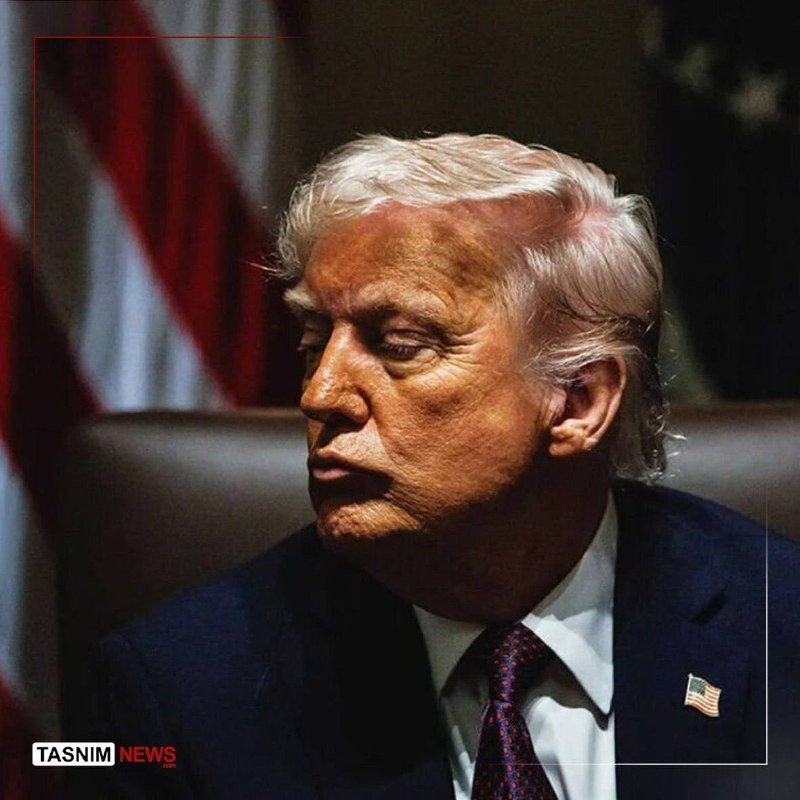
A memorandum of understanding committing roughly $300 billion to Iran's reconstruction was signed in Geneva on Friday, even as President Donald Trump publicly dismissed reports of American participation in the fund as "fake news." The dissonance between what was put on paper in Switzerland and what the White House is willing to own politically has turned the agreement into a domestic flashpoint within hours of its signing.
What the United States, Iran, and an array of regional intermediaries putatively agreed to, and who actually foots the bill, are now two separate questions. Both will shape the next phase of diplomacy in the Gulf — and the durability of the "complete ceasefire on all fronts" that Trump says he now expects.
What was signed in Geneva
Al Jazeera's breaking-news desk reported on 18 June 2026 that the MoU's $300 billion Iran reconstruction fund had become a US political flashpoint, with Trump declaring the United States will not pay for the planned fund. Middle East Eye's live blog on the same day quoted Trump as saying the US expects a "complete ceasefire on all fronts" following the Iran deal. The Geneva signing is being framed by participating governments as a confidence-building instrument tied to broader de-escalation, with the reconstruction envelope serving as the financial spine of a wider political understanding.
The dollar figure, $300 billion, is the single most politically combustible element in the package. It is also the figure that Trump is now disavowing on his own social media feed, where a community-note-style explanation under one of his posts contested his characterisation that US participation is "fake news." The back-and-forth captures, in compressed form, the gap between diplomatic optics and domestic fiscal politics.
The congressional reaction
Lawmakers on Capitol Hill are connecting the price tag to affordability questions rather than to the strategic merits of détente with Tehran. Al Jazeera's reporting frames the response in domestic-budget terms — who writes the cheque, and through which appropriation — rather than as a debate over the wisdom of a regional accommodation. That distinction matters. Congress is not, on the evidence so far, contesting the ceasefire architecture; it is contesting the cost-sharing architecture that underpins it.
Reuters published a separate explainer on 18 June 2026 placing the new arrangement in historical context, comparing the Trump deal with the Obama-era Joint Comprehensive Plan of Action. That comparison is now the dominant reference frame in Washington coverage. The structural lesson the Obama deal taught the political class is that a multilateral understanding with Iran can survive signature but not survive a US president willing to walk away from it. Whether the Trump deal has structural features the JCPOA lacked — sunset clauses, snapback mechanisms, escrow arrangements — is not yet visible in the public reporting.
Why the $300 billion is the wedge
The size of the envelope is not arbitrary. Reconstruction at the scale Iran would require after years of sanctions compression, infrastructure decay, and currency collapse is, by any independent estimate, a multi-hundred-billion-dollar undertaking. Gulf states, China, and Russia have been mentioned in adjacent reporting as potential contributors to Iranian recovery in exchange for discounted energy access or infrastructure contracts. A $300 billion figure is consistent with a consortium model in which no single government carries the full load.
That is precisely the model Trump is now denying the United States has joined. The political utility of the denial is straightforward: he can claim credit for a ceasefire and a diplomatic opening while refusing ownership of the bill. The diplomatic cost is equally straightforward: counterparties who read the denial as a US walk-back may discount the entire package as performative.
What remains uncertain
Three things are not yet visible in the public record. First, the exact text of the Geneva MoU — what enforcement clauses, what dispute-resolution mechanisms, what conditionality links reconstruction disbursements to verified Iranian behaviour. Second, the identity of the committed funders. The reporting so far names a $300 billion figure without itemising which governments, multilateral institutions, or private consortia have signed up for which tranches. Third, the operational meaning of "complete ceasefire on all fronts." Trump used the phrase in a public statement; Middle East Eye carried it; the underlying front list — Hezbollah, the Houthis, Iraqi militias, Iranian proxies in Syria — has not been enumerated in the wire reporting this publication has read.
What can be said is that the pattern is familiar. A high-profile signing, a presidential disavowal of the cost, a congressional probe of who pays, and a community of analysts debating whether the deal will hold past the next news cycle. The Obama administration's experience suggests that American commitments to Iran are only as durable as the next American president's appetite for them. The Trump administration's own behaviour on 18 June — a Geneva signature, a denial within hours — suggests this administration has internalised that lesson and is trying to extract the political upside of a deal while outsourcing its fiscal downside.
Whether the Iranian side, the Gulf intermediaries, and the European signatories will accept that asymmetry is the open question of the next 72 hours. If they insist on US Treasury participation as a condition of the broader ceasefire architecture, the denial becomes a negotiating position rather than a settled fact. If they do not, the $300 billion envelope gets funded somewhere else — and the precedent set is that the United States can claim credit for peace in the Gulf without paying for the peace it claims.
Desk note: Wire coverage on 18 June 2026 framed the Geneva MoU primarily through the Trump denial and the congressional affordability probe. Monexus read those reports alongside the Reuters Obama-era explainer and Middle East Eye's live updates to place the price-tag dispute in its longer historical context — a context the wire ledes did not foreground.
Wire provenance
This editorial synthesis draws on the following public wire/social posts:
- http://reut.rs/43Jbrmc
- http://reut.rs/3SODr5k
- http://reut.rs/43Jbrmc