Trump and Iran's Pezeshkian sign MOU at Versailles as US-Iran de-escalation takes shape
Signed at Versailles on 18 June 2026, an Iran-US memorandum of understanding commits both sides to halt fighting and lift maritime blockades in the Gulf — but Trump's concurrent threat to "bomb the hell" out of Tehran sets the working terms for whatever peace emerges.
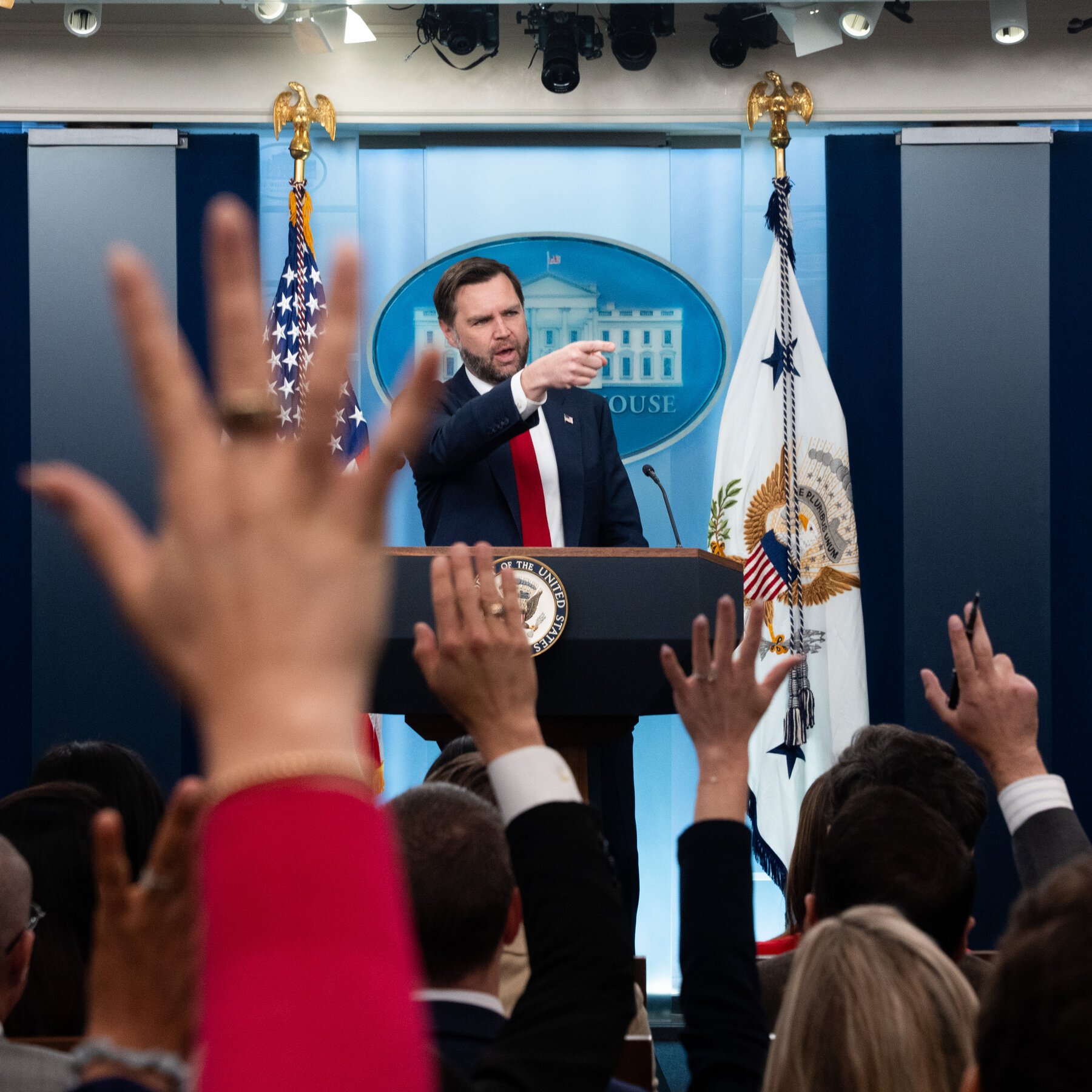
At 02:50 UTC on 18 June 2026, Donald Trump told reporters it would be "unfair" for Iran to be denied ballistic missiles while other countries possess them. The remark landed less than an hour after Iran's state news agency, IRNA, confirmed a memorandum of understanding between the United States and the Islamic Republic ending active fighting and maritime blockades in the Gulf. Both statements came out of the same venue: the Palace of Versailles, where Trump and Iranian President Masoud Pezeshkian had signed the MOU earlier in the evening, moments before a dinner hosted by French President Emmanuel Macron that doubled as the closing ceremony of this year's G7 summit and a commemoration of 250 years of US–French relations.
The package is striking for its contradictions. A formal document, signed in front of European hosts, commits two governments to halt a conflict the public has only partially seen, and to lift the naval strangulation of one of the world's most strategic waterways. Hours earlier, Trump threatened to "bomb the hell" out of Iran if Tehran did not honour the deal. The combination — signed agreement plus public menace — is the operating language of this diplomacy, and it sets the terms under which the next phase of Gulf security will now be negotiated.
What the MOU actually does
According to IRNA and reporting relayed by Reuters at 02:40 UTC, the memorandum commits both sides to end fighting and to lift the maritime blockades that have been choking shipping through the Strait of Hormuz and the wider Gulf. The document was signed at Versailles on 18 June by Trump and Pezeshkian, with Macron as host. A US official confirmed the signing to the Reuters wire at 02:05 UTC; Macron's office distributed a message saying the agreement "paves the way for lasting peace," distributed by the Open Source Intel channel and carried verbatim on Iranian-aligned outlet Al-Alam.
What the MOU does not yet do is public. No text has been released. The official quoted by Reuters described the document as a memorandum of understanding — a political commitment, not a binding treaty — and the immediate operational gains are limited to the narrow but consequential category of Gulf shipping. Iran's recognition of an end to "fighting and maritime blockades" suggests both sides have been conducting kinetic and naval operations in the Gulf under thresholds most Western publics had not registered. The MOU, on this read, is less a peace deal than a cessation of activity that the parties were already in a position to halt.
Trump's accompanying demand that Iran be allowed to possess ballistic missiles is the most consequential line in his 02:50 UTC remarks. The missile question has been the single hardest obstacle to any broader US-Iran deal since the collapse of the Joint Comprehensive Plan of Action. By stating openly that Iranian access to ballistic missiles is "unfair" to deny — at a moment when his own administration is signing a security document with Tehran — Trump is effectively conceding a longstanding Iranian negotiating position, or at minimum signalling that a successor framework cannot look like the JCPOA's narrow, time-limited, enrichment-focused architecture.
The threat as enforcement mechanism
The threat to "bomb the hell" out of Iran, reported by Middle East Eye at 02:29 UTC, is not a slip. It is the corollary of the missile concession. Strip out the theatrics and the logic is straightforward: in exchange for Iran accepting constraints on its nuclear and missile programmes, Washington is offering both sanctions relief and a security guarantee. The guarantee is enforced by the same instrument that imposes it — the credible threat of overwhelming US airpower. That is a familiar pattern from the Trump era's first Middle East portfolio, including the May 2025 Yemen-Houthi sequencing, and from earlier US-Iran episodes from 1980 onwards. The MOU is the contract; the threat is the penalty clause.
The arrangement has obvious fragility. MOUs are not treaties. They require neither Senate ratification nor Iranian parliamentary approval. The Iranian side is governed by a system in which the Supreme National Security Council and the office of Supreme Leader Ali Khamenei retain final say over foreign-security commitments; Pezeshkian, a relative moderate who took office in 2024, can sign documents he cannot unilaterally enforce. On the US side, the November 2024 transfer of power to President Trump reshaped the Iran portfolio; the current agreement is the product of an administration that treats formal arms-control architecture with suspicion and prefers bilateral political deals that the executive can revise.
The two-sided problem of authorisation explains why the deal was framed as an MOU and not as a treaty, and why Trump's threat is doing the work that treaty language and verification protocols would otherwise have to do. The penalty for Iranian non-compliance is the airstrike; the penalty for a future US administration that wants to walk the deal back is reputational, since Versailles and Macron are now on the hook as hosts and witnesses.
What was left on the table
The MOU's omissions are as informative as its inclusions. The Reuters wire confirms the document covers the Gulf fight and the maritime blockades. It does not, on the public record, address the nuclear file beyond the broad constraint implied by Iran's acceptance of an arrangement with Washington. It does not reference Iran's support for armed groups in Lebanon, Iraq, Syria or Yemen. It does not address sanctions architecture. It does not address the Iranian missile stockpile that Trump, in the same 24-hour window, argued should be permissible.
That selective scope is consistent with how the US has historically managed de-escalation with Iran: address the most acute kinetic flashpoint, defer the structural file, leave the regional axis and the missile question for the next round. The risk of the approach is well known. Each round of partial de-escalation resets the clock on the components left out, and the components left out — missile delivery systems, regional proxy networks, sanctions — are the ones that drive the next crisis. The bet, in effect, is that the commercial and political value of restored Gulf shipping will be large enough to discipline both sides into a longer architecture.
The Versailles frame
That the signing took place at Versailles, hosted by Macron at a G7-adjacent dinner, is more than ceremony. It anchors the deal in a European institutional setting, in front of allies who have their own interests in the stability of Gulf energy flows and in the non-proliferation file. Macron's public endorsement — that the MOU "paves the way for lasting peace" — pulls European diplomatic weight behind a document the United States and Iran could have signed bilaterally. The choice of venue is also a hedge against US domestic political volatility: a future administration in Washington that wants to repudiate the deal has to do so in the face of European co-signatory pressure and the political cover Macron has now extended.
The same framing also gives Tehran cover at home. Signing in Paris, in the gilded setting of the Palace of Versailles, alongside a US president and a French president, is a much easier sell to a domestic Iranian audience that watches US-Iran interactions as a series of humiliations. Whether that cover extends to the Supreme National Security Council and to Khamenei is a separate question, and one the public record does not yet resolve. The MOU, as signed, is a starting position; its political durability inside Iran is the first test the agreement now faces.
Stakes and what to watch next
The narrow, immediate stakes are commercial and military. Gulf shipping has been disrupted by the fighting the MOU now claims to end. Insurance rates, freight rates, and the price of crude and LNG will respond over coming days. The wider stakes are structural: if the MOU holds and broadens, it would represent the first US-Iran accommodation of Trump's second term and a model — bilateral, threat-backed, EU-anchored — for any future deal with North Korea or other adversarial states. If it fails, the failure will likely come through the axis components the MOU does not address, and the next crisis will arrive faster than the current de-escalation has bought.
Three specific signals will indicate which path the agreement is on. First, whether Iranian and US naval forces in the Gulf visibly stand down in the next 72 hours, and whether commercial tanker traffic returns to pre-crisis volumes. Second, whether the Iranian side releases any portion of the MOU text, or whether the deal remains exclusively in the hands of the two governments and the IRNA wire. Third, whether Trump's missile remarks harden into a formal US negotiating position in any subsequent round, or whether they are walked back as a rhetorical excess of the Versailles evening.
The reasonable read, on the public record available at 03:00 UTC on 18 June 2026, is that a real but partial de-escalation has been agreed, that its durability depends on whether the structural questions — missiles, the regional axis, sanctions — can be carried into a follow-on negotiation without breaking the political compact that Versailles just produced, and that the threat of force is the currency in which that durability is currently denominated.
Desk note: the wire reporting on the MOU clusters around IRNA, Reuters and Middle East Eye, with Iranian-aligned Al-Alam and Open Source Intel carrying the Macron readout. Monexus treats the document as a confirmed MOU on the strength of the Reuters-confirmed US official and IRNA's parallel report, and treats Trump's "bomb the hell" threat and his missile remarks as part of the same negotiating package — not as off-the-cuff asides. We have not yet seen the MOU text and have not attempted to summarise it beyond the two operative points — end of fighting, end of maritime blockades — confirmed by the wire.
Wire provenance
This editorial synthesis draws on the following public wire/social posts:
- http://reut.rs/4ecPfqw
- http://reut.rs/4xCdTs2
- https://t.me/ourwarstoday
- https://t.me/osintlive
- https://t.me/alalamfa
- https://t.me/BellumActaNews
Follow the event.
These dated source records provide context. They do not retrospectively verify this archive article.
Separate what the nuclear watchdog reported from what it could not determine after the June 2025 strikes.