A 90-minute phone call and a Polymarket line on Seoul: reading Trump's Korea pivot in real time
A reported 90-minute Trump–Lee call lands alongside a 41% Polymarket line on a Trump visit, and the gap between the two tells its own story about how Asia policy is now being priced.
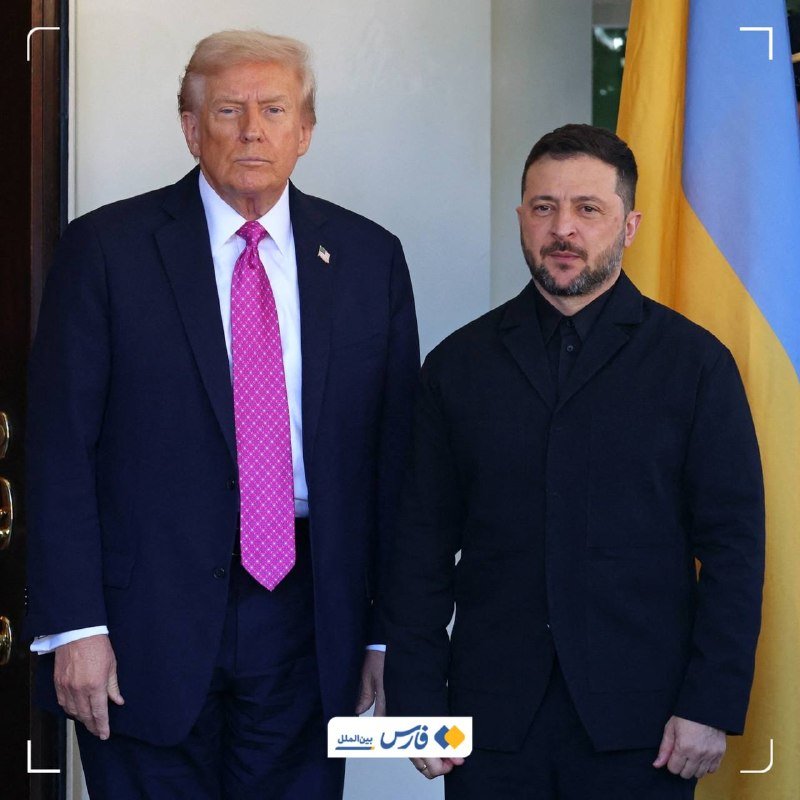
Two signals landed within four hours of each other on the morning of 18 June 2026, and they say more about the state of US–South Korea policy than any cable-readout ever could.
The first was a reported 90-minute telephone conversation between Donald Trump and South Korean president Lee Jae-myung, focused on peace on the Korean Peninsula, per an X post flagged by Polymarket's account at 05:41 UTC on 18 June 2026. The second, posted by the same account at 01:48 UTC the same day, was a prediction-market line: a 41% implied probability that Trump visits South Korea in 2026, listed on Polymarket's "Which countries will Donald Trump visit in 2026?" market. Sandwiched between them, at 01:46 UTC, was Lee's own characterisation of the US–Korea relationship as "solid and eternal," delivered after Trump invited him to play golf.
None of these are formal state acts. The 90 minutes is not a treaty; the 41% is not a foreign-policy doctrine. Read together, they describe something more interesting: a bilateral relationship being conducted, in significant part, in the open air of social posts and prediction markets, where the press release, the retweet, and the implied probability are all part of the same communication layer.
The phone call as the new joint statement
Long-form leader calls have historically produced two outputs: a joint statement, and a press conference. What is unusual about the Trump–Lee exchange is the prominence of the call itself as the news. The reported 90-minute duration does the heavy lifting — that is roughly the length of a working dinner between senior negotiators, not a courtesy congratulatory call. A conversation that long, on a substantive dossier like the peninsula, usually means there is something to negotiate: deterrence posture, cost-sharing, the question of whether Seoul builds its own nuclear capability, the sequencing of any contact with Pyongyang.
The framing from Seoul — "solid and eternal" — is the language a smaller ally uses when it wants to lock in a commitment before the conversation drifts. It is the same register Japanese, Filipino and Polish leaders have used in recent months when Washington signals transactional intent. The golf invitation sits in the same category: it is the personal-channel diplomacy that has substituted, across this administration, for much of the institutional architecture that previous governments used to underwrite alliances.
The Polymarket line as a foreign-policy indicator
A 41% implied probability that Trump visits Seoul this year is high enough to take seriously and low enough to leave room. It is roughly the level at which prediction markets stop being noise and start being treated by traders as a real forecast — comparable to the lines Polymarket ran on UK general-election timing in 2024 or on Federal Reserve cuts through 2025.
For Seoul, the visit question is not cosmetic. A Trump trip to South Korea would normally be sequenced around an APEC or G20 stop, or attached to a Camp David–style bilateral. Its absence from the calendar through the first half of 2026 — implied by a sub-50% line in mid-June — is itself a data point about bandwidth. Trump's foreign travel this year has skewed toward Gulf monarchies and Latin America; East Asia has been managed by phone and by ministerial travel. The 41% is the market's way of asking whether the phone-and-golf phase is about to graduate into a presidential visit, or whether it is the substitute for one.
What the gap between the two signals reveals
The interesting structural feature is the gap. The 90-minute call signals genuine engagement at the top of the food chain; the 41% market line signals that this engagement has not yet converted into the kind of presidential presence that would lock in a posture for the next US administration cycle. That is the bind Seoul — and Tokyo, and Taipei — is in. The relationship is being upgraded in tone and frequency, but the institutions that would normally anchor that upgrade (state visits, formal joint statements, long-cycle arms packages) are being run at a slower tempo.
In plain terms: the personal channel is warm, the institutional channel is running behind schedule. Allies who have built decades of strategy around predictable US behaviour are now reading personal rapport as the leading indicator, and prediction markets as the lagging one.
The counter-read and the stakes
The polite interpretation is that the personal channel is working exactly as designed — Trump has always said he prefers to deal with counterparts directly, and Lee, who took office in 2025, is plainly willing to invest in that relationship. The more sceptical read is that 90-minute phone calls produce 90-minute phone calls; they do not, on their own, produce the defence-industrial coordination, the nuclear-submarine schedule, or the trilateral with Japan that Seoul actually needs. If the Polymarket line drifts below 30% over the summer without a confirmed visit, the "solid and eternal" framing starts to look like the kind of language that gets cited in hindsight as evidence that the warning signs were visible.
The uncertainty that remains is real. The thread reports a call and a market line; it does not include the readouts from either side, the agenda, or any indication of whether the 90 minutes touched the nuclear question at all. For now, the trading desk and the foreign ministry are reading the same two signals — and drawing slightly different conclusions about what is being built.
Desk note: Monexus is leading this piece from Polymarket's own account of the call and the market line, in the absence of wire-service confirmation at the time of writing; the framing is that prediction markets have become a third channel of alliance signalling, alongside the official readout and the press conference.
Wire provenance
This editorial synthesis draws on the following public wire/social posts:
- https://x.com/polymarket/status/1
- https://x.com/polymarket/status/2
- https://x.com/polymarket/status/3