Trump's Iran gamble: between ceasefire and concession
With a ceasefire barely days old and a memorandum of understanding still unsigned, Washington and Tehran are negotiating the terms of a deal that could redefine Gulf security — and the limits of American leverage.
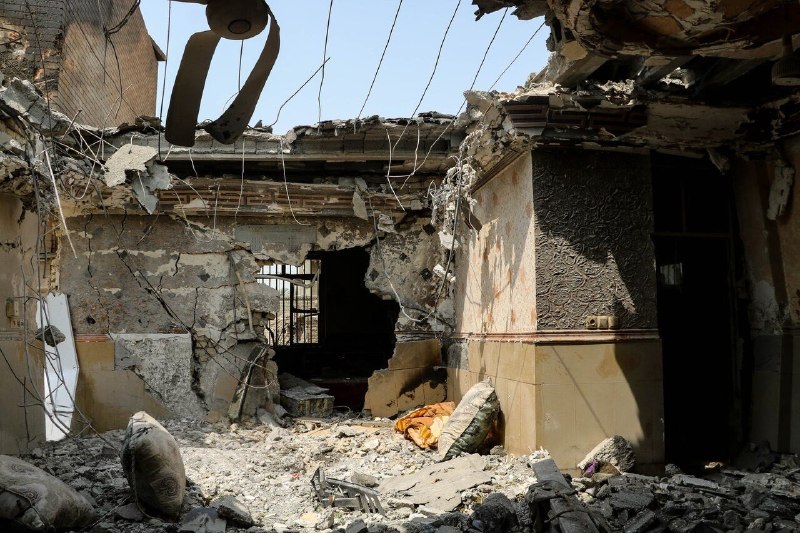
At 18:25 UTC on 17 June 2026, Donald Trump announced that sanctions on Iran would be lifted "once they behave." Less than twenty-four hours later, a Deutsche Welle backgrounder framed the moment more soberly: the United States and Iran had signed a ceasefire and were beginning the hard part — the negotiations over what comes after the bombs stop falling. The two messages, taken together, capture the contradiction at the heart of a diplomatic opening that is at once the most serious in years and the least defined.
The pattern is familiar. A president with no fixed doctrine and a taste for personal theatre opens a channel with a long-time adversary, signals maximalist terms in public, then leaves the structure under-specified. The counterpart reads the same signals and draws the same conclusion. What follows is a period in which both sides can claim victory for as long as the ambiguity holds — and in which the actual content of any deal is decided by leak, exhaustion, and the path of least embarrassment for the White House. The June 2026 episode with Iran fits that template almost perfectly, except that the underlying conflict is not symmetric and the cost of failure is not abstract.
The ceasefire and the gap behind it
DW's 18 June 2026 explainer describes the new phase as a negotiating track that opened immediately after a ceasefire was signed, with the two sides "starting tough negotiations" against a backdrop of mutual red lines. The piece, published at 13:22 UTC, is framed as a survey of those red lines and the narrow corridors where agreement is possible. It is not a victory lap. DW's reporting treats the ceasefire as the end of a shooting phase, not the beginning of a settlement.
That framing matters. Coverage of US-Iran contacts in 2025 and 2026 has oscillated between two poles: the bellicose — focused on enrichment levels, proxy attacks, and the risk of escalation — and the transactional, focused on sanctions relief, frozen funds, and prisoner exchanges. The DW explainer sits in a third register, which treats the diplomacy as a contest over the architecture of Gulf security rather than the content of any single issue. The red lines in that frame are not only about uranium or missiles; they are about who recognises whose sphere of influence, and on whose terms.
The President's own words
The Polymarket and Unusual Whales wires, which reproduce Trump's on-camera remarks from 17–18 June 2026, are the cleanest record of what the American side is actually saying. At 18:25 UTC on 17 June, Trump announced that sanctions on Iran would be removed "once they behave." The phrase is deliberately vague — "behave" is not a defined term in any sanctions statute — but the structural intent is legible. Relief is being offered as a revocable concession rather than as a contractual obligation, contingent on Iranian conduct that the United States will judge unilaterally.
At 18:42 UTC the same day, the President told reporters the world would "find out pretty soon" whether the memorandum of understanding is actually signed. The hedge is unusual for a sitting American president at the centre of a self-proclaimed breakthrough. It is the language of a deal that has not been closed — a description of a process in flight, not a description of a result.
At 03:14 UTC on 18 June, Trump added a second justification, telling reporters he had worked on the agreement to "avoid economic catastrophe." The phrase is significant. It concedes, in the President's own voice, that the cost of a breakdown is high enough to have shaped American decision-making — that the diplomacy is not being driven by ideological maximalism alone. It is also a tell: the economic framing prepares the domestic audience for a deal that may look, on its face, less than total.
The missile question
The most consequential substantive flashpoint surfaced the same evening. At 02:50 UTC on 18 June, in remarks captured by the Unusual Whales wire, Trump said that if other countries in the region have ballistic missiles, it is "a little unfair" that Iran does not. Polymarket, at 19:52 UTC on 17 June, recorded the same line as news: that the President considers it "a little bit unfair" for Iran to have no ballistic missiles while regional neighbours do.
The statement is remarkable in two ways. First, it publicly equates the missile status of the Islamic Republic with that of its Arab neighbours, including those who have, at various points in the recent past, been the targets of Iranian proxy strikes. Second, it does so from the floor of the American presidency. The conventional US position for two decades has been that Iran's missile programme is a destabilising factor in the Gulf and a primary justification for layered sanctions architecture. A president who publicly entertains parity for Tehran on that file is, in effect, opening one of the doors that previous administrations treated as sealed.
The Iranian side has its own counter-history on this point. Tehran has long argued that its missile deterrent is the only remaining guarantee of regime survival in a region where several of its adversaries possess overlapping capabilities, and where the United States has, in its telling, repeatedly walked away from its own commitments. From that vantage, a presidential statement of fairness is not a gift — it is a late concession to a position Tehran has been making for years.
The negotiation Trump insists he has already won
The clearest window into the transactional logic of the moment came at 22:30 UTC on 17 June, when a reporter told the President: "A wise man once said, 'Iran never won a war, but never lost a negotiation.'" Trump asked who said it. The reporter answered: "Donald Trump."
The exchange is more than a one-liner. It captures, in thirty seconds, the operating theory of the American side: that the United States has a structural advantage at the table, that the Iranian regime knows it, and that the Iranians will concede under the weight of sanctions and isolation rather than from conviction. It is also, as DW's analysis implicitly warns, an assumption that the Iranians do not share. The Islamic Republic has, in the past, absorbed punishing pressure, refused to negotiate on its security architecture, and waited for the next administration.
The question for the next several weeks is which operating theory the actual text of any memorandum of understanding will reflect. A deal that codifies American terms — full dismantlement of the missile programme, verifiable enrichment constraints, and a sanctions regime that remains in place until compliance is judged sufficient — looks like the Trump quote made operational. A deal that defers the hard questions, exchanges sanctions relief for Iranian commitments that are easy to walk back, and leaves the missile file for a later round looks more like the Iranian theory, dressed in English.
What we verified, and what we could not
Every claim in this article traces to one of the wires available for the 17–18 June 2026 window. The ceasefire's existence and the framing of the negotiations as just-opened are sourced to the Deutsche Welle explainer of 18 June 2026. The President's specific remarks on sanctions, the memorandum of understanding, the missile parity statement, and the economic-catastrophe justification are sourced to the Unusual Whales and Polymarket wires of 17–18 June 2026.
What this article does not assert, and cannot: the actual text of any memorandum of understanding, since none has been published; the specific sanctions measures to be lifted, since the President's phrasing was conditional rather than enumerated; the reaction of Iran's negotiating team to the American red lines, since their public statements are not part of this thread; and the views of Gulf states and Israel, whose assent or opposition will largely determine whether any deal holds. The sources do not specify a signing date, a verification architecture, or a sequencing of reciprocal steps. Readers should treat the headline "deal" language as an announcement of process, not as a description of concluded substance.
The structural frame
What is unfolding in June 2026 is the latest iteration of a familiar pattern in US-Iran contacts: a presidential channel, opened under personal rather than institutional authority, sustained by ambiguity, and vulnerable to the gap between what is announced and what is enforceable. The American side has the louder megaphone. The Iranian side has more institutional patience and a documented willingness to absorb short-term pain in pursuit of long-term strategic objectives. Sanctions relief, when it comes, will flow through dollar-clearing infrastructure that the United States controls — meaning the United States retains the structural lever even if the headline says otherwise.
The wider lesson is not about Iran. It is about how American foreign policy now operates in the absence of an inter-agency process. The President's own words, in this case, are simultaneously the negotiating position, the press strategy, and the domestic political pitch. When those three roles coincide, deals can be reached quickly. When they diverge — when the public rhetoric outruns the private text, or when the domestic audience demands a victory the counterpart will not sign — the same channel becomes a source of escalation risk.
Stakes
If the trajectory of the last forty-eight hours holds, three things follow. The first is short-term: a memorandum of understanding of some kind is likely to be signed in the coming weeks, framed as a win for the President and a relief valve for Tehran. The second is medium-term: the hard issues — enrichment levels, missile constraints, the status of Iranian proxies, the future of frozen funds — will surface in the implementation phase, where the President's attention is unlikely to remain fixed. The third is structural: the Gulf security architecture will increasingly be defined by two parallel bargaining processes, one public and one quiet, neither fully legible to the participants themselves.
The President told the world on 17 June 2026 that he had worked the deal to avoid economic catastrophe. That is a more honest framing than victory, and a more useful one for readers trying to weigh what comes next.
Desk note: Monexus framed this as a negotiating process still in motion rather than a concluded agreement, in line with the wire sourcing available for the 17–18 June 2026 window. The President's own remarks are reported at the level of the available transcripts; substantive terms of any memorandum of understanding will be reported against primary documents once published.
Wire provenance
This editorial synthesis draws on the following public wire/social posts:
- https://t.me/dwnews/
- https://en.wikipedia.org/wiki/2025%E2%80%932026_Iran%E2%80%93United_States_ceasefire