Five hundred and twenty-two: the repatriation numbers and the war's grinding arithmetic
Kyiv's Coordination Headquarters says 522 bodies have come home. The figure is small compared with what is missing, and that ratio is now the war's most honest metric.
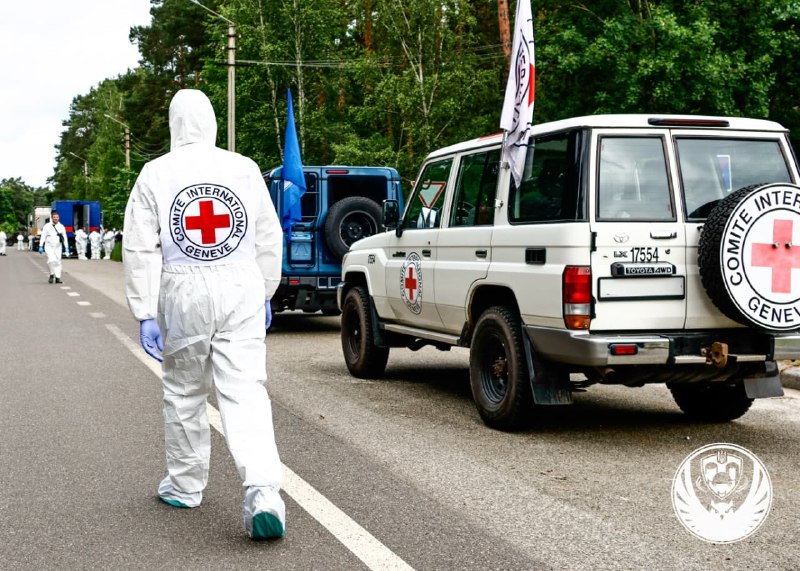
At 10:53 UTC on 18 June 2026, the Telegram channel operated by former Ukrainian interior minister Anton Gerashchenko pushed a short flash to its subscribers: the bodies of 522 dead had been returned to Ukraine, and "according to the Russian side" they include service members. Within three minutes, the public broadcaster Hromadske confirmed the figure. By 11:28 UTC, the outlet War Translated — which re-publishes and contextualises Russian and Ukrainian operational feeds in English — had carried the same number, attributing it explicitly to Ukraine's Coordination Headquarters for the Treatment of Prisoners of War. The figure moved across the information stack in half an hour. The actual exchange it describes moves far more slowly, and the gap between those two tempos is the war's most honest metric.
Five hundred and twenty-two is, on any reading, a large number. It is also, on any reading, a small one. Ukraine's missing-persons ledger runs into the low five figures by the most conservative counts and well into six by casualty-tracking NGOs that aggregate from municipal registers. The 522 figure is therefore not a headline about closure. It is a headline about pace.
What the Coordination Headquarters actually announced
The Coordination Headquarters for the Treatment of Prisoners of War is the Ukrainian government body responsible for negotiating exchanges of prisoners and the repatriation of the dead. It operates under the Cabinet of Ministers and runs parallel talks with the Russian side through a channel that has, in fits and starts, produced a stream of such transfers since 2022. Its 18 June communication, as carried by Hromadske at 10:56 UTC, is austere: 522 bodies returned; forensic specialists will carry out identification; the Russian side asserts the remains include Ukrainian citizens, "in particular to military personnel."
That careful phrasing — "according to the Russian side, the bodies belong to citizens of Ukraine, including military personnel" — is doing real work. Identification is forensic, not political. The Coordination Headquarters cannot, at the moment of handover, confirm whose remains are in the refrigerated rail wagons. It can only confirm what the counterparty says is in them. The verification belongs to the next stage of the process, which runs through Ukrainian forensic laboratories and, increasingly, international partners who supply DNA-analysis capacity and chain-of-custody documentation.
Gerashchenko's channel, Pravda_Gerashchenko, frames the same announcement in more declarative terms at 10:53 UTC: "the bodies of 522 dead were returned to Ukraine." The gap between Hromadske's hedged language and Gerashchenko's flatter formulation is itself a small lesson in how wartime information moves. One outlet preserves the epistemic uncertainty built into the handover; the other translates it into the simpler grammar that social platforms reward. Both are reporting the same event. Only one is reporting it accurately.
The strikes that did not make the headline
At 11:37 UTC, four minutes after the repatriation figures finished propagating through the Ukrainian-language wires, the Telegram channel Megatron_ron — which has, over the course of the full-scale invasion, accumulated a sizeable following by republishing frontline drone and strike footage — pushed a strikingly different image: a Russian fuel depot with a tank airborne off its roof, sent there by a Ukrainian strike. The juxtaposition is incidental to the operators of the channels but unavoidable for any reader of both feeds on the same morning. Within the space of an hour, Ukraine took possession of 522 of its dead and put a Russian armoured vehicle into low orbit.
That is not a coincidence to be sentimentalised; it is the war's operational grammar. The same four-and-a-half-year conflict produces, in parallel, the bureaucratic machinery of dignified return and the kinetic machinery of long-range strike. The Coordination Headquarters negotiates in person, in rooms with maps and prisoner lists. The strikes that destroyed the fuel depot are executed by crews who will never meet the people on the other end of that negotiation. Both tracks answer to the same political leadership, but they speak entirely different languages and they optimise for entirely different outcomes. The repatriation track optimises for a number that can be added to a tally and reported at 10:53 UTC. The strike track optimises for a number that can be subtracted from the Russian logistics base and that, ideally, the other side never gets to count at all.
The Western-wire coverage of any given morning in this war tends to flatten that simultaneity. A repatriation story is filed as a repatriation story; a strike on a fuel depot is filed as a strike on a fuel depot; the two narratives appear in different sections of the same publication on the same day, with no editorial mechanism to connect them. That is a legitimate editorial choice — specialisation is how complex stories get told — but it has the side-effect of obscuring the war's central feature, which is that it runs on two clocks at once.
What 522 does and does not mean
Set the figure against the wider repatriation record. Ukraine has, since the start of the full-scale invasion, received multiple batches of remains in the low three figures — some 320 in one tranche in 2024, others of similar size since — but the cumulative total of identified returns still falls well short of what Ukrainian civil-society trackers estimate to be the population of unaccounted-for persons. The Coordination Headquarters itself treats each batch as a single transaction, not as progress toward a closing balance. Forensic identification is slow; DNA matching takes weeks; some remains are never matched to a name; some matched names were carried on rosters that the war has made untrustworthy.
The honest framing, then, is not "Ukraine brought its dead home" but "Ukraine brought 522 of its dead home, against a denominator that is not publicly disclosed and against a process in which the ratio of named to unnamed remains is itself unstable." That framing is less satisfying than the headline, but it is closer to what the Coordination Headquarters, in its careful language, is actually telling the public.
There is also a less-discussed counter-narrative worth surfacing. Russian-side commentators have, in earlier exchanges, alleged that Ukraine sometimes receives remains that include non-military civilians — people who died in filtration, in occupation, or in transit — and that the political value of these returns to Kyiv is, in part, instrumental: each confirmed military return reduces pressure on a different front. That is a contested claim and one that should be flagged as such, not as established fact. But it is the kind of counter-claim that any rigorous reporting on these transfers has to acknowledge exists, if only to dismiss it after weighing the evidence.
The structural read, in plain prose
What is happening in this war is not mysterious. Two states, one of which invaded the other in February 2022 in what Moscow initially styled as a "special military operation" and which the international legal consensus treats as a full-scale invasion, are grinding through a conflict whose attrition cost is expressed primarily in human remains. The repatriation track is the slowest, most bureaucratic expression of that cost. It is also the most legible to a domestic Ukrainian audience that has, since 2022, learned to read casualty figures the way other publics read inflation prints.
The larger pattern is one of bureaucratic-industrial normalisation. A Coordination Headquarters that did not exist as a discrete body before the invasion is now an established institution with operational protocols, named interlocutors on the other side, and a steady cadence of public communications. The forensic infrastructure that processes returned remains is, similarly, a wartime construction — a network of laboratories, DNA databases, and identification specialists that has been built out precisely because the volume of unidentified remains has made the existing civil-registration machinery inadequate. This is what protracted war does to the institutions that surround it: it builds new ones, out of urgent need, and then those institutions acquire their own constituencies and their own momentum.
That is not a justification of the war. It is an observation about how wars of this length and intensity reshape the state apparatus that runs them. The Coordination Headquarters is, in its small way, evidence of that reshaping. So is the fuel-depot strike. So is the Telegram channel that aggregated both events into the same morning feed for an audience that consumes them in sequence and draws, from that sequence, its own conclusions about the war.
Stakes, and what remains uncertain
If the trajectory of the last twelve months holds, the 522 figure will not be a single event. It will be one of several such transfers through the summer, with each batch producing a similar cycle of headlines, identifications, and quiet family notifications. The political stakes are concrete: every successful repatriation reduces the open-ended casualty exposure of a Ukrainian government that is already under domestic pressure to account for the human cost of the war. The diplomatic stakes are subtler: a functioning exchange channel is one of the few bilateral mechanisms that still operates between Kyiv and Moscow, and its continued operation is, paradoxically, a precondition for any future negotiation that requires face-to-face contact at all.
What remains genuinely uncertain is the trajectory of the wider repatriation ledger. The Coordination Headquarters has not, in its 18 June communication, published a cumulative total. Independent trackers operate with different methodologies and arrive at different denominators. The ratio of named to unnamed remains, both inside and outside Ukraine, is contested. The forensic infrastructure is at capacity, and a winter campaign that produces additional losses at the current rate will produce, by spring 2027, a repatriation backlog measured in the low five figures that the existing institutions cannot absorb without further expansion. None of that is in the Hromadske headline. All of it is implicit in the careful language the Coordination Headquarters used at 10:56 UTC on a Thursday morning in June.
Desk note: Monexus read the Coordination Headquarters announcement through two independent Ukrainian-language channels — Hromadske and Pravda_Gerashchenko — and contextualised it against the English-language re-publication by War Translated. Western-wire coverage of the 522 transfer was not present in the source feed at the time of writing; the strike footage was carried by the frontline channel Megatron_ron rather than by an established outlet. The piece therefore foregrounds the Ukrainian primary sources and the bilingual re-publication, rather than layering in aggregator coverage that would not have added independent verification.
Wire provenance
This editorial synthesis draws on the following public wire/social posts:
- https://t.me/Pravda_Gerashchenko
- https://t.me/hromadske_ua
- https://t.me/wartranslated
- https://t.me/Megatron_ron
Follow the event.
These dated source records provide context. They do not retrospectively verify this archive article.
A dated voting record is evidence of one decision. Use the original UN record before turning it into an alignment label.
Visual explainer · historical vote of 2022-03-02 →