The $300bn Iran question: what the US is reportedly offering, and what Tehran says it will cost
FT and WSJ report a sweeping reconstruction and sanctions package under negotiation, while Tehran floats Hormuz tolls and Washington draws red lines. The numbers, the political risk, and the disputes inside the framework.
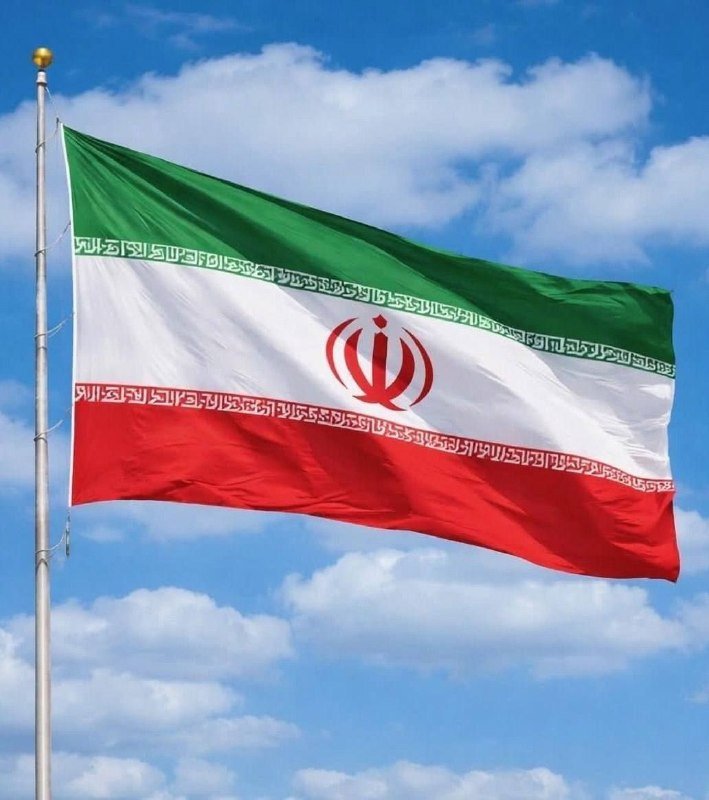
By 18 June 2026, the outlines of a US-Iran deal have moved from speculation to reported terms. The Financial Times and the Wall Street Journal, citing US officials, describe a package that includes a roughly $300 billion reconstruction and economic development plan for Iran, $6 billion in frozen Iranian funds released to buy American goods, a 60-day window of free passage through the Strait of Hormuz, an impending sanctions waiver regime for Iranian oil, and a US commitment not to impose new sanctions pending a final agreement. Vice President J.D. Vance, assigned the diplomatic lead, has been blunt in characterising the trade: he told reporters, "To be honest, we didn't see this as a big concession to the Iranians."
The headline figure is $300 billion. Spread over the multi-year horizon a reconstruction plan implies, that is roughly 7-8% of Iran's annual GDP every year for an extended period — a number that, if delivered, would be among the largest single-country commitments the US has made outside a formal treaty since the Marshall Plan. Whether the money arrives, who administers it, and what Iran must do to unlock tranches, will determine whether the deal is remembered as a diplomatic masterstroke or a deferral of confrontation.
What the reported package contains
The architecture, as described in the FT and WSJ reporting that has circulated since mid-June 2026, rests on four interlocking pieces. First, the reconstruction and development fund — a $300 billion envelope, with the United States and "regional partners" as contributors, framed as rebuilding Iranian infrastructure and industry damaged by sanctions, war, and years of under-investment. Second, the unfreezing of roughly $6 billion in Iranian funds, tied specifically to purchases of US goods, a structure designed to route money through escrow and into American export channels rather than into the central bank in Tehran. Third, a sanctions-relief track that includes an explicit US commitment not to impose new measures "pending a final deal," and an early waiver regime for Iranian oil exports once a memorandum of understanding is signed. Fourth, a maritime arrangement in which Iran would "arrange" passage through the Strait of Hormuz — a phrase that has already become a point of friction — with a reported 60-day period of no charge.
Each of these elements has independent political constituencies in Washington, in Tehran, and in the Gulf. None of them is fully de-risked.
The Hormuz dispute — a telling preview
The maritime component has already produced the first public fracture. Vice President Vance indicated that there will be "no agreement with Iran if they charge tolls," a position that, taken literally, removes the principal economic lever Iran has historically used to extract concessions from oil-importing states. Tehran's response, delivered through academic and political commentator Seyed Mohammad Marandi, was categorical: "Iran will definitely charge fees. The Trump regime should not test Iran's resolve. It will not end well." Polymarket's contract on whether Hormuz traffic returns to normal by the end of June sat at 13% on the afternoon of 18 June 2026 — a market signal that traders, who put capital where their forecasts are, do not believe the chokepoint normalises this month.
This is the deal in miniature. Washington wants to convert Iranian cooperation into a non-monetised arrangement; Tehran wants a revenue stream that anchors its leverage. The 60-day free-pass window is best read as a goodwill gesture, not a structural settlement. The longer-term tariff question is unresolved and, on present positioning, is the most likely place for the framework to fail.
The Vance wager, and what Trump is buying
The diplomatic portfolio sits with the Vice President, not the Secretary of State. President Donald Trump, in remarks reported on 18 June, made the political logic explicit: "If [the Iran deal] works out, I'm going to take the credit; if it doesn't work out, I'm blaming [Vance]." The attribution is partly facetious, but the distribution of risk is real. Vance is the visible negotiator. He is also the one whose office leaked, in truncated form, the line about not seeing the lifting of sanctions as a "big concession" — language that will complicate the framing in Tehran, where any concession is by definition a concession.
Vance's structural argument, as reported, is that the underlying constraints on Iran's economy were already biting hard, that additional pressure produces diminishing returns, and that the United States is therefore trading away something with limited marginal value for something with high marginal value — a measure of maritime stability and the political decoupling of the Iranian file from other Middle Eastern flashpoints. The counter-argument from sanctions hawks, and from Gulf partners whose security architecture is premised on continued Iranian economic containment, is that a $300 billion reconstruction commitment effectively resets the strategic balance of the Gulf and re-equips a state whose regional behaviour, in their reading, has not changed.
What remains genuinely uncertain
Three sets of questions are still open. First, the legal architecture: any deal of this scale requires Congress, or an executive-branch workaround, to commit funds and waive sanctions in a way that survives a future administration. The reporting describes an MOU, not a treaty, and the durability of MOU-level commitments across US political cycles is poor. Second, the escrow and verification regime for the $6 billion in released funds: Iranian access to hard currency is the most sensitive variable in the deal, and the design of the escrow will determine whether the money is a working commercial channel or a one-off transaction that the Treasury treats as precedent-setting. Third, the enforcement of the sanctions waiver for Iranian oil: the WSJ reporting that waivers will follow the MOU leaves open the customer list, the volumes, and the price-cap regime — all of which will be contested by existing Iranian-oil sanctions enforcers in the US, the EU, and Gulf capitals.
A separate, parallel thread on 18 June also deserves attention. Polymarket flagged a reported Department of Justice investigation into US bank transactions linked to Iran's supreme leader and his financial network. The optics are awkward: Washington is negotiating a $300 billion package with the same government whose financial dealings are the subject of an active US criminal probe. The two tracks can coexist, but they impose a constraint on the political space in which any final deal can be signed.
Stakes and trajectory
If the framework holds, the principal beneficiaries are the Gulf monarchies (a quieter, more contained Iran), Chinese and Indian oil buyers (a working sanctions waiver), and the US Treasury (export demand for American goods and renewed influence over a $300 billion capital flow). If the framework fractures, the burden falls first on global energy markets — a Hormuz toll regime can move crude prices by multiples within hours — and on the Iranian population, which has been promised normalisation that may not arrive. The Polymarket contract on whether Vance meets Iranian counterparts this month, at 59% as of the afternoon of 18 June, is the cleanest read on the near-term: roughly three-to-one odds that a face-to-face happens, and roughly one-in-eight odds that Hormuz normalises by month's end. The two numbers, taken together, suggest a market that expects diplomacy to proceed but does not expect the hard parts to be resolved quickly.
Desk note: this article follows the FT/WSJ reporting on the framework, the public Hormuz positioning from Vance and Marandi, the Polymarket read on near-term probability, and the DOJ investigation flag. It is framed as reported terms in negotiation, not as concluded policy; the $300 billion figure and the sanctions-waiver mechanics in particular remain subject to revision as the MOU text becomes public.
Wire provenance
This editorial synthesis draws on the following public wire/social posts:
- https://x.com/unusual_whales/status/
- https://x.com/unusual_whales/status/
- https://x.com/unusual_whales/status/
- https://x.com/unusual_whales/status/
- https://x.com/unusual_whales/status/
- https://x.com/polymarket/status/
- https://x.com/polymarket/status/
- https://x.com/polymarket/status/
- https://x.com/unusual_whales/status/
- https://t.me/FotrosResistancee
- https://x.com/s_m_marandi/status/
- https://x.com/unusual_whales/status/
- https://x.com/unusual_whales/status/
- https://x.com/unusual_whales/status/
- https://x.com/unusual_whales/status/
- https://x.com/unusual_whales/status/
- https://x.com/polymarket/status/
- https://x.com/polymarket/status/
- https://x.com/polymarket/status/
- https://x.com/unusual_whales/status/
- https://t.me/FotrosResistancee
- https://x.com/s_m_marandi/status/