Trump and Pezeshkian sign interim deal to end US-Israeli war on Iran, opening 60-day window for permanent settlement
An electronically signed memorandum in the early hours of 18 June 2026 commits Washington and Tehran to a two-month negotiation over the terms of a permanent end to the war.
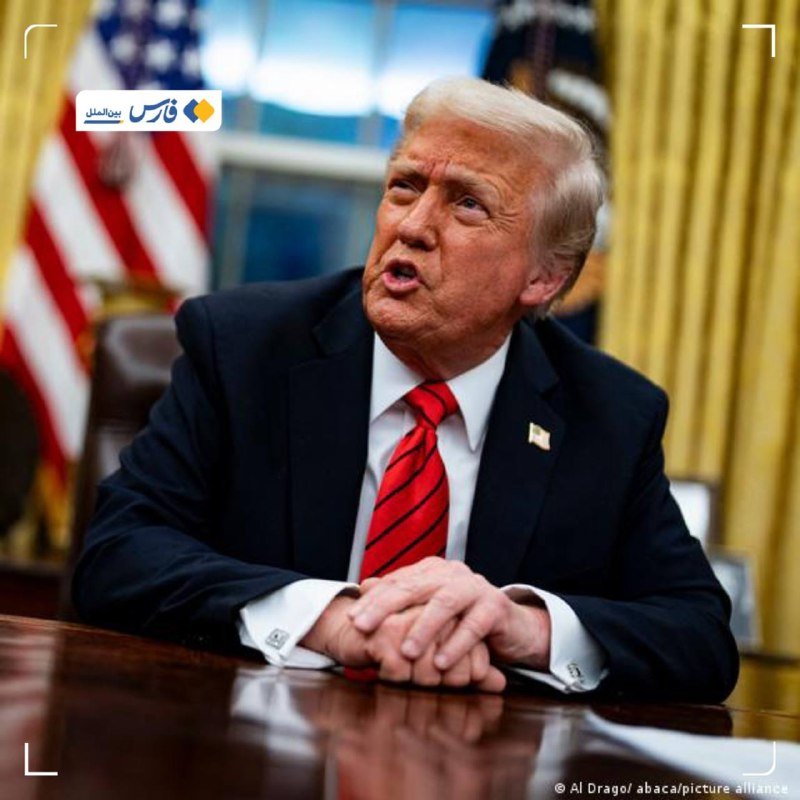
At 06:31 UTC on 18 June 2026, FRANCE 24 reported that President Donald Trump and his Iranian counterpart, President Masoud Pezeshkian, had signed an interim agreement to end what the outlet described as a US-Israeli war on Iran. Confirmation came roughly fifteen minutes later, at 06:46 UTC, when Iran's state-run IRNA news agency carried a separate item on Pezeshkian's public schedule — a routine message from the president's office praising Iran's student team at world games — and within the same hour, the X account @sprinterpress posted a brief confirmation: "It's signed. US President Donald Trump and Iranian President Masoud Pezeshkian electronically signed the US-Iran MoU." Three independent channels, three different frames, one announced event.
The interim deal, as described by FRANCE 24, gives Washington and Tehran 60 days to negotiate a permanent settlement. The outlet's reporting characterised the conflict as a "US-Israeli war on Iran," a framing that has not yet been corroborated by the wire services and that diverges sharply from how the same events have been described in Washington and Tel Aviv. The deal itself — a memorandum of understanding, signed electronically rather than at a single televised ceremony — is the more firmly established fact; its strategic meaning, and the question of who is most exposed by the 60-day clock, is the harder story.
What was actually signed, and what was not
According to the FRANCE 24 report, the two leaders committed to a temporary cessation of hostilities and to a two-month negotiating window. The mechanism is an MoU, not a treaty, and it was executed electronically, a procedural detail that matters. Treaties bind successors and require, in the US case, Senate advice and consent for a particular class of agreements. Memoranda of understanding do not. They are political documents, harder to enforce and easier to walk back, but also easier to sign quickly under conditions of active fighting.
The 60-day window is the operative number. It is long enough for technical talks — sanctions sequencing, nuclear verification modalities, prisoner exchanges, the status of proxy networks — and short enough that any breakdown will be visible almost immediately. The lack of a single signing ceremony is itself a tell. The two governments wanted the announcement; they did not want a piece of theatre that would commit them to specific optics, or to the seating arrangements that a handshake in a third country would have implied.
IRNA's own contribution to the day's news flow, on Pezeshkian's schedule, did not name the deal. The Iranian president's office chose to lead its English-language output on 18 June with the student games, a soft-power item, rather than with the diplomacy. That editorial choice, in a state media system where the lead is curated, is consistent with a posture that wants the deal to be real but does not want to oversell it to a domestic audience that has paid a high price during the conflict.
The framing gap
The most consequential divergence in the day's reporting is not over whether a document was signed — all three sources agree on that — but over what to call the war that preceded it. FRANCE 24 used "US-Israeli war on Iran." IRNA, in the material that has surfaced from 18 June, has not yet used that construction; the Iranian state framing of the conflict, across the duration of the war, has typically centred on "the Zionist regime" and on US complicity, rather than on a joint US-Israeli war effort. American and Israeli coverage, where it has touched the conflict, has tended to characterise strikes as defensive or as responses to specific Iranian actions, not as a war on Iran as such.
Monexus finds that the dominant frame, for now, is the most cautious one: an MoU has been signed, the fighting is to stop, and 60 days of negotiations begin on 18 June 2026. The more expansive reading of the conflict's nature will be settled, one way or another, by what is in the permanent deal — particularly the language on nuclear capability, on sanctions relief, and on the regional armed networks that have been a central Israeli and US demand across the war.
Why an interim, and why now
The structural pressure pushing both governments to a memorandum rather than a treaty is simple. A treaty requires legislative buy-in in Washington at a moment when the US Congress is not a reliable partner for any administration on Iran; in Tehran, a treaty would require the political space to make binding concessions, a space that has narrowed over the course of a war that has imposed real costs on the Iranian economy and on Iranian civilians. An MoU, by contrast, is a holding pattern. It stops the bleeding. It does not resolve the underlying dispute.
The 60-day window is also short enough to function as a sanctions mechanism on its own. If the talks collapse, the document can be allowed to lapse; the two sides revert to a posture of active hostilities without having to formally renounce a treaty. That feature, more than any of the specific commitments, is what makes an interim attractive to negotiators who do not yet trust each other and who are under domestic pressure not to be seen as the party that walked away from a final deal.
Stakes and what remains unresolved
If the trajectory holds, Iran trades a portion of its nuclear and proxy infrastructure for sanctions relief and an end to the bombing; the United States and Israel trade the costs of an active war and the risk of escalation for a verified arrangement that constrains Tehran's strategic reach. The losers in the most likely settlement are the armed networks in Lebanon, Iraq and Yemen that have been part of Iran's deterrence architecture; their patrons in Tehran are being asked, implicitly, to demote them from strategic assets to negotiating chips. That is a change the regional balance will register, whether or not any final document names them.
What remains genuinely unresolved on the morning of 18 June 2026 is the substance. The FRANCE 24 report gives a date, a duration, and a pair of signatories; it does not detail the issues under negotiation, the verification regime, or the order of operations. The IRNA feed, for its part, has not yet produced a stand-alone English-language statement on the MoU. @sprinterpress's confirmation is terse. The cautious reading is that a real document was signed and a real clock has started; the more cautious reading still is that the gaps in the public record are large enough that the 60-day window could close on almost any set of facts, depending on what the next 48 hours of briefings and leaks produce.
Desk note: where the wire cycle on 18 June diverged over what to call the war, Monexus led with the narrower, documentable claim — that an MoU was signed, that the two leaders named on it are Trump and Pezeshkian, and that a 60-day negotiating window has begun — and flagged the wider framing as a separate, contested question.
Follow the event.
These dated source records provide context. They do not retrospectively verify this archive article.
Separate what the nuclear watchdog reported from what it could not determine after the June 2025 strikes.