US-Iran memorandum takes effect as Israeli coverage splinters over what it means
A US-Iran memorandum signed electronically on 18 June 2026 enters force the same day Israeli commentators quarrel publicly over whether Tehran has won.
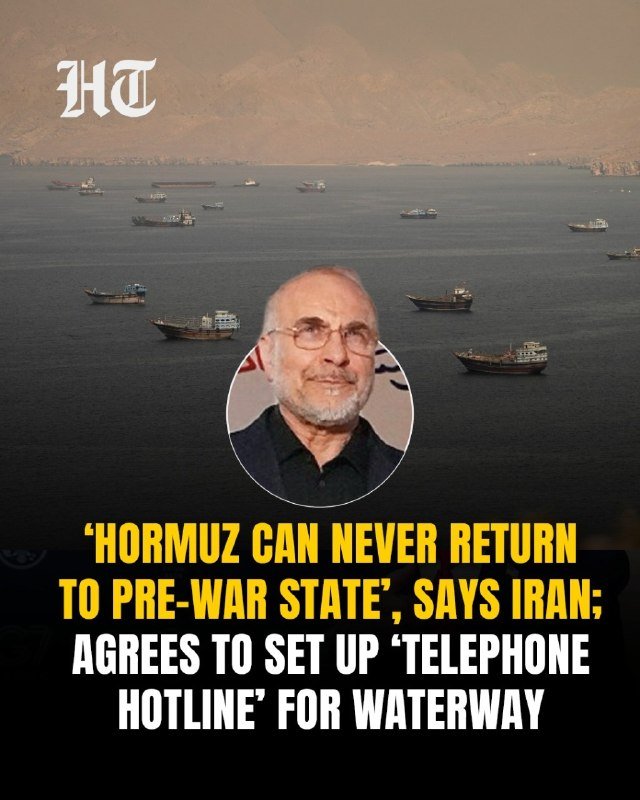
A memorandum of understanding between the United States and Iran took effect on Thursday 18 June 2026 after what Israeli Channel 15 described as an electronic signature exchange earlier in the day. The signing caps a sequence of indirect exchanges mediated through regional intermediaries and is being read in diametrically opposite ways inside Israel — as a strategic shield for the Jewish state by its defenders, and as a quiet surrender to Tehran by its critics.
The split is the story. Three separate Israeli-language information streams — a state-aligned Arabic-language Telegram channel summarising Hebrew TV coverage, a US-based Axios correspondent's social feed, and an Iranian state outlet carrying a former Trump-administration counterterrorism official — are running essentially different narratives about the same document. That divergence matters more than the text of the memorandum itself, because each reading carries a different policy implication for Israel's posture in the Levant.
What was signed, and by whom
Israeli Channel 15, summarising the development on the morning of 18 June 2026, reported that Washington and Tehran had electronically signed a joint memorandum of understanding which officially enters into force the same day. The text of the memorandum has not been published in full; Israeli reporting names it as a "joint MoU" rather than a binding treaty, and the Iranian side uses the same terminology. PressTV, the Iranian state broadcaster, carried parallel framing under the headline "Restraining Israel, regional stability key to ensuring Iran-US MoU," quoting a former senior US counterterrorism official who argued that the agreement's survival depends on the parties constraining Israeli unilateral action in the region. That framing — a former Trump-era security official publicly endorsing the MoU's regional logic — is the most direct external endorsement of the deal's substance this publication could locate.
The document's contents remain partially opaque. Israeli and Iranian state-adjacent media agree that the package touches nuclear constraints, sanctions sequencing, and a regional stability mechanism. They disagree, sharply, on what each of those elements actually obligates.
The Israeli reception: shield or surrender?
Within Israel, two readings are competing. The first — visible in sympathetic Hebrew-language commentary and in the framing of the agreement as a containment of Iran's nuclear file — treats the MoU as a successful piece of Trump-administration statecraft that buys time and lifts the immediate pressure on the Israeli home front. Under this view, the agreement is a tactical Israeli gain: a US-anchored framework that constrains Iranian enrichment without committing Jerusalem to a unilateral military track.
The second reading, captured in a public exchange flagged by Iranian Telegram monitors on the morning of 18 June, is darker. A user on X responded to Axios correspondent Barak Ravid's coverage of the MoU's contents with a pointed line about Iran's "complete victory." Ravid reportedly republished that post, which Iranian aggregators read as a tacit admission from a US outlet close to the Israeli national-security establishment that the deal favours Tehran. The episode is small — a single repost — but the speed with which it has been amplified across Iranian and Arabic-language Telegram channels illustrates how thin the boundary between a Western reporter's editorial choice and a hostile framing exercise has become.
What is actually contested
Three substantive disagreements run underneath the rhetoric. First, sequencing: whether sanctions relief arrives before, after, or in parallel with verified Iranian rollback of enrichment and proxy-weapons flows. Israeli commentators reading the deal favourably argue that verification architecture is robust; critics argue that Tehran has historically exploited the gap between signature and inspection. Second, the Israel clause: whether any US-Iran arrangement implicitly constrains Israeli action against Iranian assets in Syria and Lebanon. The PressTV-cited former US official explicitly named Israeli restraint as a survival condition for the MoU; Israeli-language discussion has avoided the same framing, suggesting that the Israeli public conversation is being conducted on a different page from the Iranian public conversation. Third, the durability question: whether an MoU signed by an executive branch survives a change of administration in Washington, or whether Tehran is buying a window rather than a settlement.
Why the framing war matters
The contest over what the MoU means is itself a structural fact. Israeli Channel 15's reporting reaches a domestic Hebrew-speaking audience and frames the deal inside a national-security register. PressTV's coverage is produced for an Iranian and pan-Arabic audience and frames the deal inside a regional-justice register. The Axios-republished post operates as a third channel — an English-language journalistic feed whose incidental reposting decisions are read as signal in Tehran and Beirut. When three information streams cannot converge on what the same document does, the document itself becomes harder to govern, because each audience is preparing for a different next move.
That risk is not symmetrical. Israel retains the ability to act unilaterally against Iranian assets regardless of any bilateral US-Iran instrument; the Iranian side is structurally more constrained by the deal's verification and sanctions architecture. The asymmetry means Israeli framing debates are, in effect, debates about whether to use the freedom of action the deal preserves or whether to treat the deal itself as a constraint.
Stakes and the next ninety days
If the MoU holds through the summer, the regional order implied is a managed tension in which US-Iran diplomacy sets the ceiling on escalation and Israeli action is the variable that determines whether that ceiling is tested. If the MoU fractures, the most likely vector of failure is an Israeli strike against Iranian nuclear or proxy infrastructure in the September-November window, followed by an Iranian retaliatory cycle that the memorandum's architecture was designed to prevent. The former senior US official quoted by PressTV on 18 June is explicit: in his framing, the agreement's survival is contingent on restraint from Tel Aviv. That is not a phrase any Israeli government would use, and the gap between the two vocabularies is the next ninety days' most consequential diplomatic fact.
What remains genuinely uncertain is the memorandum's text. Until the document is published — if it is published — every analysis of its substance is necessarily partial. The three streams cited above agree on the existence of a deal and disagree on its meaning; readers should hold that gap open until primary documents are in hand.
This publication reads the 18 June development as a signed framework whose durability depends on framing alignment that has not yet been achieved. The Israeli debate, not the Iranian one, is the binding variable.
Wire provenance
This editorial synthesis draws on the following public wire/social posts:
- https://t.me/JahanTasnim
- https://t.me/gazaalanpa
- https://t.me/presstv
Follow the event.
These dated source records provide context. They do not retrospectively verify this archive article.
Separate what the nuclear watchdog reported from what it could not determine after the June 2025 strikes.