US Treasury hits Lebanese officials in new Hezbollah sanctions push
On 18 June 2026 the US Treasury added Lebanese officials and others to its Hezbollah sanctions list, drawing an immediate response from Beirut and a fresh rhetorical escalation from Tehran-aligned voices warning Lebanese politicians not to discount Iran's deterrent capacity.
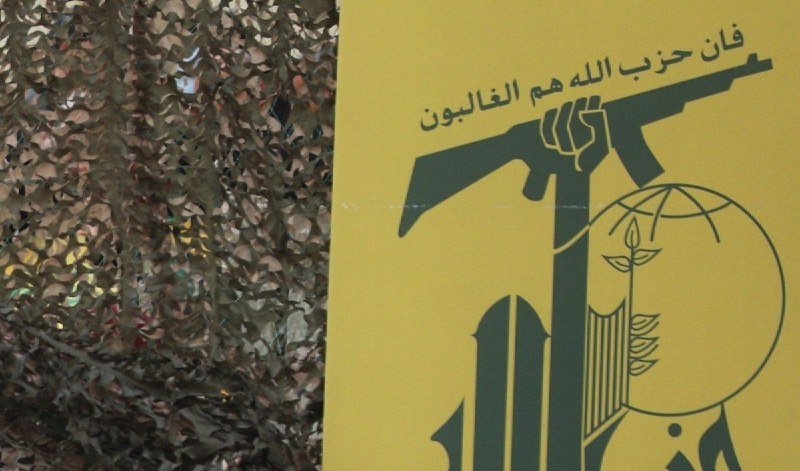
The US Treasury Department imposed a fresh round of sanctions on Lebanese officials and others accused of aiding Hezbollah on 18 June 2026, the latest in a sanctions architecture against the Iran-aligned movement that has tightened incrementally since the 2020 designation framework. The action, reported by Reuters, was announced through Treasury's Office of Foreign Assets Control and frames a Lebanese state apparatus that has, in Treasury's telling, become a working enabler of an organisation Washington classifies as a foreign terrorist organisation.
The move matters less for any single official named than for what it signals about the trajectory of US policy in Beirut: a sustained effort to weaponise the dollar against Hezbollah's civilian-facing infrastructure at a moment when Lebanon's politics are already deeply fractured, its economy still under strain, and its southern border with Israel a recurring flashpoint. Treasury is not just targeting financiers — it is signalling to every Lebanese public servant whose name touches a Hezbollah-aligned file that they may be next.
What the sanctions cover, and what the source material tells us
Reuters' short wire identified the action as targeting "Lebanese officials" and "others" for aiding Hezbollah, without in the visible item specifying the names of those designated or the legal authorities invoked. The Iranian state-aligned Tasnim news agency, reporting in English at 16:56 UTC, framed the move as continuous US support for what it called "the barbaric and anti-human crimes of the Zionist regime," language that places Treasury's action inside Tehran's preferred narrative — that American pressure on Hezbollah is functionally indistinguishable from American support for Israel. A parallel Tasnim dispatch at 16:55 UTC carried a statement attributed to Hezbollah's parliamentary bloc leader Mohammad Raad, asserting that "the Zionist regime has 60 days to leave Lebanon" and urging Lebanese officials not to discount Iran's capacity to deter Israel.
That is the full evidentiary base on the record here: one wire confirming the action, two Iranian-aligned outlets framing it. Treasury's own press release would ordinarily be the primary document, identifying designated persons, their addresses, the specific authorities invoked (typically Executive Order 13224, the 2019 Hezbollah Financial Sanctions Regulations expansion, and successor authorities) and the practical effect of designation — blocking of US property, prohibition on US persons transacting, and a global secondary-sanctions reach through the correspondent banking system. None of that granular detail is in the source set under review, and this article will not invent it. What can be said with confidence is that Treasury acted, that Reuters confirmed the action, and that Iran-aligned media treated the action as a continuation of an established pattern rather than a rupture.
The Lebanese counter-narrative, taken seriously
The voices inside Lebanon that the sanctions are most directly aimed at have a structural complaint that survives the politics. Hezbollah is, in formal Lebanese constitutional terms, a Lebanese political party with elected parliamentary representation, a portfolio of ministers during coalition periods, and a welfare network that delivers services to a non-trivial share of the population, including Shia communities underserved by the central state. Designating allied officials under US counter-terrorism authorities does not, on its face, distinguish between partisan affiliation and material support for the group's military wing. From Beirut's perspective — particularly from the perspective of those Shia constituencies whose only effective political vehicle Hezbollah remains — this looks less like counter-terrorism and more like a foreign power using its banking choke-hold to reshape Lebanese internal politics.
That framing is not without force. The same correspondent-banking system that lets Washington enforce Iran-related sanctions is the system on which Lebanon's diaspora-bond-dependent economy depends for basic functioning. Treasury's Hezbollah sanctions regime, layered on top of the 2019 Caesar Act pressure on Syria and the still-operational Iran metal sanctions regime, means that a Lebanese banker's appetite to hold dollar correspondent relationships with Lebanese counterparts whose names appear on any US list is, in practical terms, near zero. The sanctions therefore do not just target the named officials; they squeeze the institutional space in which those officials operate. Whether that squeeze advances US counter-terrorism objectives or simply damages ordinary Lebanese service delivery is a question on which serious analysts disagree, and the disagreement is not reducible to a partisan line.
Hezbollah's response: escalation posture, and what 60 days actually means
The Mohammad Raad statement carried by Tasnim — that Israel has 60 days to leave Lebanon and that Lebanese officials should weigh Iran's deterrent capacity — is rhetorical escalation, but it is also a structured negotiating posture. The 60-day formulation is a deadline, not a forecast. It places Lebanon's political class on notice that any compliance with the US sanctions regime will be read in Tehran-aligned circles as a costed choice with consequences, and it offers a counter-frame: that Hezbollah's deterrent value to Lebanon exceeds whatever financial damage Treasury can inflict.
The structural pattern here is familiar. Iranian-aligned messaging around sanctions events tends to do two things at once: rhetorically escalate, to demonstrate that pressure does not produce compliance; and tactically de-escalate, by routing the confrontation through a deadline rather than an immediate act. Whether the 60-day marker tracks a real operational plan or is a posture-maintenance device is the kind of question that the public sources cannot resolve. The reporting does not specify what mechanism, if any, Hezbollah would use to act on the deadline, and this article will not speculate.
Structural frame, in plain prose
What is happening in Beirut this week is a small move inside a much larger arrangement. Dollar-denominated financial infrastructure has, since at least the 1990s, given Washington an enforcement reach into third-country politics that no other capital enjoys. Hezbollah sanctions are not principally enforced through Treasury's own investigators; they are enforced through the structural incentives of a global banking system in which dollar clearing is the default and in which losing access to it is functionally fatal for a mid-sized institution. Every Lebanese official designated this week becomes a marker that the rest of the Lebanese political class reads. Every Lebanese bank decides, on its own risk-weighted logic, whether to maintain a relationship with anyone adjacent to the designated person.
This is the asymmetric advantage of a hegemonic currency, applied to a counter-terrorism file. It is also, from a Global South perspective, a reminder that the international financial architecture is not a neutral utility. The same architecture that lets Washington pursue Hezbollah also constrains Iranian oil exports, Russian hydrocarbon customers, and any number of other sovereign decisions that the architects of that architecture disagree with. Lebanon, in 2026, is paying an unusually visible price for being the country through which several of those files intersect.
What remains uncertain, and what to watch
Three things are unclear on the public record and worth flagging rather than glossing. First, the identities and number of the officials designated: the source set does not enumerate them. Second, the specific legal authority invoked and any general licences issued to wind down pre-existing transactions — material to whether the action is principally symbolic or operationally disruptive. Third, the response of the Lebanese central bank, which has historically tried to preserve dollar access for the wider economy even while individual institutions have been pressured to shed Hezbollah-adjacent clients. Treasury's practical effect on the ground is a function of how Bankmed, Byblos, and the larger commercial banks recalibrate their compliance posture in the week ahead.
What is clear is that the action is a continuation, not a departure. Reuters describes it as a new round; Tasnim frames it as continuation of an established American line. Both readings are compatible. The more interesting question — whether incremental sanctions pressure on Hezbollah's civilian-facing network produces the political realignment in Beirut that Washington wants, or merely deepens Lebanese dependency on the Iranian-aligned actors who can operate outside the dollar system — is the question on which the policy will ultimately be judged.
Desk note: this article foregrounds Reuters as the wire of record for the US action and Tasnim for the Hezbollah-aligned response, per Monexus's standing policy of citing wire services for Western actions and Iranian state media — with explicit caveat — for Tehran's framing. The structural point about dollar architecture is editorial analysis, not source material.
Wire provenance
This editorial synthesis draws on the following public wire/social posts:
- http://reut.rs/4ox2iGE
- http://reut.rs/4ox2iGE
- https://t.me/tasnimnews_en
- https://t.me/tasnimnews_en
- https://t.me/JahanTasnim
- https://t.me/JahanTasnim